After crossing 650 million mobile subscribers worldwide, Bharti Airtel has announced a major milestone in its global operations. This scale now positions Airtel as the second-largest telecommunications operator on the planet by customer base.
Crossing this threshold reflects a network of immense scale, the capacity to reach customers across diverse markets with consistent quality, and the ability to deliver experiences shaped by sustained innovation.
In a statement signed by Femi Adeniran, Director, Corporate Communications & CSR, Airtel has continued to scale infrastructure at a pace unmatched in its recent history. Over the past three years, the company has increased its national site count from just above 13,000 to nearly 17,200 sites, including more than 1,560 added in the last twelve months.
This expansion deepens capacity in high-demand corridors and extends high-speed coverage to previously underserved regions. The latest industry data from the Nigerian Communications Commission (NCC) underscores the significance of this growth.
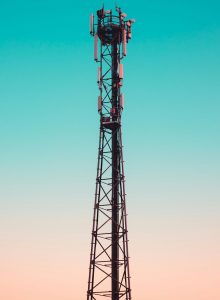
As of December 2025, Nigeria recorded 145,141 base stations across 2G, 3G, 4G and 5G layers. Of this national infrastructure, Airtel accounts for 46,918 base-station layers, reflecting its substantial contribution to the country’s radio access network and its push to absorb rising data consumption.
Nearly 99 per cent of Airtel Nigeria’s sites are now 4G-enabled, positioning the operator as one of the few with a near-ubiquitous high-speed broadband footprint. Thousands of sites have been upgraded for capacity in the past year alone, enabling improved speeds and more stable performance during peak usage.
The company’s expansion underpins Nigeria’s rising internet adoption, with Airtel recording among the largest monthly increases in new internet subscribers, driven by network upgrades across states and rural corridors.
Besides, the company also has a strategic connectivity and redundancy edge, as it is tackling a critical infrastructure challenge for the Nigerian digital economy: reliance on a single international internet gateway. The company is advancing plans for its second submarine cable internet breakout point at Kwa Ibo in Akwa Ibom State, early in the 2Africa cable system rollout, to provide faster and more resilient national connectivity across regions. This significant investment aligns with global best practices in network diversity and redundancy, ensuring a more stable digital experience for consumers and enterprises alike.
in addition to its growth, Airtel’s digital finance arm, SmartCash, has gained traction in Nigeria’s competitive mobile money ecosystem, now serving over 3 million active users. The platform is supported by an expansive agent network and digital services that lower barriers for everyday financial transactions and savings.
Across Nigeria, Airtel’s retail distribution network stands as one of the sector’s most extensive, with approximately 4,000 exclusive outlets bringing services, support, and products closer to customers in small towns, communities, and high-traffic urban hubs. That footprint drives both access and engagement in a market where localised presence remains a competitive differentiator.
Dinesh Balsingh, CEO, Airtel Nigeria, said: “Reaching 650 million customers globally reflects the trust people place in Airtel’s networks and services. Here in Nigeria, we are building infrastructure that not only keeps pace with rising demand but anticipates it. Expanding our network, strengthening redundancy with the second international gateway at Akwa Ibom, and scaling digital services like SmartCash are strategic investments in Nigeria’s digital ecosystem. Our goal remains clear: reliable connectivity, equitable access, and seamless digital experiences across the board.”
As Nigeria’s digital economy continues to evolve, Airtel is committed to sustained innovation — from expanded fibre backbones and advanced mobile broadband to future-ready services, including satellite-enabled solutions and enterprise-grade digital platforms. These efforts help ensure that connectivity, commerce, and creativity thrive across Nigeria and beyond.