
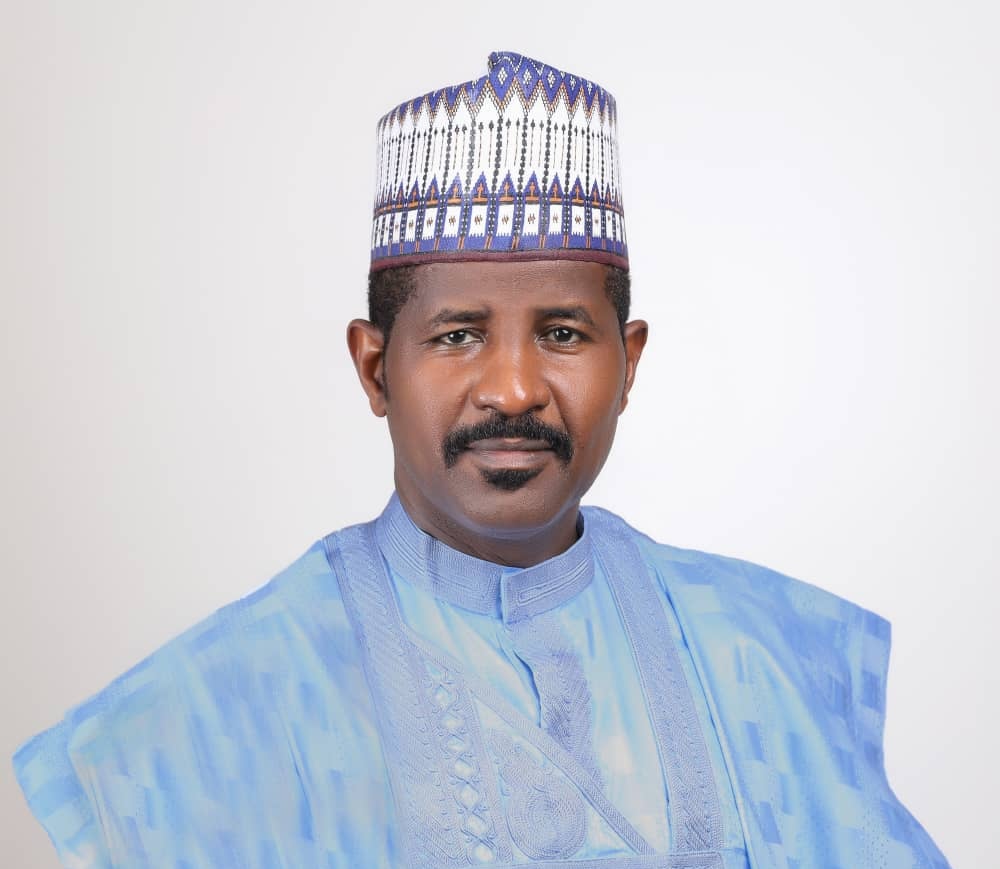
Dr. Bashir Gwandu, former acting Executive Vice Chairman and CEO of the Nigerian Communications Commission (NCC) and former EVC/CEO of the National Agency for Science and Engineering Infrastructure (NASENI), has urged African countries to unite and work to secure 600 megahertz (MHz) band mobile spectrum allocations.
The independent telecom expert stated this at the just concluded 9th Sub-Sahara Spectrum Management Conference 2024, held in Nairobi, Kenya on 6-7 November, organised by Forum Global on the third theme: “From WRC-23 to WRC-27- Emerging Landscapes & Technologies and the Path Ahead.”
Dr. Gwandu, who held chairmanship positions at the ITU and Commonwealth, the ITU Radio Communications Advisory Group (the RAG), Joint Task Group, and Commonwealth ITU Group (CIG), made the call during his opening remarks on the 600MHz spectrum discussions.
In his presentation, “The shape of Post-WRC spectrum ecosystems”, he asked for the cooperation of African countries at the forthcoming World Radio Communications Conference 2027 (WRC-27) to enter Footnote 5.307A, which are radio regulations used to allocate spectrum to a country or countries.
He played a key role in founding the ATU (African Telecommunications Union) WRC coordination meetings and was disappointed at the waning effort of the continent. At the core of the discussions was the 600MHz (3GGP n71) band, a key frequency range that many countries are allocating for IMT to support 4G and 5G networks.
While several nations in Regions 2 and 3, and some in ITU Region 1, have designated this band for mobile, some African countries are not ready to switch to co-primary allocation. Eleven African countries had requested WRC-23 for primary mobile spectrum allocation and IMT identification in the 614-694MHz band; however, only Egypt got it. Rwanda, Guinea, Benin Republic, and Cameroon blocked requests from 10 other African nations by making similar aspirations.
These 11 countries included Nigeria, Senegal, Mauritania, Libya, Chad, Gambia, Sudan, Namibia, Somalia, and Tanzania. He posited that fighting for the status quo to remain or ‘No Change’ is akin to refusing an available front seat and fighting for a back seat.


 WRC coordination meetings and was disappointed at the waning)