Friday, November 20, 2026
Home Blog Page 16

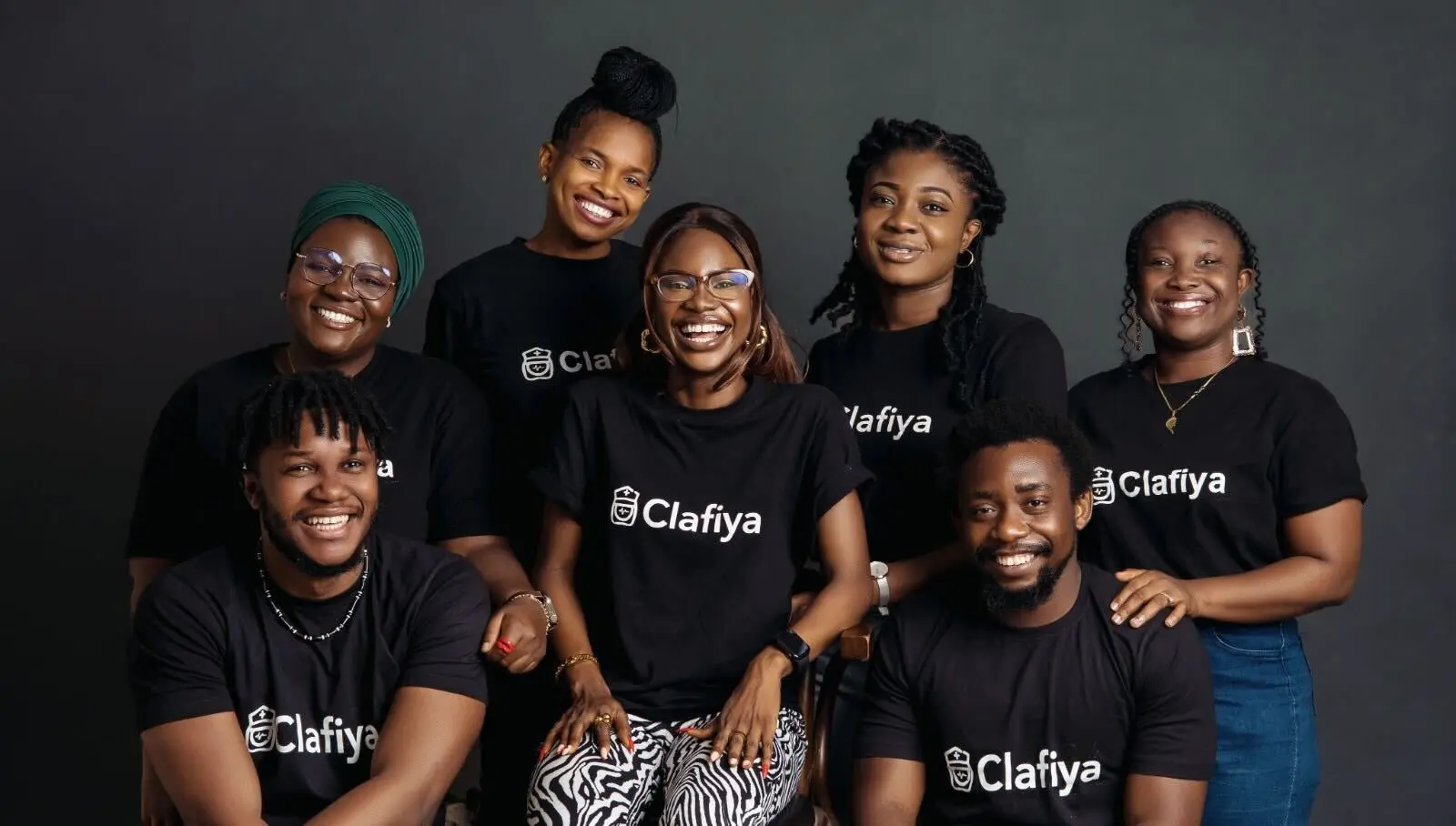
Clafiya raises $610,000 in pre-seed funding

0

Clafiya disclosed it has raised $610,000 in pre-seed funding to fuel its expansion, invest in product development, and hire fresh tech talent.

The funding comes from venture capital funds, angel investments, and grants. Clafiya joined the Google Black Founders Fund in 2022.

Jennie Nwokoye launched Clafiya in 2021 to provide virtual and in-patient care services to maintain control over the value chain and the standard of care
delivered. The firm offers consultation, health education, and rapid diagnostic tests for malaria and typhoid.

It also conducts STD testing and screening for hypertension, diabetes, or blood sugar and in-person maternity care as well as offer care navigation and patients referral to other facilities.

It also targets small and medium businesses, where employers provide services for their staff by offering health care to them. These employees can also register their families, providing health insurance to them.

Its primary goal was to make healthcare convenient for people by placing them in touch with vetted medical professionals.

Nwokoye has adjusted that strategy, even as it continues to engage the market. Clafiya is developing a digital primary care facility focused on the patient as the beneficiary while collaborating with pharmacies, diagnostic facilities, mental health services, hospitals, and health specialists to provide an all-encompassing healthcare experience.

According to Techpoint Africa, it is also launching its B2B offering, which allows businesses to set up health savings accounts through which their employees can access primary healthcare.  It provides products that allow people living abroad to purchase healthcare plans for relatives in Nigeria rather than sending money directly.

CLAFIYA INVESTORS:

  1. Norrsken Accelerator.
  2. Acquired Wisdom Fund (AWF).
  3. Hustle Fund. Voltron Capital.
  4. Microtraction. Ajim Capital.
  5. HoaQ.
  6. Bold Angel Fund.
  7. Shivdasani Family.

Unified Payments firm becomes Verve card processor licensee

0

Unified Payment Services Limited, a Nigerian-based financial technology service provider has secured a Verve processor license to operate as an Acquirer-Processor of the payment card.

According to the Fintech company, the license will help in expanding its electronic payment services.

Agada Apochi, managing director of Unified Payments said the partnership aims to drive growth and good payment experience in the Nigerian market.

“It allows us to offer our merchants and customers the convenience and security of Verve card transactions. We are confident that this partnership will drive further growth and deliver exceptional payment experience in the Nigerian market,” Apochi said.

With the license, Unified Payment is now authorized to process transactions made with Verve Cards, a widely accepted payment card brand in Nigeria.

According to UP, this collaboration leverages the expertise and infrastructure of both companies to provide seamless and secure payment experiences for businesses and consumers across the country.

The license also enhances UP’s capabilities and enables it to attend to a broader customer base, deepening transactions and expanding customer reach.

Government rakes in N80.86 billion from Electronic Transfer Fees

0

Electronic transfer levies have generated N80.86bn for the three tiers of government in the first six months of 2023.

This is according to data obtained from the Federation Account Allocation Committee communique for January to June 2023. It also followed a surge in electronic transfers that had been recorded in the country, in recent times.

Electronic money transfer levy was introduced as a source of government revenue in the Finance Act 2020, which amended the Stamp Duty Act to tap into the growth of electronic funds transfer in Nigeria.

The EMT levy is a singular and one-off charge of N50 on electronic receipt or transfer of money deposited in any deposit money bank or financial institution on any type of account on sums of N10,000 or more.

Since its introduction, it had been a steady source of income for the three tiers of government. The government made N13.8bn from electronic money transfer levies in January, N11.65bn in February, N14.49bn in March, N15.12bn in April 2023, N14.37bn in May, and N11.44bn in June.

The government was also moving to surpass its N137.03bn projection for 2023. In its 2023 – 2025 Medium Term Expenditure Framework and Fiscal Strategy Paper, the Budget Office of the Federation hoped to make N137.03bn from EMTL in 2023, N157.59bn in 2024, and N189.11bn in 2025.

“The Main Pool, VAT Pool, and Electronic Money Transfer Levy are projected at N4.89tn, N2.74tn, and N136.35bn, respectively, in 2023,” it said.

The office added that the government made N111.84bn from EMTL in 2021. E-payment transactions had recorded a surge in adoption since the onset of the pandemic in 2020.

According to data from the Nigeria Inter-Bank Settlement System portal, the total value of electronic transactions was N108.42tn in 2019. This grew to N162.89tn in 2020 and surged to N278.38tn in 2021. By 2022, cashless transactions jumped to N395.47tn.

The International Monetary Fund recently stated that the value of mobile money transactions in Nigeria grew to 9.72 per cent of the Gross Domestic Product in 2020 because of the COVID-19 pandemic.

Credit: Economicconfidential.com

Why making payment digitally isn’t worth the wait

0

Waiting can be frustrating. If you know what you are waiting for, and why you are waiting, with joy you will wait. A groom awaits the bride. A pupil awaits after-school chocolate. The president-elect awaits the baton. These waiters have the assurance of why they are waiting.

They know what comes after the wait. But what do you do when your delay is uncertain, untimely, and unending? What do you do when it destroys the trust between two partners? There is no joy in waiting. Users of digital channels have endured the agony of waiting. That is the trend. That is the way it is.

On the one hand

In 2022, making payments digitally was the best thing after ChatGPT. Click the send button. Your transactions were delivered. Blink. The recipients acknowledged the payments. Digital payment had such a high level of efficiency. And consistency. This regularity had built trust between millions of partners and parties. The trust was mutual. Could it be eternal? The parties were sure the electronic transactions would be delivered. Instantly. When digital payments moved at the speed of thought, businesses flourished. The delivery channels were super. Optimal.

The advent of the Nigerian Inter-Bank Settlement System (NIBSS) Instant Payment Gateway (NIP) has raised the bar. The plethora of USSD codes from the banks’ Fintech department sent the ecosystem into a frenzy. Experts hailed these modern inventions as the best thing after electricity. We jumped on the bank wagon. We had millions of reasons to use the codes. We topped our phone. We recharged our cable TV subscription. Is paying your fitness subscription a bother? Not anymore! Nothing comes close to the codes. Do you want instant payment delivery? NIP it. NIP does not fail. It cannot fail! We were in a cashless paradise. Or so we thought. Until the devil crept into the naira redesign policy.

On the other hand
In 2023, some banker friends said the country was the first to develop instant payment. Even America does not have it. Australia got it in 2022. We should be grateful to the e-payment gods! Well said. But the e-payment gods and priests are disappointingly embarrassing lately. The e-payment gods are on holiday. They are not likely to return soon. The shrine is empty. It is in darkness. There is no fire. There is no oil. There is no goat. The e-payment worshippers are agitated. They are waiting for the priests. No one knows when he would say yes. Is the wait worth it?

A software engineer-friend said the banks’ servers need replacements. The software needs an upgrade. This should have happened 36 months ago. The banks have not done so. This is the reason we are experiencing several failed transactions. The banks made provision for a year of “capital expenditure as opposed to a lifetime of built-in budgets with recurring maintenance.”

She shared a story. One of the FUGAZ banks was ready to switch on a particular service. The service would accommodate 40,000 transactions in one hour. “We felt we would not get up to 10, 000 transactions in a day. Then we switched on the feature. We had 400,000 transactions in one hour. Everything crashed. It took two weeks to recover. We had to start from the beginning.”

Are we not having a similar experience? What has happened to our networks? What is the matter with our switches? Why are the ATMs not working? Are they available? Do we have to “manage it like that” (MILT)?

“One financial institution is too small to build the infrastructure for scale. It is not economically feasible. Our financial institutions are too small to afford it. It will be prohibitive to build it during a crisis. Even if they can,” she said.

In the short term
I was in a fuel station. Two queues emerged. Queue A and B. A was shorter. B was longer. Within minutes, the motorists on B had disappeared.

Why?

B paid cash.

What happened to line A?

We were the victims of the cashless transaction! We were waiting for the network to be
restored.


Complain about your failed transactions via email. Copy cpd@cbn.gov.ng. State the
relevant details. Attach copies of printouts to show the transactions failed.

Verve Exceeds 50 Million Payment Cards

0

Verve International, Africa’s 1st and largest domestic payments scheme has hit a remarkable milestone in its business, firmly consolidating its growing market share in Nigeria – in terms of card issuance and transactions.

Verve now has over 50 million issued payment cards to date. Barely a year again, the company announced its 35 million cards issued in Nigeria in March 2022. This translated to 42% growth in issuance volumes year on year.

Verve has become the payment card of choice across various tiers of banking services and particularly within the burgeoning fintech space in Nigeria. The CEO of Verve International, Vincent Ogbunude said: “Verve continues to provide innovative ways to make transactions and payments more secure and convenient for our customers across Africa and beyond.

“As the progressive shift towards cashless payments accelerates, and given the peculiarities of the markets in which we do business, it has become important that we continue to consolidate in delivering global-standard payment solutions.

“We have tailored these solutions to economic and operational realities of the environment, whilst doubling down on value-adding partnerships that ensure we scale our impact and turbo-charge financial inclusion on the African continent.

“13 years ago, we defied daunting odds and set out to chart a course for a brave new world of payments in Africa. We are delighted and proud to celebrate this phenomenal milestone of 50 million cards and counting, which effectively positions Verve as the leading payment cards scheme in Africa’s most significant consumer market.”