Friday, November 20, 2026
Home Blog

Moniepoint co-founder, Tosin Eniolorunda, rewards students who offer solutions to real-life challenges

0


#1. Moniepoint co-founder, Tosin Eniolorunda, rewards students who offer solutions to real-life challenges

Moniepoint and the Tosin Eniolorunda Foundation have awarded three final-year Mechanical Engineering teams at Obafemi Awolowo University [OAU] ₦1 million for outstanding, innovative projects tackling practical challenges in agriculture, healthcare, and environmental sustainability. The rewards came during the Department of Mechanical Engineering’s final-year project exhibition, where 12 student teams presented solutions to real-world problems.

Lead Executive Communications, Moniepoint Inc., Chidinma Enemanna and other judges assessed the projects based on originality, design, innovation, practicality, and the potential contribution to national development. The overall winner received ₦ 500,000. The first runner-up received ₦300,000, while the second runner-up got ₦200,000.

 #2. Fintech redefines SME access to finance

The emergence of fintech platforms has altered access to financial services for SMEs. In Nigeria, companies such as OPay, Moniepoint, and FairMoney have built systems that enable businesses to open accounts, receive payments, and access credit through mobile applications. These platforms remove traditional barriers such as documentation requirements and branch visits, replacing them with digital onboarding and transaction-based services.

#3. Interswitch and banks have simplified transactions through phone-tap payments   

Technology company Interswitch and the banks have collaborated to make phone-tap payments more accessible as financial institutions find new ways to simplify transactions and strengthen their position in the country’s digital payments market.

The technology allows customers to pay for goods and services by tapping compatible smartphones or other devices against supported payment terminals. For banks and payment providers, the opportunity is to make electronic payments more convenient while encouraging businesses and consumers to rely on digital channels for everyday transactions.

#4. Klump slumps after five years  

After five years of operations, Klump, a Nigerian buy-now-pay-later (BNPL) startup, has slumped. The company cited difficulties securing lending capital, lengthy integration processes, and restrictions imposed by financial institutions. Celestine Omin and Olufunbi Falayi, Klump’s co-founders, announced the shutdown in a farewell note.

The founders explained that they had weighed raising additional capital against selling the business before deciding to wind down operations. Klump raised approximately $1.2 million across a seed round and an extension.

#5. Engineers identify reasons for failed payment transactions

The rejection, blockage by security filters, or a technical glitch can lead to failure of online payment transactions. Various fintech engineers, who spoke at the inaugural Moniepoint ‘Off the Record Engineering Mixer’ in Lagos, disclosed this. They said that unreliable and weak infrastructure often leads to payment transaction failures.

 

African insurance versus African insurance market, who wins?

0


Banks contribute more to Nigeria’s GDP than insurance firms. It should be the other way round. This is because insurance connects all sectors. Yet it has a stigma. Insurance in Nigeria has different meanings to different people. For some, it is a tale of woe. It is gloom. No bloom. For others. Yet for those in the logistics business, the insurance man is not to be trusted. What is your story?

Insurance firms are smaller in Nigeria

The Reinsurance reports reveal that Nigeria holds a mere 1.7% (or $1.08 billion) of the African insurance market. In contrast, South Africa dominates with a remarkable 68.2% ($43.36 billion). Insurance firms are bigger in Europe and America. But the banks are bigger in Nigeria. Insurance firms are smaller here.

Is insurance adorable?

If an insurance policy is indispensable, it will be adorable. But it is indispensable. That is why it is not adorable. You can live without an insurance policy. To keep up with your policy, you obviously need disposable income to pay your premium every month. Otherwise, your policy may lapse. If it lapses, you are out of coverage. Without coverage, if it rains, you will be wet. If it floods, you have no one coming to rescue you.

 NIIRA to right the perception

The 2025 Nigerian Insurance Industry Reform Act (NIIRA) has come to strengthen the industry. I have a doubt. Anyway, the NIIRA Act says it will increase capital requirements for insurers. Improve policyholder protection. Align the insurance practice with international standards. Mandate the digitalisation of the insurance processes.

The act will hasten claims settlement. For instance, you can expect a 24-hour settlement mandate for some claims. This is germane because the lack of transparency in claim settlement has pushed many Nigerians away from taking out an insurance policy. In 2005, I had a comprehensive insurance policy on a brand new car. Paid the premium every month. For two years, life was good. Then life happened. The car tumbled. No life loss.

Courting my lessons

My insurance firm waded in. I photographed the accident scene. Got the police report. Sworn to an affidavit. The broker was helpful. Life crawled. Then the ping-pong game went on. For six months. I had fixed the car. Moved on. Out of the blue, the broker called. Bad news. The insurance would pay [he mentioned the paltry sum]. I accepted the payment. Courted my ‘lessons’’. After that, the insurance policy is a taboo. Many friends and contacts have shared similar experiences of not receiving claims on time, of receiving no claims, and of receiving too little with no impact.

Many of my contacts have embraced African Insurance Inc. One of them bought a car recently. She did not call an insurance firm. She called her pastor. Another one called his imam. The other one drove to his village. Obtained a ‘’comprehensive insurance cover’’. These obstacles are competing against the insurance firms. With more Nigerians resorting to unorthodox means and African Insurance, can NIIRA curtail this tradition?

Well, NIIRA has promised to rectify the late and non-payment of claims. NIIRA, scars do not die. Scars live. But technology is changing the narrative. Many insurance companies have embraced tech. They are pushing the envelope. They are breaking barriers. Through these outliers, insurance is accessible to artisans, market women, and students for a token amount.

Reputational damage

The insurance sector has suffered reputational damage. NIIRA may have come to mend it.

——————-

Rarzack Olaegbe, the Content Chef at Applesauce, produces The Fintex Show on Nigeria Info 99.3 FM, and he can be reached at rarzack@applesauce.ng

4 lessons learnt during the four weeks I was sans vehicle 

0


Commuting in a metropolitan city like Lagos is a stress that one must avoid at all costs. But what do you do when you cannot avoid this stress and you must earn an honest living? What do you do when your hope of a car has gone up in smoke, and your other hope is your carriage? Your leg. You walk on.

That was what I did for four weeks, and while at it, I journaled along to make the stress less stressful; you get what I mean? Wink. Here I go:

Lesson #1 – set an alarm and hit the road earlier

In my first week, I sat on a public bus, I spent more money to get to the studio, and I was sweaty and nervous because I was not familiar with the bus stops. To cut my expenses, I set an alarm and woke up earlier. Beat the traffic at its game. Super excited.

Lesson #2 – ride a bike and pay more

The second week, I was surprised that the traffic was heavy, and to overcome that small irritant, I rode with a biker. The experience was exhilarating as the breeze washed my face and kept me calm all the way. Quite excited about this experience. The journey was quicker, but I spent more.

Lesson #3 – enjoy the camaraderie with a passenger

Now I was enjoying the experience, but I was spending more on bus fare. Today was different, though. I arrived at the bus stop earlier. I got a seat on the floor of the bus. The driver was direct, a non-stop driving. I followed the bus to its final destination. The lesson was basic. There were more bus options at the final destination than stopping halfway. The second bus stopped me close to the station.

Lesson #4 – learn the route and run with it

My mechanic called to announce my car would arrive the following day, and I was sad because this new experience was about to end. Oh, how I wished it could go on. Anyway, I was getting used to the direct, non-stop bus driving. The bus stopped right close to my destination, and I was shocked at how easy it was to move around when I understood the terrain. No stress. No fret. I arrived at the studio on time and calmly. I simply enjoyed the ride and even slept soundly during one of the trips.

Then I missed my stop, and I had to trek for another 30 minutes under the blazing sun. Ouch!

——

Sarah’s Demons is written by an advertising executive who works and lives in Maitama, Abuja. Responses to her diary should go to contentchef@applesauce.ng

The super app conversation with a super app advocate

0


What if our market can only support fragmented businesses?

’Users can connect multiple bank accounts and carry out everyday transactions from the app. These include transfers, airtime and data purchases, electricity and other bill payments, government and merchant payments, and recurring payments. The app also provides tools for budgeting, expense tracking, and managing personal finances”.

 On the one hand

‘’In summary, this is another finance management app.’’

‘’These are the most frequent transactions that Nigerians engage in daily’’.

‘’All right. Where is gaming? Ride hailing. Chat. Video call. HMO? All the apps are plucking the low-hanging fruit. They are not ready to climb the tree. To build a super app takes time. Mind you, a super app is not about one thing. It is one basket with so many things.

On the other hand

‘’Is it feasible to have all these items in one single app?’’

‘’Yes. You can add more items to the basket as time goes on’’.

‘’Sometimes you need to focus on the low-hanging fruit first before trying to climb the tree to pluck the higher-hanging fruit. It is a purely simple and effective business strategy. You need to get into the market first and then grow and expand later on as more users get on your platform or patronise your services.’’

In the long term

‘’You are right. In my quest to understand the app persona, I have studied WeChat. Yes, it is possible. But you must build it one layer at a time. Find your anchor. Move up gradually. I am unsure an app in Nigeria is ready to be a super app’’.

‘’If you plan to build a super app, 20 years is too long. But the app that has been around for 20 years has no such plan. We need a legacy. We need to build things that will outlive everyone. I have an app for several tasks. No one app fulfils my needs’’.

‘’WeChat is used in China, a much bigger and more economically prosperous country with highly educated and financially capable citizens. Therefore, you cannot keep making comparisons with or using WeChat as an example. You are not comparing apples with apples but with oranges. It does not work that way, my brother’’.

‘’You are right. In my column last week, I wrote that we do not have the population to support a super app. Maybe we do not need a super app, after all. Let us stick with the apps we have’’.

‘’WeChat is used only in China, a country with about 1.2 billion people. The user base in China is enough for the app to thrive and survive without the outside world. Not like Facebook or WhatsApp with billions of users monthly the world over’’.

‘’Yes, again, you are right. We do not have the population. It means we do not need a super app’’.

‘’Exactly. That is my position, too. Besides, Nigerians would rather use foreign apps than locally built apps, wherever possible. Do Facebook, Instagram, or even TikTok have Nigerian versions? Nobody or no tech group can attempt to build such a gigantic social media platform in Nigeria. They will not get the resources to build or run it profitably. Nigerians might not even use the local app as much’’.

‘’Maybe you have not considered the environment you live and do business in yet. Does it support an investor- and business-friendly environment for such an app to be built and operated? What if it can only support a fragmented business that can allow different businesses to operate at whatever level they can afford to?’’

‘’I share your viewpoint. We cannot support such a huge project with funds or billions of users

”We need to be SMART’’.

‘’Yes exactly. In Nigeria, you need to be very careful when you deploy an app to market. It has to be something that appeals to the users to solve daily challenges (personal and business) through technology tools’’.

In the short term

‘’Exactly. Otherwise, you will waste precious funds and financial resources’’.

——————-

Rarzack Olaegbe, the Content Chef at Applesauce, also produces The Fintex Show on Nigeria Info 99.3 FM and can be reached at rarzack@applesauce.ng

NCC: Over 100 PWDs in Lagos have benefited from two-day digital citizenship skills training  

0
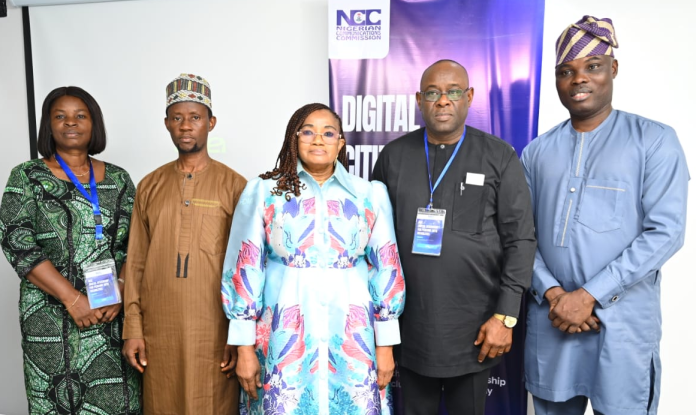
From the left: Dr. Adekola Oluwafunmilayo, Director, Monitoring Orientation and Evaluation, Lagos State Office for Disability Affairs, LASODA; Akeem Olayiwola, Assistant Director, Lagos State Ministry of Innovation Science and Technology (MIST); Helen Obi, Director, Digital Economy, Nigerian Communications Commission, (NCC); Michael Idah, Country Programme Manager, Christian Blind Mission, (CBM), Abuja office; Lateef Alani, Director, Head of Unit E-Government, Project Management Office, MIST


The Nigerian Communications Commission (NCC) has trained over 100 Persons with Disabilities (PWDs) in Lagos State on digital citizenship, cybersecurity, data protection, and assistive technologies, as part of its drive to ensure that disability does not exclude Nigerians from opportunities in the digital economy.

The training, themed Empowering Persons with Disabilities through Digital Citizenship for an Inclusive Digital Economy, occurred from September 9 to 10, 2026. The digital citizenship training for PWDs exposed the participants to digital foundations, internet and digital communication, cybersecurity basics, data protection, assistive technologies and responsible participation in the digital space.

For most of the PWDs, the programme changed their perception about their own safety, independence, and place in an increasingly digital society. It taught them how to protect their personal data, identify giveaways of online scams and avoid disclosing sensitive information to unknown persons online; others discovered accessibility features, including speech-to-text tools, that could make everyday use of their mobile devices easier and more independent.

The programme also addressed the social realities faced by PWDs, including discrimination, helping them to understand that some negative attitudes towards disability stem from ignorance and ‘’should not define their confidence, abilities or participation in society’’.

The Executive Vice Chairman and Chief Executive Officer (EVC/CEO), NCC, Dr Aminu Maida, said the initiative reflects the Commission’s commitment to creating a digital Nigeria in which PWDs have the skills and confidence to participate in the digital economy.

Maida was represented by the Director, Digital Economy Department, Helen Obi.  ‘’Digital citizenship goes beyond operating a smartphone or computer; it encompasses the knowledge, skills and responsible behaviours required to participate safely and meaningfully online, protect personal information, recognise scams and misinformation, safeguard one’s digital identity, and understand digital rights and responsibilities,” Maida said.

He noted that technology could be particularly transformative for PWDs by removing barriers to education and employment, supporting entrepreneurship and remote work, improving access to information and public services, and promoting greater independence through assistive technologies.

According to him, the Commission’s objective is ultimately to build a Nigeria where disability does not determine whether an individual can obtain an education, access public services, secure employment, start a business or contribute productively to society.

“You are not merely beneficiaries. You are important participants and contributors to Nigeria’s digital economy. Your talents, ideas, businesses, and aspirations have value, and technology can help take them further,” Maida told the participants.

The Lagos programme was part of a broader NCC initiative to provide digital skills training for PWDs in Nigeria’s geopolitical zones. Maida said the initiative was built on the Commission’s existing interventions to expand digital access and inclusion, including its e-accessibility project, which provides ICT tools and assistive technologies to institutions supporting PWDs.

He also highlighted the NCC’s support for research into assistive technology, including an assistive walking-stick prototype for blind and visually impaired persons, and the fourth NCC Hackathon, themed “Technology without Barriers,” which encouraged innovators to develop solutions promoting accessibility and inclusion.

The principle behind these interventions is to use digital technology to create opportunities, not barriers. Maida said connectivity alone would not deliver meaningful inclusion unless Nigerians also possessed the knowledge and confidence to use technology safely, responsibly and productively.

“The NCC remains committed to promoting connectivity, digital skills, accessibility, online safety and meaningful participation, to build a digital Nigeria where PWDs can learn, work, do business, communicate and access services with dignity and confidence,” he said.

He called for stronger collaboration among government institutions, regulators, technology companies, service providers, development partners, civil society, and organisations of PWDs to ensure accessibility is incorporated from the outset in the design and deployment of digital products and services.


How can I terminate the irritating rat trying to access my bedroom and ruin my peace?  

0


Who will protect me from the many rats loitering around my life? A few months ago, a member of our extended family sold me a junkyard car, and I have spent scarce funds repairing it. Then a government official taxed my start-up business more than it earned.

Oh, I have not told that story. I will tell the story soon after I have overcome my present predicament about my house rat posing as a real estate agent.

God knows what he told the estate owner that prompted the owner to think adding decorative chalk, or is it plastic of Paris, to the ceiling is the tenants’ benefit.

Now, the rat sent me a message. He requested access to my bedroom because a mason would be visiting to add some blocks to the air conditioning vents in our four bedrooms, ‘because you do not use the spaces.’’

He sent the message on the house’s WhatsApp platform, and one fiery tenant replied in a dismissive tone. Then the rat sent the message to individuals’ WhatsApp. No one replied to this rat.

This same rat had been loitering around the compound in the name of supervising the renovations in one of the vacated flats upstairs. He did not deem it necessary to replace our old prepayment metre that is about to expire. Is he waiting for the day our rent expires, eh?

This rat does not have an iota of care for the occupants except how to fleece them in the name of a rent increase. He knows the higher the rent, the higher his fees, but he is doing this to the detriment of my peace.

My live-in doctor does not have the time, as he is on the campaign train. I am alone with my remote business. I am not ready to relocate now. I do not even have the funds. If this rat does not quit playing games with my heart, I might have to rent the service of a rat terminator.

I need a rat terminator.

Can you help me?

————————————————————————————-Sarah’s Demons is written by an advertising executive who works and lives in Maitama, Abuja. Responses to her diary should go to contentchef@applesauce.ng

Why no fintech or bank can successfully build a super app in Nigeria

0


If Tony builds one, Jim will build his own.

Well, do not run ahead of yourself. An app that does everything for you is a super app. You remember the app for texting. Shopping. Video calls. Games. Friends. Family. Fashion. Football. Casino. You pay for rides, food, bills, and cinema using a single wallet.

A super app gives you a single login.

A single password.

A single email.

A single account.

We do not have a super app in Nigeria. Even if Alipay berths here, it will fail. If WeChat comes here, it will fail. If you build one, it will fail. If you can build it, call me.

On the one hand     

Do you know why we do not have a super app? Our culture does not allow it. A silo culture has held us captive. A silo legacy has held us bound. For instance, if you create a machine that rides on water, I will fragment your market by replicating the machine. That is our culture. We do not support innovation. We copy innovation. A friend discussed with me recently why Nigerians do not succeed together abroad.

On the other hand

He noted that the Pakistanis, Chinese, and Israelis succeed together abroad. They have a community that builds together, not one that builds separately. It adds up. Nigerians do not have a ‘’togetherness’’ culture. That is the reason we do not have a bank as big as Discovery Bank. A fintech that is as big as Ant Group. We like to outdo each other instead of supporting one another to build something massive. We do not have one super fintech firm. We have fragmented fintech firms, doing the same thing or slightly different things.

In the long term

For instance, we have the Dangote and Rabiu cement competition. We have the Fugaz Bank rivalry. We do not have a super app. We have many apps jostling to become super apps. None of the apps has 200 million daily users and is owned by one company. Our silo culture will hinder it. Our me-too ego will dice the market. Let us imagine it.

This is a mere imagination. Let us imagine this: If all our banks are one bank, how many customers can that one bank attract? If all the multiple apps become one super app, how many customers do we get? If the myriad of fintech firms are one, how many innovations do we get?

Our culture will emerge and say, hang on, who will own the one bank, the one super app, and one super fintech? However, I would rather be a cleaner of a super app with 1 billion monthly active users than be the owner of an app struggling to keep afloat in a fragmented market.

If a fintech builds an app and sustains it until it becomes a super app, what will stifle its growth is waiting already. Its name is Slow. Slow internet. Slow regulation. Slow collaboration.  Instead of collaboration, you will get ‘’app-wagon’’.

If Ikem builds a super app, you will not use it because Ikem hails from Nsukka.

If Sola constructs one, you will not use it because Sola is an Igbajo boy.

If Iyin promotes it, you will not use it because Iyin is a Nepo boy.

If Tony builds one, Jim will build his own.

If Segun builds one, Abu will not rest until he finds a way to build one.

Have you wondered why all super apps are in Asia?

In the short term

I have 10 apps. I need a super app. I do not need to download separate apps for every task.


Rarzack Olaegbe, the Content Chef at Applesauce, also produces The Fintex Show on Nigeria Info 99.3 FM and can be reached at rarzack@applesauce.ng

Let’s share infrastructure: ipNX urges players to share and accelerate Nigeria’s broadband plan

0
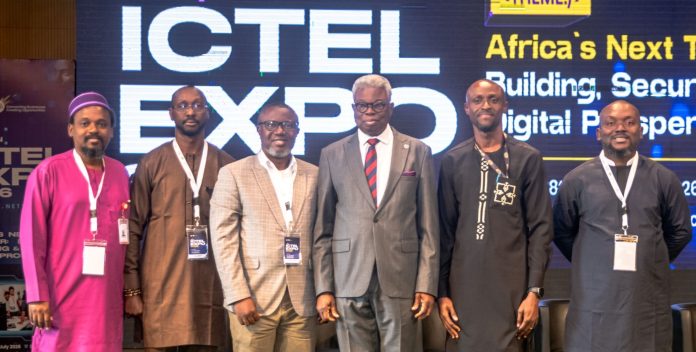
From the left: Oluwaseun Oluboyo, Chief Technology Architect, ipNX Nigeria; Oluseyi Lala, Divisional CEO, ipNX Business; Segun Okuneye, ICT Chairman, Lagos Chamber of Commerce and Industry [LCCI], & Deputy Director, Strategic Business Initiatives, ipNX; Engr Leye Kupoluyi, President, LCCI; Awa Kalu, Senior Manager, Fibre Sales Development, MTN Nigeria & Obinna Adumike, Head, Converged Digital Infrastructure for Africa, Open Access Data Centres at event in Lagos


”If one operator has already deployed fibre along a route, there is little value in having multiple operators excavate the same corridor to install parallel infrastructure”.

IpNX has urged stakeholders in the telecommunications industry to collaborate and adopt open-access infrastructure models to close Nigeria’s connectivity gap and increase broadband penetration.

At the first panel of the Lagos Chamber of Commerce and Industry (LCCI) ICTEL expo themed “Broadband, Fibre and Telecoms Infrastructure: Solving Nigeria’s Connectivity Gap”, the stakeholders dissected hindrances to broadband expansion and offered solutions to improve digital connectivity.

The Divisional CEO, ipNX Business, Oluseyi Lala, highlighted the economic realities of broadband deployment, particularly in underserved and low-density communities. He said deploying broadband infrastructure ”is capital-intensive.”

“The cost of building infrastructure, providing reliable power, transporting equipment to remote locations, and maintaining networks in difficult terrains significantly impacts deployment economics. These challenges become even greater in low-density environments”, Lala also noted that while Nigeria is progressing towards broadband penetration targets, ”improving the quality of broadband services must receive equal attention”.

“Achieving Nigeria’s broadband ambitions will require more than fibre alone. We need to leverage both fibre and wireless technologies, encourage greater collaboration among operators, and embrace infrastructure-sharing models that reduce unnecessary duplication of investments.”

He stressed that competition within the industry should increasingly focus on service innovation, customer experience, and quality of service, not duplicating physical infrastructure.

“If one operator has already deployed fibre along a route, there is little value in having multiple operators excavate the same corridor to install parallel infrastructure. We should instead explore innovative infrastructure-sharing models that optimise investments and accelerate network expansion.”

The panel also examined broader structural challenges affecting broadband deployment across the country, including the limited implementation of Right of Way reforms by state governments, multiple layers of taxation, security concerns, power costs, and regulatory complexities.

Head of Converged Digital Infrastructure, Africa, Open Access Data Centres, Obinna Adumike observed during the panel session that Nigeria’s geography presents inherent connectivity challenges, noting that submarine cables land along coastal regions while extending connectivity inland requires substantial additional investment.

Adumike reinforced the need for operators to embrace infrastructure sharing, pointing out that the model has already proven successful globally.

“We should not continue to duplicate fibre infrastructure,” he said. “Open-access and shared infrastructure models make network expansion easier, reduce costs, and improve access. This is not a new concept. The majority of submarine cable systems were built through joint ventures and shared investment models. Nigeria should adopt approaches that work for our local operating environment.”

Engr. Gbenga Adebayo, Chairman of the Association of Licensed Telecoms Operators of Nigeria (ALTON), called for protection of telecommunications infrastructure and stronger consequences for its damage.

Engr Adebayo reiterated the need to define an equitable contribution structure for infrastructure sharing models to ensure that early investors are not unfairly disadvantaged.

Where do you belong in the social media arc?

0


210 million people are addicted to social media globally

He was inseparable from his phone. For five years. He had no conversation with his wife and children. For five years. He was addicted, not to his phone, but to social media apps. His marriage was at a breaking point.

Then, his mother-in-law intervened before his wife could file for divorce. A caller shared this pathetic story on the Fintex Show, which I produce on Nigeria Info 99.3 FM every Monday.

All the radio callers had the same stories of social addiction. They are hooked. They cannot get off. One caller lost his wife. Another lost his job. One lost his sanity. One caller, a pastor, shared how his wife regularly scrolls through her phone in church while he is preaching. Every Sunday. His wife is addicted. Are you a social media addict? I am not a therapist. Do not expect any counselling here.

On the one hand

The social media business has been through the grinder lately. Meta, the owner of Facebook and Instagram, is facing a series of increasingly dramatic lawsuits. This week, Meta settled a history-making case.

It agreed to pay around 18 billion dollars [N14 trillion] to settle a lawsuit that claimed it made its apps addictive for children, ‘’even though the firm knew it would hurt people’’.

On the other hand

About 210 million people are addicted to social media globally. 34 million social media addicts reside in the United States. That is 10% of Americans. Maybe the changes Meta agreed to make to its platforms could tackle social media addiction. Maybe.

In the long term

For instance, Meta has agreed that users under 18 will get a mandated social media bedtime that disables the app. Besides, some features [which psychologists say are bad for self-esteem, such as beauty filters] will be hidden. However, according to reports from Tech Coded, the biggest news is ‘’kids will be able to turn off the algorithmic feeds on Meta’s apps’’.

Purists have said that the content recommendation systems have turned Instagram and other social media apps into a digital casino. Meaning: you cannot stop using them. As a digital casino, it could ruin your life. As the story above shows, social media addiction is real. You cannot overemphasise the stress level it generates.

From my conversation with some experts, there is a psychological and technological angle to this addiction. If you are suffering from low self-esteem, social media will turn you into a narcissist.

Facebook’s beauty filter feature is your artist. If you are shy and cannot hold a conversation with a group at a party, your escape route is a social media app. Do you want to ignore some friends and be lost in an unreal world? Plug into a social media app. However, with the option to disable Facebook, the internet and social media will change forever.

However, this does not mean social media is safe. Facebook will be here. Instagram will be here. Snapchat will be here. Where do you belong in the social media arc now? This is the beginning. No one knows where, ultimately, it will stop.

In the short term

Digital casinos and social media addiction are harmful.


Rarzack Olaegbe, the Content Chef at Applesauce, also produces The Fintex Show on Nigeria Info 99.3 FM and can be reached at rarzack@applesauce.ng

Now that Uber has left Nigeria, who will drive me to amala joint in Lagos?

0


I have a phobia for Lagos’ traffic, and this is a genuine fear, as I grew up in the villa, not in Lagos. Therefore, experiencing the endless traffic for the first time in the 1990s filled me with anxiety. That anxiety has not left me. My Uber driver, let us call him Mr G, had helped with my Lagos commute. Mr G was my handbag. He was always available at the airport whenever I arrived in Lagos for business.

Mr G would park his clean car quietly, as if he were my personal driver and wait until I was done with my business. He would guide me to where to shop for lingerie in the heart of Lagos. What is running through your mind? No. Not on your grave! My doctor friend thought about the same thing, but I told him to forget it. To do what with a stranger? I am not that low and horny.

Anyway, while my doctor friend and I attended Dirty December in 2025, Mr G was our driver. He drove us to a place where we ate hot, spicy amala with assorted meat. He had become a member of the family. He enjoyed the delicacy, too. Spent and tired, he drove to our hotel and left for the night. He understood my itinerary, and he was back the following morning, fresh and early. His promptness enabled me to meet my appointment on time. Then he would wait. Calmly. Then he spoke English, Efik, and Yoruba. He told me his story.

Raised in Ikot Ekene by a Calabar mother who married an Igbo soldier who hailed from Enugu but lived in Lagos before the civil war, Mr G had some life experiences. He did not choose to drive Uber taxi. Uber taxi chose him. The Covid-19 pandemic happened to all of us, but it consumed him. He lost his job, and then his wife eloped with another man. A friend helped him with the Uber contact. He was reluctant to take it, but he did, and we met. Knowing him was a beautiful experience.

Now that Uber has exited Nigeria and Uganda, who will taxi me to the amala joint again?

————————————————————————————-Sarah’s Demons is written by an advertising executive who works and lives in Maitama, Abuja. Responses to her diary should go to contentchef@applesauce.ng