Friday, November 20, 2026
Home Blog Page 14

Glo, 9mobile and others suffer losses after the NIN exercise

0

Glo, 9mobile and others have suffered huge losses due to unverified NINs after the National Identification Number (NIN) exercise. 

The latest data from the industry regulator, the Nigerian Communications Commission (NCC), showed that the huge loss was driven by two of the operators, Glo and 9mobile. 

Glo and 9mobile shed massive weight due to unverified NINs during the exercise that closed on September 14.

At the end of the verification of the NINs linked with mobile SIMs, the operators experienced a sharp drop in the subscriptions database: MTN, Airtel, Glo, and 9mobile lost 64.3 million subscribers.

Globacom dropped from 62.1 million active subscriptions as of March to a low level of 19.1 million subscriptions at the end of September. This operator lost 43 million subscriptions.

Recently, the Executive Vice Chairman of the Nigerian Communications Commission (NCC) Dr. Aminu Maida declared all mobile lines in use in Nigeria have been linked with NIN following the conclusion of the implementation of the federal government’s 2020 policy of linking every phone number to a NIN in September.

“There is no phone number that we cannot associate with a verified NIN. Not just a number, but a number that has been verified. 

“If this phone number is involved in fraud or any crime, I can now authoritatively say, based on the NIN linked to it, this is the person who is using that phone number,” he said at the 2024 annual corporate governance conference held in Lagos.  


The naira appreciates by 0.07% against the dollar at the official market.

0

The Naira closed the week stronger on Friday at the official market, trading at N1,600 to the dollar. Data from the official trading platform of the FMDQ Exchange revealed that the Naira gained N1.20.

This represents a 0.07 per cent gain when compared to the previous trading date on Thursday when it exchanged at N1,601.20 to a dollar.

NAN reported that the total daily turnover increased to 284.93 million dollars on Friday up from 230.99 million dollars recorded on Thursday. At the Investor’s and Exporter’s (I&E) window, the Naira traded between N1,682 and N1,589.82 against the dollar.

People didn’t believe Africa could be a source of innovation: how the continent holds the key to future drug research.

0

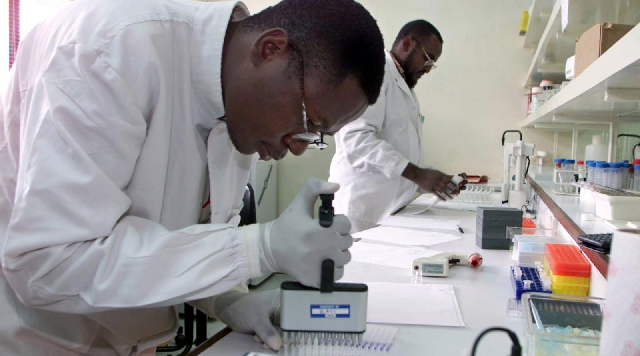
Africa has the greatest variety of human genes anywhere on the planet, but the world is failing to capitalise on it, according to one of the continent’s leading scientists, Prof Kelly Chibale. He is determined to change that. He believes the birthplace of humanity could hold the scientific key to its future.

About 18% of the global population lives in Africa—a proportion set to rise over the next few decades—and it accounts for 20% of the global disease burden. But only 3% of clinical trials take place on the continent, and most of those are in just two countries: South Africa and Egypt.

“I would argue that if you really want to have confidence in a clinical trial, it must start in Africa. Why? If it works in Africa, there’s a good chance it’ll work somewhere else because there is such huge genetic diversity,” says Chibale, of the University of Cape Town.

Genetic differences affect how drugs are processed by the body. They might pass through more quickly, meaning a standard dose is not enough, or more slowly, risking a toxic overdose. Testing a drug in people with a wider variety of genes, rather than the historic standard of a Caucasian man, means the frequency and amount of a drug given to patients can be better calibrated for everyone before it gets to market. Some global regulators now require genetic diversity in trials before they will approve medicines.

He says it is important that encouragement for more Africans to get involved comes from people such as him. There is deep mistrust in many communities because of medical abuses under colonial and apartheid regimes. If calls to participate come from non-African outsiders, people will think “you’re trying to use us as guinea pigs”, he says. “People have been traumatised. But if I say it – because I come from there and I know this is the truth. Who says it, matters?


The 2023 recipient of the Royal Society’s Africa prize, Chibale was in the UK at the institution earlier this month to give a lecture on tailoring medicines to African populations. He leads the H3D research centre at the University of Cape Town, a unit he founded in 2011, which is working on drugs to fight diseases such as malaria and tuberculosis and combat antimicrobial resistance – conditions that predominantly affect people in Africa.


Source: Kat Lay/theGuardian.org

NASENI, Imose Rollout Made-in Nigeria Laptops, Tablets.

0

The Made-in-Nigeria laptops and tablets have been rolled out by a duo of the National Agency for Science and Engineering Infrastructure (NASENI) and Imose Technologies, a Nigerian company. The 14-inch laptops and 10.5-inch tablets carry the NASENI brand name.

NASENI said the move aligns with its mission to drive indigenous industrialization, local content and promote job creation in fulfilment of President Bola Ahmed Tinubu’s Renewed Hope Agenda, which emphasizes local content development and cooperation amongst economic players in order to revamp the economy.

The NASENI Zedon X-Pro laptop comes with a Core i5 processor and a 14-inch screen which offers a blend of power, portability, and practicality, making it an attractive choice for a wide range of users including students, professionals, or anyone who needs a reliable laptop or tablet on-the-go.

Similarly, the 10.5-inch tablet strikes a balance between portability and functionality, making it an ideal choice for various use cases like document editing, drawing, video streaming or
gaming.

The Executive Vice Chairman/CEO of NASENI, Khalil Suleiman Halilu, said the partnership is “a strategic move which aligns with the agency’s 3Cs principles of collaboration, creation and commercialisation to work with like minds. That is the reason we are working with Imose Technologies to bridge the technological gap by reducing importation bills. Chairman of Imose Technologies, Osayi Izedonmwen said, “For ten years, we have had a relentless focus on solving uniquely Nigerian problems by championing the local manufacturing of mobile and computer devices to improve lives and transform local institutions.”

Innovation bill and tax incentives to boost startup growth in Lagos.

0

A bill that will boost start-up growth and address the perennial challenges of registration, incorporation, and patenting is in the works. The Lagos State government said the bill would make the state an attractive destination for startups due to a series of initiatives aimed at fostering innovation and improving the business environment. The bill offers tax incentives and other benefits to startups operating within its borders through the Innovation Bill. Olatunbosun Alake, the Commissioner for Innovation, Science, and Technology, said the bill would streamline the processes, and provide startups with tax benefits, address the challenges faced by startups in areas such as registration, incorporation, and access to patents. In addition, the state is also working on an ease-of-doing-business policy to simplify the incorporation and registration process for businesses and provide access to government procurement opportunities.

Netflix of the village: The start-ups targeting India’s $200bn rural market

0

It’s no secret that the bulk of India’s vast 1.4 billion population still lives in its 650,000 villages. And yet, to date, this group has largely been ignored by the country’s booming tech start-ups, who tend to focus their attention on wealthier urban consumers.

‌

That’s now changing, however, as more founders and investors put their money into companies geared towards addressing rural India’s needs.

‌

I saw that for myself this month while visiting the sets of the film Batta in a small hamlet in the north-western state of Haryana. Batta is not a Bollywood extravaganza for a pan-Indian audience. It’s a small regional movie produced by a fast-growing streaming platform called Stage, that calls itself the Netflix of India’s rural dialects.

‌

Stage tailor-made content for largely underserved provincial audiences, keeping hyperlocal tastes, dialectical quirks and cultural syntax in mind. There are 19,500 different dialects in India and Stage has identified 18 that are spoken by a large enough population to merit their own film industry.

‌

For now, the streaming app serves only two languages, but already has three million paying subscribers and is on the verge of closing a funding round from an American venture capital firm to expand into other territories.

‌

India’s fast-growing economy has been a hotbed for tech innovation, birthing several dozen unicorns in the last decade. (Unicorns are defined as privately held start-ups worth more than $1bn.)

‌

But barring a few agritech players, these firms are largely built for the “top 10%” of urban Indians, according to Anand Daniel, a partner at Accel Ventures, which has funded some of the country’s most successful start-ups including Flipkart, Swiggy and Urban Company.

‌

However, start-ups like Stage or Frontier Markets – a rural e-commerce player that operates in remote villages with less than 5,000 residents – exemplify the rapid change that is underway, as newbie companies hunt for growth in the hinterland.

Better digital payments infrastructure is facilitating access to new markets for enterprises.

0

Saying that small and medium-sized enterprises (SMEs) are the backbone of economies in East Africa is an understatement. SMEs make up the largest part of all registered entities in nearly every industry and sector in most East African countries, averaging 60% to 90%, including micro-enterprises.

As the region continues to experience significant progress and development, the SME ecosystem plays a crucial role in creating employment opportunities, encouraging innovation and entrepreneurship, and diversifying economies.

However, only a few of these SMEs will grow into larger-sized firms or expand their reach into markets beyond the area they operate. This is mainly due to the constraints they face that limit their ability to expand and scale their business, such as inadequate financing and access to investment and financial services and insufficient integration into international capital markets.

Historically, the finance sector in East Africa has shown a preference for traditional banks, which have been restricted in terms of geographical reach and other factors. This has resulted in limited access to financial services for many merchants in the region, hindering economic growth and development. But this is changing.

The emergence of an increasingly robust digital payments infrastructure in East Africa presents an incredible opportunity for businesses to scale by opening up access to new markets in the region, across the continent, and around the globe.

Africa accounts for 70% of the world’s $1 trillion in mobile money value, mainly due to the boom in digital instant payment solutions and inclusive interoperable payment systems across the continent. East Africa makes up the largest mobile money market on the continent, with transaction values worth $491 billion for 390 million registered accounts in 2022.

These booming, secure, efficient, and interconnected digital payment systems are transforming the business landscape by breaking down geographical barriers and broadening enterprises’ ability to collect and make payments to and from anywhere in the world.

Trailblazing fintech firms are revolutionising the digital payments space and helping enterprises solve their revenue collection and payment challenges, reducing operational costs and leaving them free to focus on operational efficiency.

Now, SMEs can scale their existing services into new African and global markets by capitalising on the growing digital payment infrastructure without the need to build their payment infrastructure or platforms. With just the right payment partner, businesses can expand into new territories by establishing a virtual financial presence, helping duplicate their services in the new market.

By leveraging the shared infrastructure and resources from their payment partner, enterprises can now mitigate risks while gaining access to local knowledge and networks.

The increased access to new markets for enterprises, facilitated by the digital payments space, enables their ability to scale up, compete with larger firms, and increase their growth potential.

By scaling effectively, East African SMEs can keep up with customer and market demands, improve their efficiencies, and find new avenues of revenue growth without impediment from a lack of resources or infrastructure.

Can you go on a Fintech Detox?

0

You need to detoxify. Detoxification is the medicinal removal of toxic substances from your body. The process eliminates harmful compounds accumulated over time due to environmental pollution, unhealthy diet, or substance abuse. Detoxification uses various methods. Diet. Herbal remedies. Intermittent fasting. Therapy. Research says the goal is to support your body’s natural detox systems: the liver, kidneys, and digestive tract to cleanse and purify your body.

READ https://applesauce.ng/experts/columnists/fintech-bank-noahs-ark-and-sexy-toys/

On the one hand

A digital detox detaches you from social media platforms and electronic devices: mobile phones, laptops, or tablets. It is a digital reset. It forces you to be present. The idea is to break the cycle of dependency on digital devices. The overall effect can lead to improved mental health. Better sleep. Meaningful interactions with others. I observe digital detox every week.   

On the other hand

A Fintech detox can be as short or as long as you want. Recently, I had a 72-hour Fintech detox. I was refreshed. You may not even think about it. But in the new dispensation, you may go days or weeks without engaging Fintech in any form. It may be a major reset. It is up to you. For me, I took three days off and shunned engagements with Fintech. I took a break from Fintech. I did not use Fintech products, even to receive and send funds. Can you try it?

In the long term

The pandemic has changed the electronic payments landscape and hastened the adoption of instant payments as people switch to electronic channels for funds exchange. The Covid has transformed our lifestyle. Electronic payment is our world. The effect of the pandemic has pushed all of us to worship at the Fintech altar. We have moved from cash to card, from bank branch to virtual payment and from virtual to instant payment.

Then many Fintech start-ups emerged to oil the path of worship. A report from ACI Worldwide and Global Data, a leading data and Analytics Company, and the Centre for Economics and Business Research says the volume of real-time payment transactions in Nigeria’s economy will hit 8.9 billion in 2027 from 5.1 billion in 2022.

NIBSS Instant Payments (NIP) is Nigeria’s real-time payment system. NIBSS rolled out NIP in 2011. It is an account-number-based online, real-time inter-bank payment solution. The banks, micro-finance banks, and mobile money operators support NIP. You can use it via the Internet, mobile banking, bank branches, kiosks, USSD, PoS terminals, and ATMs. This has helped NIP to achieve high adoption and usage rates.

With Fintech detox, you have eliminated phishing, identity theft, and fraud because you rely on cash and not a card. Your spending is minimised. You are not compelled to spend money because you have prepared for all your needs in advance. No mobile banking. No USSD. No online shopping.

You will not send money via electronic means. You will rely on cash for your purchases. You will not register to complete any transaction. You’d reduce screen time. In exchange, you will have productive time. For instance, if you spend an average of six hours online per day, that is about 180 hours per month. You can transfer this to improve your life.

By disconnecting from Fintech, and by extension digital, I did more. I concentrated more. I got more out of life. I finished personal projects on time. Maybe you can work at it too. In the process, you could pick up a new skill that could lead to a promotion. Or get a raise at work. Perhaps you can start a side hustle for some extra income.

When I discovered Fintech detox, I was on a digital detox. I had restricted access to my mobile phone and laptop. The devices were in my limo’s trunk at a retreat. Yes, because I had no access to my devices, I had no access to the Fintech menu. That was the ha-ha moment. The next time you need more hours to work on a project, consider a digital detox. It will lead you to Fintech detox. No screen time equals Fintech detox. Fintech detox means working offline.

In the short term

With Fintech, you need a device to pay bills, make transfers, and shop online. Start with a digital detox. Then graduate to Fintech detox.

Can technology influence your behaviour and make you a stalker?

0
Young Woman Texting For Help On Mobile Phone Whilst Being Stalked On City Street

Have you fallen in love lately? If you have not been in love, please stop reading. If you were in love and you have been jilted you can relate. As you would know, when you are in love, you have only one story: A love story. Nothing else matters. Nothing else would do.

The world can end and you would not even blink. Nothing else makes sense to you. You are the most sensible person on earth when you are in love. Throw in technology. Your love story takes on a different flight. You would become a different animal. You would stalk your lover. You would track the person’s movement. You would video their actions. You would send unwarranted emails, pictures, and messages. That is how technology influences your behaviour.

On the one hand

In the age of artificial intelligence, your love would become dangerous. To test this thought, Kaspersky commissioned a survey recently. The interview polled 21,000 people. The result revealed shocking data about the extent of digital abuse. About 4,830 people (23%) of respondents had experienced some form of online stalking from their new date.

Aside, 7,140 people (34%) of respondents would conduct due diligence on the new love. These individuals would Google their lover’s name and activities. Background checks the person. Look at the social media accounts. To ensure the information shared tallies. Also, about 8,610 individuals surveyed (41%) admitted to doing so when they started dating someone.

On the other hand

This study discovered what most people would do in the name of love. Some would protect themselves to find love. According to 1,000 people interviewed in 21 countries, online daters are keen to take steps to protect themselves in the quest for love. Even with these love-struck behaviours, people are still vulnerable to an alarming rise in stalking and abuse. This abuse stems from risks posed by location settings, data privacy and oversharing.

In the long term

David Emm, Principal Security Researcher at Kaspersky explained that the Internet of Things, or connected world is brilliant and offers myriad possibilities. ‘’But with opportunity comes threats and one of those threats of a connected world is the ease of access to traceable data which leaves us vulnerable to abuse.”

Emm said the victims of stalking are not to blame for the incidents. ‘Unfortunately, there is still a burden upon them to take steps to minimise risks. I think it’s great that people are taking steps to verify identities online, but I would encourage people to stop and do a quick check on any information, passwords, or data they share, to think through how that information could be used in nefarious hands.”

Anyway, the types of abuse are varied. Over 390 people (39%) of respondents reported some form of violence or abuse from a current or previous partner. Others have received unwanted emails or messages. About 130 respondents (13%) had been videoed or photographed without their consent. Many of the respondents admitted to being tracked and stalked.

The majority of the respondents are female: They had experienced some form of violence or abuse. Compared to male respondents (42% versus 36%). More of those currently dating had experienced violence or abuse compared to those in a long-term relationship (48% versus 37%). Many of the respondents are worried about the prospect of online stalking.

Emma Pickering, Head of Technology-Facilitated Abuse, and Economic Empowerment, Refuge, said navigating online dating and virtual spaces can be challenging and social media and dating apps must implement verification processes, to help confirm that users’ profiles match their actual photos.

‘To my knowledge’, Pickering said, ‘Bumble is the only dating app currently using this level of verification. I would love to see others adopting similar safety measures. Additionally, safety guides and resources should be readily accessible online in multiple languages, ensuring that vulnerable individuals have the necessary support without needing to register for an app.”

In the short term

The UK’s Online Safety Act has set a precedent by regulating platforms to protect users. We need the same regulation in Nigeria to guide against online stalking and technology-facilitated abuse. That way, anybody can fall in love anywhere, anytime, anyhow.

Coco is dying in instalment!

0

The inevitable will happen. When it does, how prepared are you? Two years ago, you were unprepared for the present epic movie. Even the ‘seers’ were unaware of the screenplay. The stage was not even set then. Then, suddenly, the movie is in production. Light. Camera. The subsidy is gone! Yes, it is gone for many people. To the extent that, job losses have tripled. Many homes cannot light their cookers.

The cost of refilling the gas cylinder has soared. Kerosene is in hiding. Charcoal is on AWOL. Petrol is gallivanting. It is here today when the loading batch is ready. It is gone tomorrow when the batch is not loaded. No one can tame the bitch. Because of this liquid bitch, many car owners have commercialised their vehicles. This action brings ‘extra’ income into the family purse. It feeds the family. It keeps the light on.


On the one hand

Some die-hard Nigerians have refused to commercialise their cars. They enter commercial buses. Sitting pretty in their garages, their cars have become objects of admiration. To preserve the cash flow, they hit the road three times in a week. Yet, some cannot still feed their families. That is why Coco is dying.


On the other hand

The owner of Coco – a shepherd dog – was a staff of a defunct fintech startup. Since the demise of the business, life is topsy-turvy. This man has become a ghost. He comes home at night. He sneaks out before dawn. He pulled both ends. But the ends refused to meet. No, he is not lazy. He is a genius. Anyway, you know when it rains, it pours. His song is a lament.


In the long term

Coco’s owner was in a dreamland when the fintech company got funds from investors. The business was flying. The employees were in a high spirit. The fintech’s minimum valuable product (MVP) was out of this world. The efforts have paid off. All doubts were gone. Morale was high. The idea received backing and the goal was set.

While this fintech start-up thought it was starting up, the inevitable happened. One of the brains behind the idea japa! Others could not land the aircraft. It crashed. Promises were broken. Harsh words were spoken. And Cudjoe’s dream died.

You may not hear the background hum. Many of the fintech firms that crashed did not lose funds. Some lost faith in the drivers. Some lost partners. Some lost their heads. Some fintech firms that are flushed with venture capital money and promised to revolutionise savings are no more. Dreams die.

Cudjoe’s fintech firm was in that category. He could not fend for his family. He had applied for loans from every apps so much he could not apply again. He understands how the ‘parade’ moves. Running a loan app is not like getting a haircut. If you do not recover your loans from applicants, you are bleeding cash. Soon, you are dry. Soon, you are out.

When Cudjoe cannot feed his family, pay his children’s school fees, do you expect Coco to survive with the subsidy gone? Giant with shinning curls, her tongue dripped with spittle as she pulled at the leash whenever she was on her evening walk, Coco could not stand erect. She was a skeleton. She had been surviving on the generosity of neighbours who threw bones at her. The bones have stopped. The neighbours, too, need the protein.

In the short term

Yesterday, Coco slept. She did not wake up. The vet doctor could not revive her. Now, her pen is empty. Coco has died. That is the inevitable.