Friday, November 20, 2026
Home Blog Page 2

Menxtt Tech strengthens cybersecurity and digital assets for businesses

0


Menxtt Tech has emphasised the need for businesses, especially startups, to embrace cybersecurity solutions to protect their digital assets such as corporate information, devices, and online operations from cyber threats.

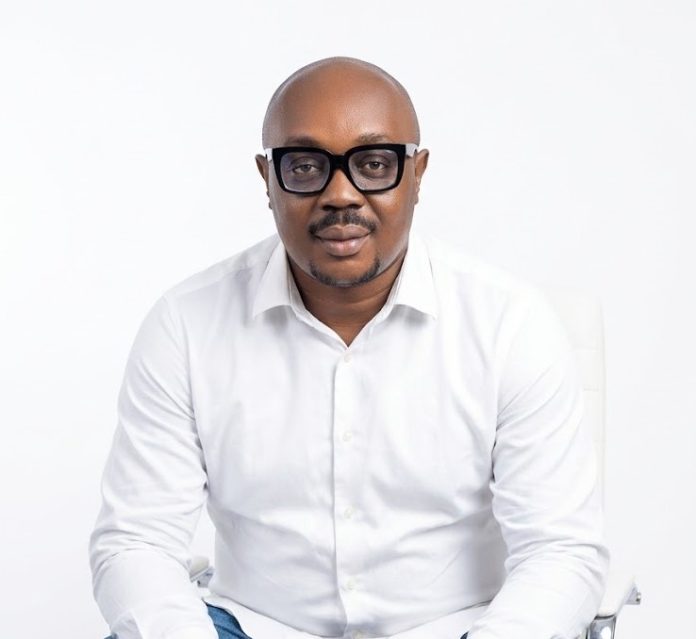
Anthony Emeka Nwosu, the co-founder of Menxtt Tech NG, said the company is focusing on bringing trusted technology solutions closer to Nigerian businesses at competitive prices, saying the changing nature of cyber threats means that businesses cannot afford to assume that they are too small or insignificant to become targets.

“Cyber resilience is important for every organisation, regardless of its size. A business can have just a few computers and still lose critical information or suffer serious financial and reputational damage if those systems are compromised,” Nwosu said.

As a Bitdefender solutions reseller, the company provides customers with access to a range of cybersecurity products designed for individuals, mobile devices, small businesses, and corporate organisations. He added that Bitdefender has established itself as a major global cybersecurity brand, offering protection against a wide range of digital threats while focusing on maintaining device performance and minimising disruption to users.

“We want to make quality technology accessible to individuals, startups, SMEs, and corporate organisations. Whether it is cybersecurity, document management, hardware or IT consultancy, our focus is to provide solutions that are reliable, practical and affordable,” he said.


NASENI to train and empower FutureMakers, host virtual hackathon, pitch sessions

0
EVC and CEO of NASENI, Mr Khalil Suleiman Halilu


The National Agency for Science and Engineering Infrastructure (NASENI) has commenced the FutureMakers-by-NASENI virtual hackathon and pitch sessions for 60 participants from the six geopolitical zones of the country.

The programme, organised by NASENI Innovation Hub, will hold the virtual hackathon from August 17 to 21, 2026, while the pitch sessions will occur from August 24 to 26, 2026. The pitch sessions will be live on YouTube and Facebook.

The virtual hackathon, a five-day virtual build sprint, will show 60 shortlisted innovators selected from thousands of entries received develop working solutions against their zone’s challenge statement, supported by technical facilitators and mentors. Innovators who advance from the hackathon progress to the pitch sessions.

The pitch sessions will feature advancing innovators presenting their solutions to a panel of judges and industry leaders and will be on YouTube and Facebook. Winners from each zone will win ₦1.5 million, ₦1 million and ₦500,000 each.

Also, the top six winners from each zone will pitch at the NASENI Invention Fest and stand a chance to win N5 million, a study tour abroad, and fully funded scholarships to two leading universities in Nigeria.

The Executive Vice Chairman and CEO of NASENI, Mr Khalil Suleiman Halilu, said, “FutureMakers Week is the culminating moment of the programme cycle, where months of outreach and selection turn into built solutions and backed ventures. Sixty innovators, six zones, six challenges: the programme is deliberately national in reach and local in problem definition.”

The Hub Manager, NASENI Innovation Hub, Busola Beckley Perez-Folayan, says “this talent pipeline is not a one-off competition. Winners gain SparkLab access, mentorship, training and scholarship pathways alongside the ₦5,000,000 prize. The virtual format widens access to innovators beyond Abuja and Lagos. This is a working demonstration of government-backed innovation infrastructure delivering for young Nigerians,” she adds.

The programme sits within NASENI’s mandate to move Nigeria from a consumer economy to a producer economy. Its defining feature is a zone-by-zone design: each of the six geopolitical zones works on a challenge drawn from its own lived reality, rather than a single national brief.

FutureMakers-by-NASENI is in collaboration with academic and ecosystem partners including MIVA Open University and the African University of Science and Technology (AUST), Abuja. The NASENI Innovation Hub is a member of the AfriLabs network.

Launched on December 11, 2025, FutureMakers-by-NASENI identifies, equips and backs early-stage Nigerian innovators aged 5 – 16, building technology-driven solutions to the development challenges facing their own regions, and connects them to NASENI’s engineering, prototyping and commercialisation infrastructure.


Digital infrastructure: NCC urges fibre protection during construction, as over 5,000 wires got damaged

0


The Nigerian Communications Commission (NCC) has called on road construction companies, contractors, engineers and other stakeholders to strengthen coordination and adopt preventive measures to protect fibre-optic cables during road construction, rehabilitation, and other civil works across the country.

The commission’s Executive Vice Chairman and CEO of the NCC, Dr Aminu Maida, called on builders at a workshop on the protection of fibre-optic cables, which was held at the National Counter-Terrorism Centre (NCTC), Office of the National Security Adviser in Abuja. He stressed that the nation’s drive to expand physical infrastructure should not undermine the digital infrastructure connecting Nigerians to information, services, markets and opportunities.

Maida said communications infrastructure has become a critical national lifeline, underpinning banking, government services, education, healthcare, commerce, security and emergency communications. He noted that damage to fibre infrastructure could disrupt essential services and impose high costs on citizens and the wider economy.

“To a machine operator on a construction site, it may appear to be one buried cable. To the nation, it can mean failed calls, stalled payments, interrupted services and missed opportunities. Nigeria must build the roads that connect our communities while protecting the fibre networks that connect our economy. We need both forms of infrastructure, and we need them to work together,” he said, pointing at the far-reaching influence of fibre cuts on individuals, businesses, and public institutions.

He said that more than 5,000 fibre-cut incidents were recorded in the first six months of the year because of road construction, excavation, and related civil works. He recalled that in February 2024, fibre cuts, including those caused by road construction, resulted in an almost network-wide disruption for one telecommunications operator, affecting millions of users for several hours and placing additional pressure on other networks.


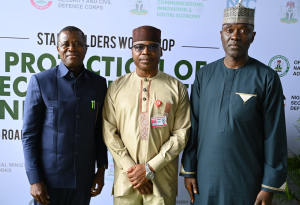
From the left: Rafiu Adeladan, Permanent Secretary, Federal Ministry of Works; AVM Effiom Ewa, Director, Directorate of Critical National Assets and Infrastructure Protection (DCNAIP), Office of the National Security Adviser (ONSA); Dr Aminu Maida, EVC/CEO, NCC at a workshop for stakeholders on the need to protect fibre optic cables during road construction held at the National Counter Terrorism Centre, Office of ONSA, Abuja recently

According to him, the challenge was not about assigning blame, noting that no road contractor deliberately seeks to disconnect a community, just as telecommunications operators do not intend to obstruct road construction. However, he stressed the need for a dependable system of early coordination among all stakeholders.

He noted that the Permanent Secretaries of the Federal Ministry of Works and the Federal Ministry of Communications, Innovation and Digital Economy had inaugurated the standing committee on the protection of fibre optic cables to develop practical coordination mechanisms before, during, and after road construction.

Maida disclosed that the committee’s membership was expanded to include representatives of the Office of the National Security Adviser, in recognition of the security implications of protecting telecommunications infrastructure, which has been designated as critical national information infrastructure, ”the infrastructure should be treated as national infrastructure and protected accordingly, with appropriate legal, regulatory and remedial consequences for damage, he added.

Therefore, the EVC urged operators, contractors, government agencies, regulators and security agencies to play their respective roles in preventing fibre damage, stressing that coordination must become an integral part of the planning and execution of relevant projects.

“Nigeria must build the roads that connect our communities while protecting the fibre networks that connect our economy. We need both forms of infrastructure, and we need them to work together,” he said, urging participants to use the workshop to develop practical measures that would make coordination standard practice rather than the exception.

The workshop forms part of ongoing efforts by the NCC and other stakeholders to institutionalise coordination mechanisms that will safeguard telecommunications infrastructure, minimise service disruptions and support Nigeria’s digital transformation agenda, and is expected to culminate in a framework for the protection of telecommunications fibre optic infrastructure during road construction and other excavation activities.

Airtel Africa launches Starlink Mobile in DRC, becomes first operator in Africa to introduce satellite-to-mobile service

0
Sunil Taldar, Airtel Africa CEO


The strategic partnership between Airtel Africa and Starlink in December 2025 has borne fruit, with the two entities launching a satellite-to-mobile service in the Democratic Republic of the Congo (DRC), marking the first commercial deployment in Africa.

The service enables Airtel customers with compatible smartphones to access connectivity in non-terrestrial areas wherever they can see the sky. DRC is the first Airtel Africa market – and the first country in Africa – where the service has progressed to commercial deployment.

To use the service, customers need a compatible LTE Android smartphone and either an active Airtel DRC data bundle or data roaming switched on. In the future, the service will be available on Apple devices.

The launch has reinforced Airtel Africa’s position as a pioneering telecommunications operator, with a strong record of bringing first-of-its-kind innovations to Africa, and demonstrated its continued focus on using technology to address Africa’s connectivity and digital-security needs.

Earlier, in March 2026, the partners successfully tested Starlink Mobile data and messaging services in Kenya.

Airtel Africa, a leading provider of telecommunications and mobile money services, has operations in 14 countries across sub-Saharan Africa, while Starlink is the world’s largest satellite-to-mobile constellation with 650 launched satellites.

Starlink product enables light-data apps, including WhatsApp messaging and SMS. Customers do not require specialised equipment or a separate device to access the service.

Sunil Taldar, Airtel Africa CEO, said the first-ever commercial launch of Starlink Mobile in Africa ‘’is a significant milestone for Airtel Africa through’’ its partnership with SpaceX.

‘’By combining Airtel’s terrestrial network with Starlink’s satellite technology, we are extending essential connectivity beyond the limits of conventional mobile infrastructure. The DRC is leading this important development, and the experience gained here will support the progressive expansion of the service across our markets, subject to country-specific regulatory approvals,” he added.

Also, Thierry Diasnoma, Airtel DRC Managing Director, explained that the commercial launch of Starlink Mobile ‘’is an important step in extending essential connectivity across the DRC.

”Our country’s size and geography mean that many people live, work and travel beyond the reach of conventional mobile infrastructure. This service provides an additional layer of connectivity, helping customers remain reachable, informed and connected even in areas where terrestrial coverage is unavailable,” he added.

The service will be valuable to people and organisations operating in remote areas, including transport and logistics operators, humanitarian organisations, health workers, farmers, mining operations and communities beyond the reach of existing terrestrial networks. It will also support access to essential communications during emergencies, natural disasters, and temporary terrestrial network disruptions.

Eligible customers can register through the MyAirtel App to receive free trial access to the service for an introductory 30-day period. Customers travelling to DRC and joining Airtel DRC can also register for the trial after activating an eligible service and downloading the MyAirtel App.

Following the introductory period, customers will continue accessing Starlink Mobile through eligible Airtel data bundles. The partners will develop the service, with additional capabilities expected as soon as the technology evolves and the necessary regulatory approvals are secured.

How to build fintech that matters

0


Life is a performance. If you understand this, you are on the way to delivering an excellent performance. Otherwise, you will struggle and compete with others, instead of competing with yourself. You are the performer.

An entrepreneur who understands this earlier in the journey would demonstrate the ability to build solutions for specific people. Rather than replicating business models from other markets. When you have successfully innovated the local arena, it is time to go global.

On the one hand

Building a successful startup does not have a date. The story of fintech startups that have become unicorns is a testimony. Some of them have been around for decades before attaining unicorn status. Others took less than a decade to achieve the same status. For instance, Interswitch versus Moniepoint versus Flutterwave versus others.

On the other hand

To build a fintech that matters does not require an army. It requires one thing. Trust. That is the currency. Because obsessions are rare. Ideas are common. We have nine leading fintech firms in Nigeria. These firms have a combined value of $10.6 billion. Of the total, Flutterwave stands at $3 billion. OPay at $2.75 billion. Moniepoint is about $1 billion. The Securities and Exchange Commission (SEC) released these figures.

In the long term

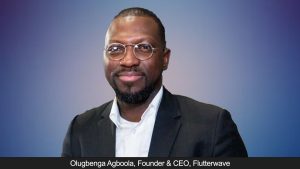
Olugbenga Agboola, founder and CEO of Flutterwave and I had an encounter recently in an unlikely environment. He had come to share business insights with intellectuals invited by the American Embassy under the YALI programme. I was invited. When Olugbenga, a.k.a. GB, concluded, we had a chat behind the scenes.

Olugbenga Agboola, Founder/CEO, Flutterwave

Our discussions centred on the theme he had spoken about, how to build something that matters. Meanwhile, he was to speak on ‘’building and scaling a fintech start-up’, but changed his mind when he walked into the full hall. He said: ‘’You need to scale globally. You trust locally. Why is money movement fragmented in Africa?’’ He did not answer the question. He explained that getting a ‘yes’ is an anomaly in raising funds, while getting a ‘no’ ‘’gives you the mental fortitude to scale through’’.

Before he built his firm, in seven years, he applied for a license six times. Each time he experienced a rejection, he applied for the same license again. His fintech firm has a presence in 30 countries. It has processed 40 billion dollars. It has democratised the Application Programming Interface [API].

‘’Learn what you want to do. You can become a student and have a domain expert in an area you want to play’’, he told the audience. In other words, he explained, ‘’you can get someone in the market you are interested in, pay someone to research the market of your interest, or get a co-founder in the country of your choice’’.

Why does this matter?

What is your niche? Is it digital payments? Stablecoins? Core infrastructure? Or regulatory tech? You need to understand that AI adoption is increasing. Besides, you must cultivate compliance and corporate governance early in your journey. This will open up the opportunities ahead. Growth is not enough. ‘’You must scale globally and trust locally,’’ GB said.

In the short term

To build a fintech that matters now and in decade​s, your trust quotient matters. How have you performed?


Rarzack Olaegbe, the Content Chef at Applesauce, also produces The Fintex Show on Nigeria Info 99.3 FM, and can be reached at rarzack@applesauce.ng


Blood beneath the soil in Nigeria’s hidden war for mineral wealth – By Blaise Udunze

0


Every day, the world watches Nigeria through a familiar lens in what appears to be a gory situation, especially in cases when the news headlines tell stories of farmer-herder clashes, bandit attacks, kidnappings, villages reduced to ashes or deserted by the dwellers, as thousands of Nigerians have been displaced across Zamfara, Plateau, Benue, Niger, Kaduna and Nasarawa.

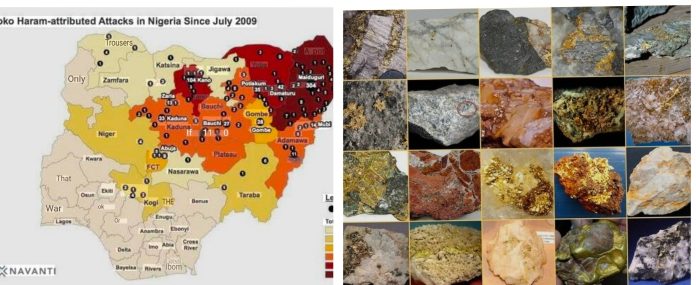
Subliminally, this is about to become a similarly ugly occurrence in southwestern Nigeria, which is fast becoming obvious if not nipped in the bud quickly. Recorded data have shown that bandits, Boko Haram, and others killed over 190,000 Nigerians in 17 years and displaced 3.7 million people.

A human rights organisation, the International Society for Civil Liberties and Rule of Law (Intersociety), in its fearful revelation has said that no fewer than 190,150 Nigerians have been killed by bandits, Boko Haram insurgents, and suspected armed herdsmen between July 2009 and March 19, 2026, as this call for concern.

The dominant explanations often point to ethnic tensions, religious divisions, climate change, shrinking grazing routes or weak security institutions. No doubt, those factors are certainly part of Nigeria’s complex security crisis. Yet another question deserves serious examination.

What if, in some locations, the violence is also serving another purpose? What if some of the territories experiencing repeated displacement are the same places sitting atop some of Nigeria’s most valuable mineral deposits? More importantly, if such a pattern exists, who benefits when communities disappear?

Of a truth, these questions are uncomfortable, but undeniably, they deserve careful investigation rather than dismissal. For ages, Nigeria has been naturally endowed, and it is estimated to be rich in enormous, significant reserves of gold, lithium, uranium, tin, columbite and other strategic minerals increasingly sought after in the global transition to clean energy technologies.

As international demand for battery minerals continues to rise, these resources have become far more valuable than they were only a decade ago. If one overlays publicly available geological information with maps showing persistent violence, some observers argue that striking geographical overlaps appear in several regions. Such overlaps alone cannot establish causation. Correlation is not proof of conspiracy. However, they raise questions worthy of independent scrutiny.

One issue attracting increasing attention and yearning for an answer is whether prolonged insecurity may inadvertently or deliberately create conditions that make mineral extraction easier.

Under Nigeria’s Nigerian Minerals and Mining Act 2007, mineral resources belong to the Federal Government, while mining rights are granted through licences and leases. Community engagement and land access are expected to form part of the licensing process, although implementation varies depending on circumstances. This raises an important policy question.

What happens when the communities expected to participate in those processes have already fled because of violence? Displacement changes the dynamics of land ownership, consent and access. While no evidence automatically proves that attacks are orchestrated to facilitate mining, the sequence of violence followed by renewed commercial activity in some locations deserves closer examination by regulators, lawmakers and investigative journalists.

In conflict studies, researchers have long observed that wars often generate economic winners alongside humanitarian losers. Could elements of Nigeria’s insecurity also be producing economic beneficiaries?

Reports over the years have documented concerns about illegal mining operations across parts of northern Nigeria. Government agencies themselves have repeatedly acknowledged that criminal networks profit from the country’s vast mineral wealth.

The unresolved question is whether isolated criminality has, in some instances, evolved into more sophisticated alliances involving political influence, financial interests and international supply chains. If so, the implications extend far beyond Nigeria.

Invariably, it is clearly known that lithium has become one of the world’s most strategic commodities, powering electric vehicle batteries and renewable energy storage systems. Gold has always remained one of the safest global investment assets during periods of uncertainty.

Meanwhile, it is well confirmed that the global appetite for these minerals creates enormous financial incentives. Suppose violent displacement reduces resistance to extraction. Suppose shell companies subsequently acquire mining interests. Suppose minerals are then exported from Nigeria through legitimate-looking export documentation while their true value remains understated.

These scenarios remain allegations unless supported by verifiable evidence. Yet they outline a framework that investigators may wish to test rather than ignore. Financial crime experts frequently identify trade misinvoicing as one of the most common methods of illicit financial flows worldwide.

Could Nigeria’s solid minerals sector be vulnerable to similar practices? If valuable lithium ore is deliberately but inaccurately described as lower-value material on export documents, substantial wealth could potentially leave the country without reflecting its true market value.

Likewise, if unrefined gold exists through privileged channels with limited scrutiny, questions naturally arise about oversight, transparency and accountability over criminal activities which have continued to stunt and disrupt the country’s socio-economic growth and at the same time cause carnage.

Such possibilities are not accusations against any particular institution or company. Rather, they illustrate why stronger monitoring systems are increasingly essential. Another question concerns logistics.

With the high level of criminal activities, industrial mining requires heavy machinery, diesel supplies, transportation networks and specialised personnel. These are not operations that can remain invisible indefinitely.

If certain territories are genuinely too dangerous for security agencies, how do industrial-scale extraction activities reportedly continue in some remote locations? If they do, who protects those operations? Who authorises their movement? Who verifies what is extracted? Who ensures royalties and export revenues reach public coffers? These are governance questions that demand institutional answers.

Equally important is the international dimension. Minerals extracted in Nigeria ultimately enter global supply chains. Gold may pass through international refining hubs before entering financial markets. Lithium may become part of battery manufacturing for electric vehicles, as these vehicles are sold across Europe, North America and Asia.

One known fact is that consumers purchasing products containing these minerals rarely know the full story of where they originated. Increasingly, however, investors and governments are demanding ethical sourcing standards that trace minerals from extraction to final manufacture.

A critical factor that must be taken into cognisance is that if insecurity is creating opportunities for illegal or unethical extraction anywhere in the world, multinational companies have responsibilities alongside national governments, of which the onus falls on the Nigerian government.

Transparency cannot stop at the mine gate. Nor should accountability end at national borders. Another issue requiring attention concerns beneficial ownership.

Across many jurisdictions, shell companies can obscure the identities of individuals ultimately controlling commercial assets. If politically exposed persons or powerful business interests are hidden behind complex corporate structures registered offshore, identifying beneficiaries becomes significantly more difficult. This challenge is hardly unique to Nigeria.

Findings showed that from Latin America to Central Africa and Southeast Asia, resistant corporate networks have frequently complicated efforts to combat corruption and illicit resource extraction. That is precisely why open corporate registries, beneficial ownership databases and transparent mining licence disclosures are becoming global governance priorities. For Nigeria, the stakes could hardly be higher.

The country stands at the centre of the world’s emerging critical minerals economy. The Nigerian government can’t feign ignorance of the fact that, when handled transparently, these resources could finance infrastructure, education, healthcare, and industrial development for generations.

In no way would the government claim not knowing that when handled poorly, they risk becoming another chapter in the well-documented “resource curse,” where extraordinary natural wealth coincides with persistent poverty, insecurity and institutional weakness.

The ultimate challenge, therefore, is not simply about mining. It is about governance. It is about whether public institutions possess both the independence and capacity to ensure that natural resources benefit citizens rather than narrow interests.

It is about whether conflict zones receive genuine peacebuilding efforts instead of becoming forgotten frontiers. And it is about whether international markets demand accountability with the same enthusiasm they demand raw materials.

None of these questions should be answered through speculation. They require rigorous investigations, forensic financial analysis, satellite imagery, mining license audits, customs records, beneficial ownership disclosures and courageous journalism.

They require governments willing to open their books. They require international cooperation capable of tracing money across borders. Most importantly, they require asking questions that have too often remained unasked.

Perhaps Nigeria’s security crisis is exactly what it appears to be: a tragic convergence of historical grievances, weak institutions, criminality and environmental pressures. Or perhaps, in some places, another layer of economic incentive deserves closer scrutiny.

Until those questions are thoroughly investigated, one possibility will continue to linger. Maybe the world’s attention has been fixed on the blood spilt above ground, while too little attention has been paid to the extraordinary wealth lying beneath it.

——————————————

Blaise, a journalist and PR professional, writes from Lagos and can be reached via: blaise.udunze@gmail.com  
Vodacom acquires Safaricom, taking majority control after 15% stake in the telecom giant, valued at $2.1 billion

0
Vodacom logo

Vodacom has acquired Safaricom, taking majority control of the telecom giant after completing a 15% [$2.1-billion] stake acquisition. These were days after the Court of Appeal cleared the long-delayed transaction.

The new deal has increased Vodacom’s shareholding from 35% to 55%, making the South African operator the controlling shareholder in East Africa’s largest telecom company. Kenya’s Treasury is expected to receive KSh 204.3 billion from the sale, alongside a KSh 40.2 billion dividend top-up backed by its remaining 20% stake in Safaricom.

Media reports noted that Safaricom’s acquisition was one of the largest telecom transactions in Africa in recent years. This gives Vodacom greater influence over Safaricom’s future strategy, including its fast-growing operations in Ethiopia and the expansion of M-Pesa across the region.

Safaricom will remain listed on the Nairobi Securities Exchange while the Kenyan government will keep a 20% stake and board representation. The majority ownership gives Vodacom a stronger say in major corporate decisions. The company says the acquisition aligns with its long-term strategy of expanding digital and financial inclusion across Africa.

In December 2025, Vodacom announced plans to buy the Kenyan government’s 15% holding and an additional 5% stake from Vodafone International Holdings in a transaction valued at about $2.1 billion. However, legal challenges stalled the sale. This delayed completion for several months. It forced the government to seek intervention from the Court of Appeal.


NCC appoints Princess Oforitsenere Emiko, interim chair, Digital Bridge Institute governing board to boost digital education

0
Digital Bridge Institute logo


The board of the Nigerian Communications Commission (NCC) has appointed Princess Oforitsenere Emiko as interim chair of the governing board of the Digital Bridge Institute (DBI) to reposition DBI for the next era of Nigeria’s communications sector, digital economy and education.

The repositioned DBI will concentrate on five areas of education and training, research and development, innovation, economic impact and growth, and emerging policy and regulation.

A statement signed by Nnenna Ukoha, Director, Public Affairs, explained that Engr. Abraham Oshadami, Executive Commissioner, Technical Services, and Ms Rimini Makama, Executive Commissioner, Stakeholder Management, would join Oforitsenere as interim board members.

According to the statement, the interim leadership will work with the President/CEO, Mr David Daser, and other members with unexpired tenures to drive the Institute’s transformation.

With 70 per cent of Nigerians under the age of 30, the DBI transformation will empower young people, equip them with advanced technical skills, and close the capability gap that currently slows the pace of technology adoption across the communications sector and the wider digital economy.

The strategy of DBI comes through engagements beyond the NCC and the Federal Ministry of Communications, Innovation and Digital Economy, including consultations with the Federal Ministry of Education and TETFund, the Federal Ministry of Science and Technology, and the National Agency for Science and Engineering Infrastructure (NASENI).

Established by the NCC in May 2004, DBI is a specialised centre for training in telecommunications and information technology. The sector DBI serves has grown from telecommunications into a broad, fast-moving digital economy.

”Technology has advanced, and it requires continuous specialised training, where communications infrastructure has become a matter of national sovereignty and oversight. Securing and advancing the future of communications and the digital economy is now a clear national and economic priority’’, the statement reads.

Do you know where fintech startup founders get into trouble?

0


Some fintech founders are making a decision that is going to end badly.

Leaders are not born. Diverse learning, a legion of scars, and the social capital of some ‘’elders’’ have formed them. The social capital is now in short supply. Thus, some fintech startup founders do not get the opportunity to drink from the fountain. Those who got the opportunity did not drink from the fountain; they merely washed their hands and moved on, thinking they were clean. But they are not. The result is evident when these startup founders get into trouble.

On the one hand

Adedeji Olowe sits on the board of Moniepoint, Paystack and other fintech firms. In his weekly blog entitled Boards and investors are failing the founders they’re supposed to equip, Olowe shared that somewhere, a founder who had raised a decent round, built a real product, and had people rooting for them, ‘’is in the middle of making a decision that is going to end badly.

On the other hand

Olowe had watched this scenario play out enough times. That was when a smart person with good company, real momentum, and then something avoidable blew it up. The question that came to him was, when these founders messed up, where were their minders? When he reflected on his career, as a young person still figuring out how professional environments worked until he sat on boards, he said a pattern stood out. ‘’Many of us who occupy board seats are actively failing the founders we are supposed to be leading,’’ he wrote.

Adedeji Olowe, Founder, Lendsqr

In the long term

Why do fintech and other companies have boards? Olowe explained that aside from fiduciary responsibility, shareholder oversight, and strategic guidance, ‘’a board is also meant to be a room full of people who have already made the expensive mistakes and are in a position to help the people in front of them avoid repeating the same mistakes.

This is where some boards have dropped the ball. Olowe knows what a board can do for a person’s development because it happened to him. He traced almost every meaningful thing he understands about leadership back to specific people and specific rooms.

He reeled out some names. Christopher Kolade and Ernest Ndukwe. He met them during his time at SystemSpecs [Ditto, when I was consulting for SystemSpecs]. These men’s names carried weight. Nobody lectured him. Nobody handed him a manual. ‘’But as I sat in that room, my brain reset itself. For him, the presence of these men did the work that no training programme could ever do.

Why should you care?

He mentioned his former boss, Aigboje Aig-Imokhuede, who exposed him to the ‘’real deal’’. What he received during his time was more rigorous than most structured programmes could have delivered. ‘’I was not the only one who benefited from being in that orbit. The board around Aigboje was its own institution’’.

However, Segun Ogbonlowo was the first person who showed Olowe what it looked like to carry oneself properly in a boardroom. Early on, Ogbonlowo guided him through how a board member was supposed to behave in the room.

Bunmi Lawson did something different. Lawson laid the foundation of how to think about ‘’risk and compliance’’ in a practical and grounded way rather than theoretically. That understanding has travelled with Olowe everywhere. Now he is paying it forward.

In the short term

Who are your mentees? As a board member, what do you do when a startup gets into trouble? How many fintech founders have benefitted from your fountain of knowledge?

How can you build a unicorn in fintech?

0


If the timing is right, you need capital to push forward your startup.

Are you familiar with the land of unicorns? It is magical. It is a glittering realm of eternal rainbows, where everything seems magical. The land of unicorns is an imaginary place where good ideas are born, and often, remain indefinitely.

On the one hand. In fintech, a business is labelled a unicorn if it appears promising at the outset but only functions and generates profit within an imaginary realm. A unicorn is a privately held business valued at over a billion dollars.

On the other hand. We have five unicorns. But these five unicorns have not shown you how to replicate a unicorn. I do not know how to build a unicorn. I have not built a unicorn. But I have dined with some unicorns. Interswitch and TeamApt [now Moniepoint]. I have shaken hands with Andela. From my experience, to make a unicorn, you need two things: money and magic.

Tosin Eniolorunda, Founder, TeamAPT/Moniepoint

 In the long term. In his book, “How to Kill a Unicorn,” Mark Payne referred to the elements I mentioned above—money and magic. Using numerous examples from the global innovation firm Fahrenheit212, Payne explained how to develop innovative ideas and solutions that can succeed in the real world. He described that to foster innovation, you must build a diverse team and encourage debate [not just brainstorming].

Payne founded Fahrenheit212. If you have not heard of Fahrenheit212, the company has worked with some of the world’s biggest corporations. Samsung. Coca-Cola. Nestlé. Toyota. Fahrenheit212 developed innovative ideas. Strategies. Products. It created dream teams with money and magic. That is, it combined finance experts, those with commercial, financial, and strategic expertise, with specialists who know how to navigate consumer wants and needs in a seemingly magical way. That is the winning combination. A unicorn is born.

How does this work? Consider an innovative idea or strategy that appeals to consumers but does not generate profit. Without funding, the author notes, the idea is unlikely to be sustainable. Fahrenheit212 tested this by turning Samsung’s new translucent LCD screen into a profitable technology. It assembled a team of analysts, financial experts, designers, writers, architects, and film producers. Together, they devised creative product solutions that were both financially and strategically viable. And then, built a unicorn.

To generate great ideas and build a unicorn, you do not need brainstorming sessions with your team. Debate. A 2003 study conducted by UC Berkeley found that debate and criticism, rather than hindering the development of ideas, actually stimulate it. To create a unicorn, you need the right timing and capital. If the timing is right, you need capital to push forward.

For instance, the timing of the COVID-19 lockdown facilitated Zoom Communications Inc.’s rise. The cashless policy and resulting internet downtime pushed rapid funds transfer solutions. If you innovate, you have a unicorn in you.

In the short term. Are you ready to build a unicorn? Find the money. The magic will come. That is the winning combination.


Rarzack Olaegbe, the Content Chef at Applesauce, also produces The Fintex Show on Nigeria Info 99.3 FM, and can be reached at rarzack@applesauce.ng