Friday, November 20, 2026
Home Blog Page 3

7 pitfalls I wished someone had shown me before paying for a Nigerian used car, and how you can overcome the pitfalls

0


The pain in my heart is yet to subside. I am still in pain three months after I purchased a Nigerian used Toyota Camry from a Nigerian car dealer. The pain is not a physical one. It is a psychological one. It is a financial pain. I have spent close to $1,000 on parts replacement and repairs.

This is painful. This pain will stay with me for as long as I drive a Toyota Camry. For as long, I have seen a Toyota Camry car. For as long as I hear the brand name Toyota Camry. The only antidote to the pain is being rich enough to purchase a brand-new Toyota Camry. Until then, I might likely carry the pain for life!

Allow me to explain. I paid a princely amount for the Toyota Camry from a Nigerian car dealer. The sweet-mouthed car dealer claimed my doctor friend was the reason he discounted the original price. What is the price? Not your primary concern. Your primary concern in this matter is to pay attention. What you need to focus on is the fact that many sweet-mouthed Nigerian car dealers are waiting to pounce on you. To help you avoid my mistake, here are seven pitfalls I wish someone had told me about before I paid for a Nigerian used car.

Fairly used Toyota Camry I bought from a Nigerian car dealer


  1. If the tyre looks new. It is a lie. The tyre might look new, but unreliable. Meaning: You might need to drive the car on a smooth road and pay attention to ‘’how the car moves’’. If the car limps or dances on a smooth road, one or two tyres are bad. Take a mental note. Factor the cost of a tyre into your negotiation.
  2. Your job description is to ‘listen’ to any scratching sound. The brakes might hold solid, but the brake discs might be empty. You would need to change these discs at a cost. You need to factor that into your negotiation.
  3. Open the windows. To fleece unsuspecting car buyers, Nigerian car dealers usually close the windows and run the air conditioner. When you drive the car, open the windows. Listen to the sound of the engine. The sound must be ‘cool’, not coarse. Listen quietly. Do not speak with the seller.
  4. There is a likelihood that the seller must have replaced the factory-fitted compressor with a cheap one. You would not know. If your ‘’mother’s head’’ accompanied you to the car lot of a Nigerian car dealer, the compressor would serve you. Otherwise, you would have to buy another compressor. A compressor is expensive. Factor that into your negotiation.
  5. Well, there is no way you would discover this. A simple test, though. Set your car air conditioner to a low temperature, not a high temperature. If it freezes, it is good. If not, factor it into your negotiation.
  6. If the car rocks sideways, it is a sign that the stabiliser rod is missing. Take a mental note and factor that into your negotiation.
  7. If the car engine is bright and clean, a car washer has bleached the engine. It is a warning sign. Call your mother to certify the engine. If your mother is illiterate like mine, pay an independent and trustworthy engineer for the job. You would not regret it.

————————————————————————————-Sarah’s Demons is written by an advertising executive who works and lives in Maitama, Abuja. Responses to her diary should go to contentchef@applesauce.ng

I regret paying a premium for a Nigerian-used car  

0


Why do Nigerian car dealers hide the correct information about the state of a car?

I have always wanted a Toyota Camry for its compactness and ease of handling, and I have saved up for this car. Therefore, when a family friend called me for one that is available, I thought I had a bargain. I was wrong.

The date was set to meet the seller, and we negotiated, and we parted company on a good note. A week later, the car arrived. I drove it, and it moved well. Was it my excitement at getting a used car at a bargain price? I would soon know.

The following morning, I scrutinised the car. Still, nothing was amiss. The seller told my doctor friend that the car had a faulty power steering pump, the reason for the discounted price. A steering pump is less than N200k. The seller said. However, a week later, I discovered more faults when I sent the vehicle registration document for registration. The vehicle was unregistered for 4 years. I paid for the registration. The chassis number on the custom documentation and registration did not tally.

Then, I called the seller. He complained about the fact the car is ”used” and not a new one. I dropped the phone and carried my cross. The registration was successful, and I had to drive the car for inspection before a roadworthiness certificate. Then a major fault was unearthed.

There were no steering linkages, rod ball joints, stabiliser bar, five screws, and a stud. Where you expected callipers, you got a flat metal. Where a bushing should be, you got rubber. Where you expected lightbulbs, empty sockets stared at you like the eyes of a trapped rabbit. Where you expected an extra tyre, you got a worn-out tyre.

Where you expected a jack, you got an empty housing. Where you expected a fire extinguisher, you got an empty canister. Where you a wheel spanner, you got nothing. Where you expected shock absorbers, you got the shocks to your system. There was no spring in the absorbers.

Why do Nigerians hide the correct information about the state of a car during a sale? I repaired the control power for the windows. The windows were stuck. The boot was bad. I repaired them. The lower arm was faulty. I fixed it. The fabric seats were dirty and smelly. I opted for leather seats. The tyres were bad. I was exhausted and could not afford a new tyre. What should I do?

———————————————————————————————-

Sarah’s Demons is written by an advertising executive who works and lives in Maitama, Abuja. Responses to her diary should go to contentchef@applesauce.ng

Data demand surge: Nigerians spend N3.33 trillion on data in three months  

0


#1

Data demand surge: Nigerians spend N3.33tn on data in three months. As the importance of digital connectivity in daily life is apparent, Nigerians have reportedly spent an estimated N3.33 trillion on internet data between January and March 2026. The Nigerian Communications Commission (NCC)’s figures showed that subscribers consumed about 4.06 million terabytes of data during the first quarter of the year. The surge in data consumption has strengthened the telecommunications industry’s position as one of the key drivers of Nigeria’s economy.

#2

Airtel and Glo delight customers as airtime-borrowing services resume. After a six-week suspension triggered by a regulatory dispute over digital lending rules, two telecoms, Airtel Nigeria and Globacom, have resumed the airtime borrowing services to delight millions of subscribers who rely on emergency airtime credit. The services resumed on May 25 following the temporary suspension of enforcement of the Federal Competition and Consumer Protection Commission’s (FCCPC) Digital, Electronic, Online or Non-Traditional Consumer Lending (DEON) regulations.

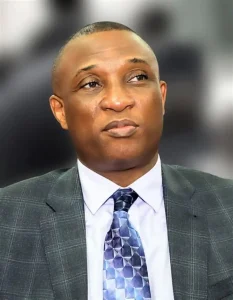
Olatunji Bello, Executive Vice Chairman, FCCPC

#3

Telcos introduced a calculator to measure data usage to show transparency. Following directives from the Nigerian Communications Commission (NCC) to drive transparency, the telecom operators have introduced a data calculator to provide a daily report of data used the previous day. This is a strategy to curb increasing complaints of data depletion. The data calculator is a tool that shows subscribers how their data is used daily. There are media reports that subscriber complaints over data depletion have now become a major concern in the industry, as it undermines trust.


​Without cash, any fintech, any business will crash

0


‘’Despite scouring the globe for capital, I was unable to bring this one home.”

Everyone who thirsts, come to the waters; and who has no money, come, buy, and eat. Yes, come; buy wine and milk without money and without price. This Bible verse is a spiritual invitation for those who lack salvation and nourishment to come and receive without money. But as in fintech and other businesses, if you have no money, you cannot produce honey. Without cash, your business will crash. That is the butt of the story.

On the one hand. That is what happened to the Bengaluru, India-based embedded-lending start-up, Niro. It ceased operations after four and a half years in business. The company cited difficulties in raising fresh funding and increasing regulatory challenges in the sector as the main drivers behind its decision.

On the other hand. Aditya Kumar and Sankalp Mathur launched Niro in 2021. Niro embedded instant personal loans into consumer internet platforms Snapdeal, Quikr, and Housing.com. It offered unsecured loans ranging from $563 to $ 7,882.

In the long term. Niro had raised close to $20 million from investors. Facilitated $200 million in loan disbursements. Formed 30 partnerships. Raised $18.7 million over five rounds. Had 289 employees. Disbursed $200 million. Its last funding round was $4.3 million on April 17, 2024. But execution alone was not enough to keep Niro’s doors open. So why did Niro cease to exist? Funding stopped coming. That is the major reason. It is impossible to scale a fintech without an endless flow of funding. Before we delve into Niro’s matter, note this.

Most fintech lending platforms offer a quicker process than traditional banks. But it comes with higher interest. No matter what you do, loan defaulters will do business with you. Besides, to scale, funding is a major element in fintech.

And funding comes in stages. Funding is one of the parts that will transform the fintech business. If any fintech founder is thinking about scaling without an endless stream of funding. Think again. It is impossible.

For instance, Tosin Eniolorunda, founder of Moniepoint, bootstrapped the company. Friends and family can assist. Angel investors can help. These funds have a limit. You need institutional funding. On a large scale.

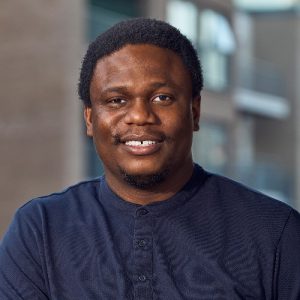
Tosin Eniolorunda, Founder, Moniepoint

Moniepoint got off the ground when it attracted huge funding from investors. Flutterwave started making waves after it hit the goldmine. Opay, Palmpay and other fintechs would have withered without an endless stream of funding.

Moniepoint recently raised an additional $90 million for expansion. Coming after earlier funds raised. Interswitch could not have spread to other African countries without endless funding from investors. The wave would have consumed Flutterwave without streams of funding. Funding is a catalyst for fintech and other businesses. Fund it. Scale it. Without it, you cannot build it.

Niro faced other challenges, though. Reports say that over the past eight months, funding in digital lending has dropped nearly 50% in India. Platforms offering instant loans without collateral face stricter oversight in India.

But the Herculean challenge is the cut in funding for digital lending. Despite earlier raises, Niro failed. It failed to secure additional funding when it mattered most. Niro founder says, “Despite scouring the globe for capital, I was unable to bring this one home.”

In the short term. Had funding not arrived when it did, some fintechs would have become another Niro. Bootstrapping is good. It cannot take you higher.


Rarzack Olaegbe, the Content Chef at Applesauce, also Produces The Fintex Show on Nigeria Info 99.3 FM, and can be reached at rarzack@applesauce.ng


Pay your debts! Telecom operators restrict debtor subscribers amid FCCPC regulations

0


# 1 

Pay your debts! Telecom operators restrict debtor subscribers amid FCCPC regulations. MTN Nigeria, Airtel Nigeria, Globacom, and 9mobile have restricted outgoing calls for millions of subscribers who have unpaid airtime and data loans, and this stance has deepened the impact of the new lending regulations from the Federal Competition and Consumer Protection Commission (FCCPC). Millions of Nigerians [who owed the operators] are unable to make calls.

Olatunji Bello, Executive Vice Chairman, Federal Competition & Consumer Protection Commission [FCCPC]
#2

Compensate subscribers for poor service quality immediately – NCC orders telecom operators. The Nigerian Communications Commission (NCC) has said that compensation of subscribers for poor service quality, such as persistent network outages or failed calls, is automatic. This initiative will ensure fairness by mandating operators to provide automatic compensation, such as airtime credits, when they fail to meet regulatory quality of service KPIs. NCC said the operators are required and mandated to identify affected subscribers and provide compensation directly.

#3

Telcos recover N2 trillion following crackdown on indebted subscribers. Following the new compliance requirements introduced by the Federal Competition and Consumer Protection Commission (FCCPC), the telecom operators did not meet these requirements. The telcos have reportedly recovered over N2 trillion from subscribers in a sweeping debt recovery campaign that has left millions unable to make calls due to unpaid airtime and data loans.

Cash, how would you handle the threats from electronic payment?

0


They called you the king. Everywhere you go, they bow at your feet. The last time you went on AWOL, the country was on steroids. Your opponent, what is its name again? E-payment. Yes, she could not withstand the frenzy. She was overwhelmed. Overpowered. There was commotion everywhere. Everywhere. Madam Cash, when you finally emerged from your hiatus, there was a sigh of relief.

In the open market, everybody loves you. You are the messiah. You are the preferred One. At the open market, you are the one. In the banking hall, the tellers hold you in high esteem. The shoppers who hugged you like a second skin received prompt service. The bus drivers are thrilled to see you. At the gas station, you run the gas pump.

At the nightclub, you are the heartbeat. At the border towns, ah, you are the alpha and omega. You rule their world. In the commercial bus, without you, there is no commute. At the mom-and-pop stores, you are the solution provider. At the owambe party, you are the soul of the party. At the PoS merchant point, you are a god!

On the one hand. Be careful, Madam Cash. Your existence is under threat. There is a gang out to cut you to size. Reduce your territory. Take over your command. Water your influence. They are out to make you a persona non grata. They want to keep you at bay. They want to make you irrelevant. For instance, when was the last time anyone made a cash payment at the gas station? Did you notice it, Madam Cash?

 On the other hand. Writing in Brookings.edu, Eswar Prasad, Senior Fellow, Global Economy and Development, explained that some people still prefer to use cash. That is because they like the tactile nature of physical currency. Because it provides confidentiality in transactions. But e-payment, made with the swipe of a card or a few taps on a smartphone, has become a threat. Madam Cash, a university lecturer, has written about your influence. That is not the end of the story. Here is another story that threatens your existence.

In the long term. Media reports have shown that many central banks are experimenting with digital versions of their currencies. This is to make their currencies relevant. These currencies are virtual. Like Bitcoin. However, unlike Bitcoin, which is a private enterprise, they are issued by the state and function much like traditional currencies. Do you remember e-Naira by the Central Bank of Nigeria (CBN), Madam Cash?

The central banks have introduced these digital currencies for limited circulation. The currencies exist alongside cash as another monetary option. This idea is to help the banks broaden their circulation over time. Gain popularity. Push cash away. Madam, did you read that sentence? Push cash away. The threat of electronic payment is real, Madam. How would you handle it?

Research has shown that China, Japan, and Sweden have launched digital currencies. Ditto the Bank of England. European Central Bank. The Bahamas has already rolled out the world’s first official digital currency. Madam, do you think the end of cash is on the horizon? There will be threats. Yes, you will overcome, Madam.

Do you know why? Some countries will not roll out digital currency. I eavesdropped on a fellow saying cash is vulnerable to loss and theft. That digital currency is relatively secure. I told the fellow about electronic hacking. When another electronic-payment influencer shouted that digital currency benefits the poor and the unbanked. I promptly told her that millions of the unbanked love cash.

Another proponent of digital payment said digital currency would slow illegal activities of money laundering and terrorism financing. I shouted at him that cash would find a way where there is no way. After all, it is a matter of cash.

In the short term. My friend, the end of cash is on the horizon. One drunken fellow punched the air. How can I quieten this drunk? I will send him a Ghana-must-go bag full of cash. Cash, the king, forever may you reign.

———————

Rarzack Olaegbe, the Content Chef at Applesauce, also Produces The Fintex Show on Nigeria Info 99.3 FM, and can be reached at rarzack@applesauce.ng

David Ogbueli: Emerging framework for value-driven global leadership – By Blaise Udunze  

0


Milestones often invite reflection. Birthdays, especially, offer a pause to measure time not merely in years lived, but in lives shaped and systems influenced. This is especially true for David Ogbueli, who is celebrating his birthday. Instead of focusing on how old he is getting, it is more interesting to think about the impact he has had, not just building visible success, but the quiet, persistent architecture of transformation that his ministry has helped construct across continents.

In an era obsessed with visibility, metrics, and viral impact, Ogbueli’s work represents something different and distinguishing, slower, deeper, and far more enduring. Yes, multitude within and outside the country who know him either closely or from a distance definitely can attest that it is common with him, as this happens to be the kind of influence that rarely trends but steadily alters the trajectory of individuals, institutions, and nations.

To understand the global footprint of his work, one must first confront a fundamental shift he embodies, which emphatically is the redefinition of ministry itself. Through Dominion City International, founded from humble beginnings as a campus fellowship in 1991 at the University of Nigeria and later formalised in 1995 in Enugu, Ogbueli has built what is now a vast global movement.

With over 2,000 chapters spanning Africa, Europe, Asia, the Middle East, and the Americas, alongside regional offices in the United States, the United Kingdom, and Nigeria, Dominion City has evolved into far more than a church network, into a leadership engine with an ambitious ongoing vision across Nigeria and beyond.

What distinguishes this expansion is not just its scale, but also its philosophy. Beyond running a church, Dominion City was never designed merely to gather people; it was built to raise leaders who transform society. One emerging fact today is that the philosophy has shaped a generation of professionals, entrepreneurs, public servants, and ministers who carry its influence into boardrooms, government institutions, and grassroots communities across the world.

At the heart of this ecosystem is a deliberate investment in human capital development. Verifiably, through platforms like the Dominion Leadership Institute, which has produced over 30,000 graduates globally, Ogbueli has undeniably and consistently built a leadership pipeline that addresses one of Africa’s most persistent challenges.

These prevailing challenges are the deficit of capable, values-driven leadership. At this point, this narrative definitely contradicts societal beliefs that his curriculum must be confined to spiritual formation; rather, it will interest society to know that his agenda integrates systems thinking, governance, productivity, and ethical leadership, equipping participants to function effectively in complex environments.

This emphasis on leadership extends into a broader scope and platforms. One of them is the Global Leadership Forum, and it would be of interest that it is not just designed for spiritual pursuit, but it is a mentorship and training hub designed to enhance performance and productivity across sectors, including business, politics, ministry, and enterprise. It reflects Ogbueli’s conviction that transformation must be holistic, that transcendence and cutting across every sphere of human endeavour.

Yet leadership, in his framework, is incomplete without economic empowerment. Across his ministry network, initiatives have been structured to move individuals from dependency to productivity. This is evident in large-scale interventions such as a N1 billion entrepreneurship support fund introduced to equip participants with the resources, skills, and networks required to succeed in business and career pursuits. At leadership retreats and empowerment programs, thousands are trained in areas ranging from agriculture and food security to innovation, healthcare, and global enterprise.

Beyond structured programmes, his personal actions reinforce this philosophy. This has sparked widespread reactions following a remarkable act of generosity during a recent church service. From distributing financial support to individuals in need during church services to empowering teams within the ministry with significant financial gifts, as one recent such act sparked widespread reactions following a remarkable benevolence, gifting about 35 choristers N1 million each during a recent church service.

With several other instances of generosity in the past, Ogbueli consistently underscores a critical principle that reveals that while immediate relief matters, sustainable change comes from enabling people to create value. In the course of one such intervention, which captures this ethos succinctly, he said that giving alone is not enough; people must be equipped to build.

With the right mindset, this approach aligns with a broader development truth that clearly states nations do not rise on charity, but on the strength of productive citizens. By embedding this mindset within a faith-based structure, Ogbueli is redefining how development can be pursued at scale.

Equally significant is his ability to mobilise faith as a development asset. It is an irony that in many parts of Africa and the global South, religious institutions remain among the most trusted social structures. Yet, their potential as vehicles for development often remains underutilised. Ogbueli’s model challenges that limitation by positioning the church as a hub for leadership incubation, economic activation, and social accountability.

Through initiatives like the Golden Heart Foundation, he has extended this vision into the non-profit space. One of the good feats is that the foundation’s flagship program, the National Youth Summit, attracts over 50,000 participants annually from across Africa, focusing on leadership education, value reorientation, and entrepreneurial development. These interventions target young people, especially a demographic that represents both Africa’s greatest asset and its most urgent responsibility.

His influence also extends into collaborative networks such as the Global Missions Network, which usher in developmental change, thereby bringing together leaders with a shared mandate of expanding the reach of the Gospel while driving national transformation. One important aspect of Ogbueli’s strategic drive for change is that through such alliances, his ideas are not confined to a single organisation but are disseminated across a broader ecosystem of leaders and institutions.

Beyond ministry and non-profit initiatives, Ogbueli’s engagement with development takes on an institutional and structural dimension. This is driven through ventures like Huram Development, which is involved in large-scale projects including auditoriums, estates, and universities. Noteworthy also is that he is contributing to physical infrastructure that supports long-term growth.

Similarly, Priesthood Institute is equipping ministry professionals with the competence and capacity required for modern-day leadership, while Shalom World ensures the distribution of knowledge resources through books and media.

One significant dimension of Ogbueli’s influence lies in his intellectual contributions, which portray him as a prolific author with nearly a hundred published titles spanning leadership, personal development, spirituality, and nation-building. His more recent works include Pillars of King Solomon’s Wisdom & Wealth, Jewish Secrets, and The Laws of Proper Speech. Meanwhile, this reflects his continued effort to distil timeless principles into practical frameworks for contemporary living and reinforce his broader mission of transforming minds as a pathway to transforming societies.

Ogbueli is the host of the programme Expand Your World, which runs on television and radio stations across Nigeria, extending his influence to seven continents, reinforcing his role not just as a pastor but as a global thought leader in transformation and leadership.

Importantly, Ogbueli’s credibility is not confined to religious circles only. Being a management and public policy consultant, an alumnus of institutions such as the Harvard Business School, Lagos Business School, and National Institute for Policy and Strategic Studies, he operates at the intersection of spirituality and strategy. His engagements with governments, corporate organisations, and policy platforms reflect a rare ability to translate faith-based principles into actionable frameworks for development.

Perhaps the most enduring feature of his model is its emphasis on multiplication. Rather than building a personality-driven movement, Ogbueli has focused on raising leaders who can replicate systems independently. This distributed approach ensures that his influence is not limited by geography or personal presence. It also guarantees continuity, a critical factor in sustainable development.

Of course, the challenge of measuring such an impact remains. Unlike infrastructure projects or economic indices, which are factors on which the government’s progress is reliant, the outcomes of leadership development and mindset transformation are not immediately quantifiable but have a greater impact.

They unfold over time, often expressed in stories rather than statistics used for evaluation, a thriving business birthed from a training program, a principled leader emerging in public service, a community mobilised for collective progress. Yes, in most cases, these outcomes may be difficult to measure, but they are foundational to nation-building and transformation beyond boundaries.

One important aspect the world must clearly know is that Pastor David Ogbueli’s contribution lies not merely in what he has built, but in what he has set in motion, which is transgenerational. This tells that his work challenges conventional development paradigms by emphasising that lasting change begins with people, their values, their thinking, and their capacity to build systems that endure.

One of Ogbueli’s outstanding influences, beneath the surface, even in a world grappling with complex challenges, from economic instability to leadership crises, is such that his model offers a compelling reminder that transformation is not only engineered through policies and capital but through the deliberate cultivation of human potential.

His legacy is rapidly unfolding. However, already, it is evident that the structures he has built, across ministry, leadership development, youth empowerment, and enterprise, are quietly shaping a future that extends far beyond the pulpit. And perhaps that is the most powerful kind of transformation, the kind that is not always seen, but is deeply felt, widely spread, and ultimately, enduring.

—————————————————————————————————

Blaise, a journalist and PR professional, writes from Lagos and can be reached via blaise.udunze@gmail.com  

 

Zero carbon: Over 2000 households benefited from NASENI’s clean energy programme

0
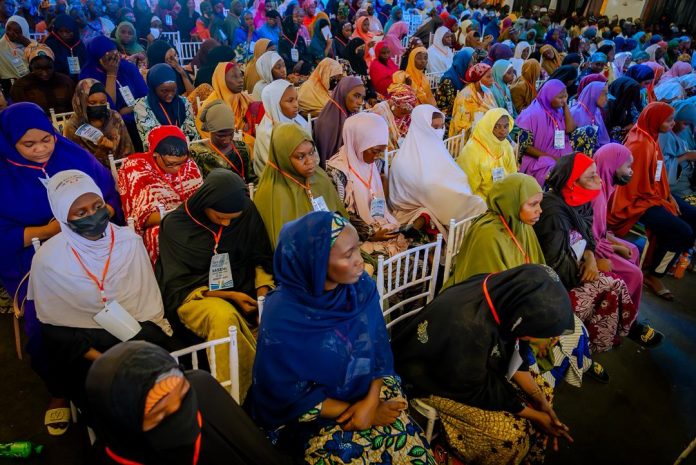
Cross-section of the beneficiaries of NASENI's sustainable empowerment programme in Kano State organised by the National Agency for Science and Engineering Infrastructure recently


Over 2000 households in Kano state have benefitted from the National Agency for Science and Engineering Infrastructure (NASENI)’s clean and reliable energy solutions launched in that state. The agency said the programme would reduce the impact of climate change.

“These are Nigerian-made solutions, built for Nigerian realities. This programme is part of NASENI’s bigger mission — the Zero Carbon (ZeCo) project.  The ZeCo project focuses on reducing carbon emissions, protecting our environment, and promoting cleaner and safer energy for our people”, Executive Vice Chairman of NASENI, Mr Khalil Suleiman Halilu, said.

He added that the initiative would empower households with clean stoves that reduce smoke and save fuel, solar home systems for reliable electricity, and practical solutions for their homes and businesses.

Held at the Fabs Event Centre recently, the programme accommodated thousands of men and women, and they left with NASENI clean stove, home solar solutions and other tools, which will enhance access to clean and reliable energy solutions for households in rural and semi-urban communities.

According to a statement signed by Olusegun Ayeoyenikan, Director, Information, NASENI, the Minister of Industry, Trade and Investment, Dr Jumoke Oduwole, said the programme is a practical demonstration of how Nigeria’s industrial, trade, and investment agenda is being translated into real outcomes for citizens.

Dr Oduwole commended the NASENI’s leadership for this initiative that celebrates excellence in Nigerian enterprise, industrial productivity, and the practical realisation of the Nigeria First policy. She said the initiative supported President Bola Ahmed Tinubu’s Renewed Hope Agenda, particularly its priorities around industrialisation, job creation, local productivity, and inclusive economic growth.

“Kano’s selection as host for this programme is particularly significant. Historically, Kano has been one of West Africa’s major commercial and manufacturing hubs, with deep strengths in trade, textiles, agro-processing, and enterprise.”

She added that NASENI’s intervention aligns directly with the African Continental Free Trade Area (AfCFTA) by localising technology deployment and expanding practical, productive assets for Nigerian households and businesses.

Mr Halilu said. “What you are receiving today is not just support; it is part of a larger national effort to build a cleaner and healthier Nigeria. This programme is not just about empowerment. It is about dignity. It is about improving your quality of life. It is about giving you tools to do more, earn more, and live better.

“To our beneficiaries: Use these tools wisely. Take care of them. Let them improve your homes and your businesses. Let them support your families and your future.”

Overpriced DSTV subscription and vanishing internet data services snowed me under, and I could barely breathe. Can you relate?

0


They are still running after me, those two monsters. Two evils have been haunting me for the past two years, and I have consulted different “helpers,” but they could not find a solution to my malaise. I had engaged in a fruit-and-water fasting round [I cannot stand dry fasting]. These two evils have hunted and haunted me endlessly because I cannot live without them. However, I have had it up to my neck now. I cannot go on again. I cannot.

My monthly spend has ballooned recently, and I have been wondering where the funds are. I have searched up and down, and I discovered to my chagrin that these two demons have been milking me dry. My doctor-friend denied it. However, after I threw the number at him, he sighed and hugged me for my ingenuity.

After he agreed to my numbers, I explained that we would jettison the vanishing data services from the telecommunication operators. We will also cancel the overpriced DSTV subscription. The new unlimited internet access from MTN would serve the whole family [as if I were married].

We would connect to the WIFI whenever we are at home. We would stream video and binge sitcoms, thrillers, and reality shows on Netflix and other networks that come around. The other demon I would need to conquer is the epileptic electricity supply, and I have been thinking about the solar inverter lately.

————————————————————————————————–

Sarah’s Demons is written by an advertising executive who works and lives in Maitama, Abuja. Responses to her diary should go to contentchef@applesauce.ng

Tale of two nations: Ghana and Kenya are redefining regulation and innovating consumer lending  

0


Innovation comes not from a magic wand or mouthing some gibberish. It comes from critical thinking and applying out-of-home methods that work. Two nations, Kenya and Ghana, have proved that this is true with the way the two countries have redefined regulations and innovated consumer lending.

Has Ghana blazed a trail in innovative regulation? Under the new Director General of the National Communications Authority, Reverend Edmund Fianko, Ghana’s telecom regulator has turned the rulebook on its head. The country has jettisoned the well-worn path, and it is blazing a trail. It has changed the strategy for shepherding the flock. Ghana is no longer imposing fines on erring telecom operators that may have delivered subpar service. That was in its past. Instead, the Ghana telecom regulator has asked the erring operators to build masts, towers, antennas and upgrade infrastructure.

Rev Edmund Fianko, DG, NCA

The regulator has said it would not slap a hefty fine on an erring operator and then keep the money. This was the practice in the early days. The former practice [of keeping the money in the coffers] had only benefited a few private pockets. It did not benefit the economy, telecom subscribers, or the operators.

Ghana’s communications regulator has pointed to the stark result of the former behaviour, which is the paucity of telecom infrastructure in that country. This experience is so evident that in the last five years, only 200 towers have been built. The result is a lack of telecom towers, poor telecom services, occasioned by dropped calls, poor reception, etc. The question is, will this innovative regulation ensure the obesity of telecom infrastructure?

Good thinking, Ghana.

Kenya takes the wind out of the sails of debtors in a new crackdown. The Central Bank of Kenya [CBK] and the Sacco Societies Regulatory Authority have introduced new consumer protection rules that would stop lenders from automatically increasing credit limits. To fill the void, the regulator would have to check whether the user could afford more debt. It would obtain the user’s information by reviewing a user’s income, expenses, existing loans and assets before offering any additional credit.

CBK is not only regulating lenders’ behaviour. It is working to fix the decision-making upfront. That means forcing fintechs to rethink growth strategies built on easy, automated credit expansion. Whether these rules can be enforced across a fast-moving, tech-driven sector is a different kettle of fish.

Thumbs up to CBK