Friday, November 20, 2026
Home Blog Page 7

IWD 2026: PalmPay’s Purple Woman initiative trains 100 women in high-demand technical and administrative tracks at an intensive 3-day masterclass

0
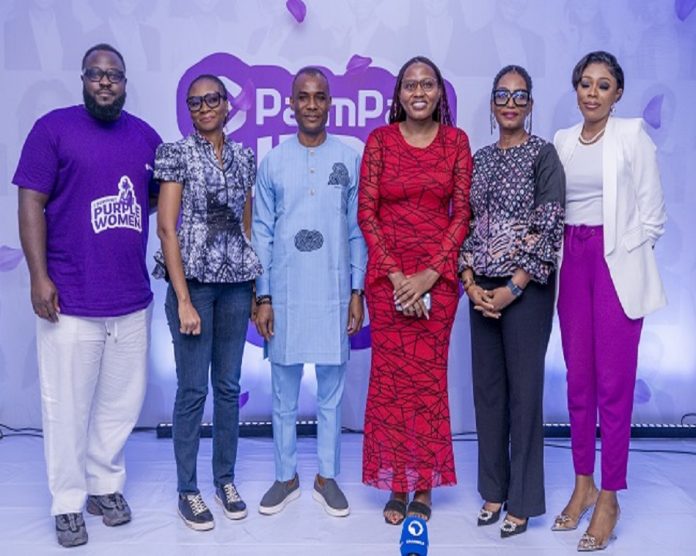
From the left: Olorunfemi Hanson, Head of Marketing, PalmPay Nigeria; Kemi Okusanya, CEO, Hydrogen; Chika Nwosu, MD, PalmPay Limited; Harriet Kariuki, Head, SME PalmPay; and Nneka Okekearu, Director, Enterprise Development Centre (Pan-Atlantic University) at the PalmPay Purple Woman 3.0 Masterclass

To commemorate International Women’s Day 2026, PalmPay, a leading fintech company, has hosted the third cohort of its Purple Woman Masterclass, where the company trained 100 women at an intensive 3-day masterclass covering high-demand technical and administrative tracks.

Courses covered include Engineering & Product: Software Engineering, UI/UX Design, and Product Management; Data & Marketing: Data Analysis and Digital Marketing; Management: Human Resources and Personal Financial Management.

After a gruelling period, 10 high-performing women out of the 100 were selected to undergo a six-month paid internship with the company. All the participants from the Purple Woman 2.0 are current full-time employees at PalmPay.

The Managing Director of PalmPay Nigeria, Chika Nwosu, said that Purple Women 3.0 came from a glaring disparity noted in the tech ecosystem. “We noticed the lean representation of women in fintech. We intend to bridge that gap. We want to see women not just participating but occupying leadership positions across the board.”

Nwosu emphasised the multi-generational impact of the initiative and added that money in the hands of a man feeds a family, but money in the hands of a woman feeds a generation.

Human Relations Manager at Palmpay, Anthony Iwuala, said, “We are not just training the women for the sake of it. We train them to employ them’’. Iwuala explained that the selection process for the final internship was merit-based and that the initiative, which coincided with International Women’s Day 2026, was to transition young women from digital learners to industry professionals through a rigorous skill-acquisition and internship pipeline.

The company said some of the classes featured a session on Psychological Capital, which was led by Nneka Okekearu, Director of the Enterprise Development Centre at Pan-Atlantic University. Okekearu addressed the cultural and unconscious biases that often shackle women in the workplace.

While celebrating the fact that 30% of Nigerian commercial banks are led by female CEOs, Okekearu warned of the “missing middle,” the point where women exit the workforce due to family milestones. “We need systems that allow women to return to their careers without losing their progress,” she said.

Over 1,000 women applied for the 2026 edition.

End of an expensive failure: Showmax says its final goodbye, as the continent’s video streaming giant is scrapped

0

Nigeria’s economic woes have been signalled as part of the factors responsible for the closure of Showmax, the continent’s video streaming giant. Canal+, the new owners of MultiChoice, blamed a combination of economic pressures and operational challenges that have weighed heavily on the company, saying that the currency devaluation in major markets such as Nigeria, electricity disruptions in parts of Africa, and rising content costs have all squeezed its margins.

Showmax, an expensive failure and a financial drain on MultiChoice

Canal+’s 2025 financial results show that Showmax is an expensive failure and a financial drain on MultiChoice, and scrapping it will accelerate savings, with an expected projection of synergies of about €250 million by 2026, a jump from the €150 million target announced in 2026. Shutting down Showmax is part of a wider restructuring effort to improve profitability.

Unmet financial expectations stall growth

The company said that its unmet financial expectations have stalled Showmax’s growth, leading to a drop in its subscriber growth in 2025 and a decline in revenue. Its 2025 revenue dropped by 6 per cent to €2.4 billion, subscriber base slipped from 14.9 million to 14.4 million, while adjusted earnings before interest and tax [EBITA] also dropped by 14 per cent to €159 million.

Ballooned losses

Showmax reported losses of R2.6 billion in March 2024. Those losses ballooned by 88 per cent to R4.9 billion in 2025. The financial hit had a major knock-on effect, with MultiChoice’s trading profit dropping sharply, falling 49 per cent to R4 billion in its last financial year. The maximum annual losses experienced by the Showmax business have proved unsustainable. The decision to phase out Showmax reflects our focus on building a sustainable, competitive business for the long term in an increasingly demanding global streaming environment. Showmax is an expensive failure,” read the statement.

Canal+ takeover changes the dynamics.

Various media reports show that Canal+’s acquisition of MultiChoice in 2025 changes the dynamics, with the Fresh giant offering ZAR 125 per share for the remaining stakes. The deal mandates HDP ownership boosts, local content investment, and the splitting of MultiChoice’s SA broadcasting arm into an independent entity to meet regulations. Canal+ came for a funeral, as it stopped unprofitable projects, including Olympic Games broadcasting, and new contracts for new shows.

Wobbling along

Launched in 2015, Showmax competed with global players like Netflix, and it has wobbled along; its closure marks the end of a significant chapter in the continent’s video streaming experiment.

Can an Angel like me work with a big man called Vulture Capitalist …to grow any business profitably?

0

I am an Angel, and I invest in small businesses, so my friends called me Angel-who-Invests. You know, I give money to some enterprising young boys and girls who have an interest in business but do not have Aliko’s kind of pocket. The banks do not give them a loan. What I give is not a loan, and let us say it is a deferred loan, because I usually get something from the businesses if they ‘blow’.

Because I am an Angel does not mean I hate the P&L account. I do not. As an Angel, I hang out with these boys and discuss how we can improve their ideas and make them better. This is what the banks will not do, but I do it. I do it to save these boys from our tax master who dwells in Aso Rock. Hallowed be thy name. These boys need financial support, since they have no connection to Seyi or Obi. What I do, Obi and Seyi do not do. What I do, I do it before the Vulture Capitalists arrive.

Most of the businesses I have supported have soared, but I have not benefited because the Vulture Capitalists came and ate them! The businesses picked up very fast, but the Vulture Capitalists soon kicked the boys out because the boys could not run fast at the rate the Vultures desired. The boys ended up with me eventually. Some slept in my living room. Others slept in my bosom.

Tell me what I should do to the Vulture Capitalists who destroyed these boys with too much money but could not take care of their emotional needs. Some of these boys used drugs as a coping mechanism. Do you know that I have been thinking about working with some of these Vulture Capitalists? This is what I will do.

I will provide the largesse and emotional support, and the Vulture Capitalists will bring their huge appetites, business expertise, and insatiable taste for profit. We will grow these businesses profitably and become rich. However, the boys will be healthy, as they will not depend on drugs anymore, and I will guide them, guard them, and not gauge them. Nevertheless, come to think about it. Does a babe like me want to do business with a big man called Vulture Capitalist? A vulture will always be a vulture, and an Angel has no business with a vulture.


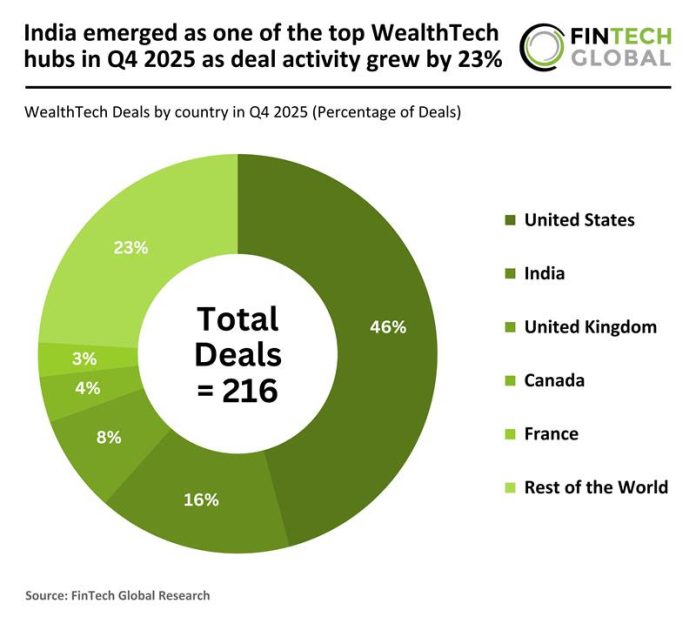
India emerged as one of the top WealthTech hubs as companies based in the country secured 46% of all deals globally, the US remain most active market with 99 deals

0

The US remained the most active WealthTech market globally with 99 deals (46% share) in Q4 2025, a 27% increase from 78 deals (44% share) in Q4 2024.

India ranked second with 34 deals (16% share), emerging as a key hub for activity in the latest quarter. The UK followed with 17 deals (8% share), representing a 13% increase from 15 deals (9% share) a year earlier.

Meanwhile, Japan, which had recorded 8 deals (5% share) in Q4 2024, no longer featured among the most active markets in Q4 2025, reflecting a shift in regional deal distribution within the global WealthTech landscape.

Range, an AI-powered wealth management platform delivering automated, institutional-grade financial planning to US consumers, completed one of the biggest WealthTech deals of the quarter after the company raised $60m in a Series C funding round.

This was led by Scale Venture Partners, with participation from Gradient Ventures, Cathay Innovation and 53 Stations, bringing total capital raised to over $100m.

Fintech Global reported that the funding will accelerate hiring across AI, product and go-to-market functions while expanding enterprise partnerships and enhancing its AI wealth assistant Rai with predictive planning and proactive tax optimisation capabilities.

The US wealth management industry oversees more than $90tn in assets, yet only 1% of Americans have historically worked with a financial adviser, with Range targeting this underserved segment through lower-cost AI-driven planning.

The company currently manages $400m in AUM and $9.5bn in AUA across 5,000+ high-net-worth clients across all 50 states. It has delivered 300% YoY revenue growth.

Rai now handles thousands of financial queries each month, and it has reduced messaging to human advisers by 50%.

Range is also developing additional AI agents focused on compliance, tax optimisation, and investment guidance while preparing to expand into broker-dealer services and scale West Coast operations.

Customer service matters and other matters that do not matter

0

The gatekeepers treat you courteously, not because you are Mr President.

If I had to choose, I would choose Nigeria. There are many variables. One is the level of service inequality. You cannot beat it. It is pervasive that I look for it everywhere, every day. In the supermarket. In the open market. At the cinema. At the viewing centres. In the banking and telecoms service arena. If the service is not rude, you are rushed. If the service is not polite, you are not satisfied. If the service is unacceptable, a refund is not guaranteed. You are stuck. The customer service capital of the world is not Nigeria. It is the Philippines. I wish it were Nigeria.

On the one hand

The type of service you receive in one location of the same company differs from another location. For instance, on the Lagos Mainland, the banks and telcos serve customers differently compared with those on Lagos Island. The service is not superb. It is bland. It is not the best. It is vanilla. The gatekeepers treat you with courtesy, not because you are Mr President. It is for a pecuniary reason. You are expected to pay for the greeting, ‘’Happy weekend, sir.’’ 

On the other hand

If you cannot speak English, you are like Alice in Wonderland. You would wander from one desk to another. There is no in-language customer service. I am not sure the service providers understand that in-language customer service equals high customer satisfaction. Someday, you queued at the office of one of the telcos. Your back ached because you ha​d sat for a long time. Then you left. Frustrated. Soon, you bought an IT gadget. The carton was large. The salesperson would not pack it. ‘’There is no bag,’’ she told you without a care. When you insisted, a small paper bag appeared. It could not contain your purchase.

 In the long term

The service on Lagos Island was different. The best. Friendly. Timely. My SIM was locked. Several calls to the telco had failed to ameliorate the situation. In this office, the atmosphere was serene. Picture an ocean breeze. The Personal Unlocking Key code request did not take 60 minutes. It took three minutes. Write your number and name. Blink. ‘’Here is your PUK, sir.’’ Look at that! Then I observed the Average Handle Time – AHT. The customer service personnel wanted to please the customers. No matter how long it takes.​

In my case, it took three minutes. This was because the office had ten service points. Ten servers. Twelve comfortable plastic chairs for customers. One concierge who doubled as a server. The concierge accosted you. If your case was mild, like a code request, you get instant attention. Blink, your request was delivered. Winifred, the roaming concierge, was efficient. The visit was a pleasure. There were no regrets. I wish other service centres in Lagos mainland and on the outskirts were the same.

In the short term

By the way, Winifred is a man. A highly skilled Nigerian.

How to turn a cashless policy into a classless problem – accepting cash, an ATM card, and an FAAN card would have prevented the chaos

0

Did you miss your flight because of the ongoing Federal Government’s cashless policy in Lagos and Abuja airports’ access gates? If you did, I empathise with you. If you have missed your flight before, you would understand the knock-on stress this ​​has on your psyche. A missed flight automatically creates a ​​domino effect on your life. Because you have missed your flight, you have also missed a scheduled meeting. You have broken a promise.

Meanwhile, the other party would view you as an irresponsible person who ​​lacks the character to honour an appointment. Then your day suddenly turned around 360 degrees. First, some retrospection. Did you miss the flight because you overslept​?​ No. If it were so, you would have quietly ​​taken the blame and wallowed in your stew. A third party caused it.

On the one hand

Recently, this scenario happened when thousands of passengers failed to make it through the ​a​irports’ access gates. These passengers lacked the Federal Airports Authority of Nigeria (FAAN) dedicated payment card. Not having a dedicated payment card triggered massive gridlock. Missed flights. Sweats. Widespread frustration among travellers.

On the other hand

The cashless policy should not have led to a fever or caused passengers to abandon vehicles at the airport entrances. There were even some delayed flights because passengers did not arrive on time. This is not the purpose of the cashless policy; something was amiss.

In the long term

Media reports said that the federal airports authority would ​​commence electronic payments at its revenue points – access gates, car parks, VIP lounges, and protocol services – from September 2025. Due to the cashless policy at the airports, vehicles passing through the tollgate endured some delays. The car owners could not obtain the ‘gold’ card. After obtaining the card, airport users must register the card. Fund it. Scan it. This must happen at the entry points.

In the first instance, this is a recipe for chaos. For context, the Lagos airport is Nigeria’s busiest airport. It handles 10,000 passengers daily. Six months is not enough to move 10,000 passengers from cash payment ​t​o a cashless policy. Cash ​​payment culture has been ongoing at our airports since independence. Six months is too short to change a culture. Besides, a triple play would have hindered the chaos. The triple play: Accept cash. ATM card. FAAN card. This would have prevented the cashless policy from becoming a classless problem.

Why this matters

Technology need not cause chaos. It should not lead to missed flights and agitated passengers. Embracing existing payment ​​cards or the triple play scenario would have prevented the ugly situation we experienced at the Lagos airport recently.

In the short term

At the Munich Airport, you cannot miss your flight. It was the first airport in Europe to introduce a ‘’Smart Checkout’’ system. You scan and pay for items without waiting in line.


How the power of fintech, smartphone penetration, and data demand surge aid MTN Nigeria’s trillion-naira profitable turnaround

0

MTN Nigeria was bruised in 2024, as it ​​haemorrhaged a ₦400.4 billion loss due to foreign exchange shocks. It returned to profitability, posting a ₦1.1 trillion after-tax profit in 2025, and its earnings per share swung from a loss of ₦19.05 to a profit of ₦53.07.

This means the telecom firm has ​​exited the woods,  posting ₦5.2 trillion in service revenue for the year ended December 31, 2025, coming up 55.1% year-on-year, driven largely by a 74.5% increase.

Karl Toriola, MTN Nigeria CEO, said, ‘’2025 marked a significant turning point in our business performance and resumption of dividend payments. In the period, we returned to profitability, generated stronger free cash flow, and restored positive retained earnings and shareholders’ funds.”

It has restored profitability and rebuilt its retained earnings. It has also resumed dividend sharing, with its board proposing a final dividend of ₦15 per share. Equally, it added to a ₦5 interim ​​payout with total dividends of ₦20 per share. For MTN, this is a turnaround. However, the following critical factors contributed to the turnaround.

MoMo, its fintech vehicle, experienced a surge.

It experienced an increase in its fintech business, driven by the Mobile Money [MoMo] vehicle. The revenue jumped to 79.7%. In addition, active MoMo wallets rose from 30.8% to 3.7 million while customer deposits swelled, and this aided its income flow.

Smartphone penetration bloom

Data from NCC confirmed that smartphone penetration has hit 66.1%. This has helped increase mobile internet usage, as more Nigerians rely on the internet for their livelihoods. Besides, video streaming networks have captured the eyeballs of millions of Nigerians through the smoky screen of smartphones, and a new generation of remote workers using smartphones and tablets has contributed to MTN Nigeria’s surge in revenue.

Data usage gush

Smartphones ​ automatically gush, which increases data usage. More data usage translates to more revenue. This shows data revenue of ₦2.78 trillion, with active data users surging to 53.2 million and average monthly usage rising to 13.1GB.

Dabengwa Data Centre monetisation

MTN also commenced the monetisation of its Dabengwa Data Centre and onboarding users to its MTN Cloud marketplace. The move has positioned MTN as more than just a telco. It has announced itself as a digital infrastructure provider.

In addition, the naira also stabilised to ₦1,436 per dollar at year-end, and inflation eased compared to 2024. MTN recorded a ₦90.3 billion net forex gain after 2025’s ₦925.4 billion loss. It also doubled its capital expenditure to ₦1 trillion, expanding 4G coverage to 84.6% of the population and investing in fibre and a new data centre.

Turning the ship around

MTN Nigeria reduced its foreign currency exposure. It settled outstanding obligations. It cushioned itself against currency volatility. Its fintech arm, smartphone penetration, and rising data demand have contributed to its profitable turnaround.

‘’Telecom business is so simple, and I do not know why MTN, Airtel, others have made it difficult, or is it my imagination’’ – how my mother-in-law whined

0

‘Ada, do you understand the knock-on stress of being unable to complete one minute call? In Europe, all the telecom operators would be in breach of the Consumer Rights Act!’ My mother-in-law whined without waiting for my response.

However, I have worked in many service organisations, home and abroad, all my life, and I do not understand why some companies have turned service delivery into a brain surgery. If it is brain surgery, we need brain surgeons, not telecom engineers or executives. By extension, the thousands of service providers worldwide will be running on empty. Some would have folded up and returned to the garages. Others would have, never mind. What I am saying is that delivering quality service to prepaid customers is not the same as performing brain surgery.

In addition, take, for instance. Why is it difficult for MTN, Airtel, Glo and T2 to deliver a premium service to millions of subscribers? The majority of these subscribers are on prepaid billing. This means telecom companies received payment upfront before subscribers were served, and you would have thought the service delivery would be excellent. You are wrung.

Nevertheless, my mother-in-law [I am not married. I am a baby maker, you know. I am like an ice-making machine. Keep that info to yourself. One day, you would need it. Anyway, my mother-in-law told me [as girls talk] the other day that she could not make calls to her friends or send messages because her airtime was running low. She whined over the disappearing acts of her data bundle. She said she could not speak with her children, who live in Europe, for more than a few minutes without experiencing multiple dropped calls.

‘Ada, do you understand the knock-on stress of not being able to complete a minute call? Do we have a Consumer Rights Act here, please? The telecoms business is so simple, and I do not know why these providers have made it difficult, or is it my imagination?’ She asked me and did not wait for a response before telling me that the telecom business comprises two basic elements: service and distribution.

‘’If you do not have clinical execution in service distribution, you would suffer a service outage. When I was in Europe…’’ I shut her up. ‘’Mama, please, we are not in Europe’’.


‘Sarah’s Demons – Diary of a babe fighting a thousand demons’ is written by an advertising executive who works and lives in Maitama, Abuja, and any responses about the column should be sent via Editor, Applesauce.ng.


What accelerates business closure faster than an act of God …. can technology adoption suppress the menace? By Rarzack Olaegbe

0
Credit: Woolypooly.com

Technology adoption can suppress this menace.

She lived in Lagos and drew a salary in Imo state. As one of the ghost workers in the civil service 12 years ago, she succeeded because her immediate boss was complicit. This was before the advent of biometric enrolment. Biometric capturing demystified the ‘’ghost workers.’’ It helped to ‘unveil’ individuals on the payroll of state and federal civil services. However, before the biometric evangelists arrived, employee fraudsters had fleeced the government of millions.

On the one hand

Employee fraud or internal fraud involves dishonest actions taken by employees to benefit themselves financially or personally at the expense of their employer. Activities such as theft, embezzlement, falsifying records, and manipulating financial statements are some of the games played by those who engage in the practice. It is still alive.

On the other hand

But by understanding the nature of employee fraud and taking proactive measures, businesses can protect themselves from potential losses. Maintain a trustworthy workplace environment. Since employee fraud is not limited to the civil service, private businesses are also bleeding.

In the long term

World Bank data on the subject stated that employee fraud is a global problem. It affects organisations in every region and in every industry worldwide. ‘’Measuring the true extent of the damage caused by occupational fraud can be challenging due to the inherent nature of concealment and deception involved in most schemes.’’

This practice is a global phenomenon. In Europe, Asia, Mexico, and America, employee fraud is a big business. Research shows that the employee fraud industry is worth over $4.7 trillion. Employee fraud is also crippling Nigeria’s micro, small, and medium enterprises (MSMEs). These businesses are losing N10 trillion every year.

The Centre for the Promotion of Private Enterprise (CPPE) CEO, Muda Yusuf, said employee corruption and occupational fraud constitute one of the largest hidden drains on Nigeria’s entrepreneurial economy, with annual losses ranging from N5 to N10 trillion. ‘’The aggregate economic consequences are profound with MSMEs losing 5 to 10% of annual revenue to employee-related fraud.”

Yusuf added that these losses silently destroy profitability. Suppress investment. Eliminate jobs. Weaken government revenue. Many of these MSMEs operate on thin margins. Often below 15% of turnover. Fraud losses of 5-10% of revenue can eliminate profits. Deplete working capital. Accelerate business closure faster than an act of God. The reason we have experienced a high mortality rate of small businesses with up to 80% failing within five years. The sectors most affected include retail and wholesale trade, hospitality, food services, and entertainment. Digitalisation is one of the most powerful low-cost anti-fraud tools available to MSMEs

Why does this matter

By adopting digital payment channels and basic accounting software, businesses can create transaction traceability, making diversion and concealment more difficult.

In the short term

Technology adoption and productivity-enhancing upgrades can suppress this menace.

​Why is the journey to becoming a unicorn fraught with giants… and what you must do to achieve the status

0

If you are planning to create a unicorn, is your idea unique?

Have you found your unicorn yet? If you have not, I have news for you. Not every fintech ​​ start-up will become a unicorn. Some fintech start-ups will die. Some will try. Others will be fried in the process of working towards a unicorn. It is like a tadpole. Not all the tadpoles became adult frogs. Many died. Some survived. In the same breath, not every spermatozoa becomes a baby. Many died. You survived. That is why you dare to birth a unicorn in months.

On the one hand

Not every fintech ​​ start-up will become a unicorn. Let us roll out the red carpet. The following unicorns did not start as unicorns. Interswitch. Chipper Cash. Flutterwave. Moniepoint. Opay. WhatsApp. None of these giants started as a unicorn. They started to solve a social problem.

On the other hand

Dear fintech start-up founders and would-be founders, have you found a pain point you can help to ease? Does the pain point exist? Is there an idea in the ecosystem that offers a solution to the same pain point? All right. Is your idea different? Have you validated the idea? Do you understand your target addressable market? Do you have a sidekick? Are you a warrior? Are you a Rambo? Do you work alone in the wilderness and fight coding demons? Do you have funding to float your idea? Alternatively, are you waiting for a venture capitalist to knock on your door?

In the long term

Anyway, there is a different way to fund your fintech start-up outside of venture capital. If you wait for venture capital funding, you might wait for a long time. Tyler Trengis, co-founder of Ernest Capital, under his theory, said that bootstrapped founders fail less frequently than venture capital-backed founders do.

He has no data to back it up yet. Nevertheless, his anecdotal evidence is compelling. He said the pressure ‘’to go big or go home’’ actually leads many start-up companies to fail. This is because so much emphasis is put on the next series of funding instead of focusing on the actual aspects of the business that make it compelling to the market. Trengis said instead of waiting for a venture capitalist to fund your start-up, take a cheque that allows you to ‘’optimise sustainability’’ over a-growth-at-all-costs.

Dreaming of becoming a unicorn is not a crime. Not understanding the terrain, not understanding that there are giants along the way and not understanding that unicorns exist in the realm of valuation is a delinquency. Value and valuation are not identical twins. As a fintech start-up founder, are you pursuing valuation? Are you suited to delivering value? Which one is first? Where does your start-up belong in the quadrants? If you are equipped to deliver value consistently, soon, the ‘mantle’ of a unicorn will fall on your business.

Why does this matter

No fintech start-up is born as a unicorn. Yes, there are soonicorns. Fintech firms that are set to become unicorns. In Nigeria, with about 430 fintech firms, only five are unicorns. Other fintechs are ‘’optimising sustainability’’. Some are living on a-pay-as-you-go-funding-model. This does not indicate that these other fintech firms do not have the greatness of a unicorn in them. Time and chance happen to the unicorns.

In the short term

If you are planning to create a unicorn, is your idea unique?