Friday, November 20, 2026
Home Blog Page 6

Why would a medical doctor with a thriving practice join politics and hang out with turncoats?

0


This is becoming quite frustrating for me. I am apolitical, and I have lost contact with all my friends who joined politics. It was not my fault at all, and you will soon see it. One of my friends became the personal assistant to a sitting governor, and she has not responded to my call in four years. All right, tell me she has been busy, and I am just being bitchy!

However, if you walked in my shoes, you would understand that on your deathbed, the degrees you acquired, the mansions you have built, the funds stacked up in a vault and the presidents you hobnobbed with would not count. What counts would be the friends you keep and the right connections you have made.

Therefore, when my doctor-friend broke the news to me over breakfast on his yacht, I almost rolled over into the ocean. With the breeze on my face, I pretended I was not listening, and the dumb repeated the sad news.

Do you know what it means to me? I will lose him forever to others, to politics, to diplomacy, to endless travels. Tell me I am selfish. Tell me I am a narcissist. Tell me I am a… Never mind. But I look at the politicians as turncoats.

However, look at the political scene, and tell me how could 86% of Nigeria’s 36 state governors could cling to one party? Only five of the 21 political parties in Nigeria in 2026 have governorship representation, and now the ruling party controls a large majority of state governments.

One of these governors has invited my doctor-friend to be his personal physician, to be at his disposal, to fly with him anywhere at any time and abandon me…

If I were Ezra… I will pave the sky

0


Being expelled from Paystack as the co-founder is not the end of fintech.

Life happens. You do not always expect things to go as planned. Being a co-founder of a fintech unicorn is not a walk in the park. It comes with its pressure and deliverables. If you did not meet up, you have failed. In life, you deserve whatever comes to you. You have earned the co-founder label. You have earned the expulsion, too.

On the one hand

The following ousted founders and co-founders deserved what they got. Whatever they got came through internal conflicts, ethical issues, and market pressures. Steve Jobs. Travis Kalanick [Uber]. Jack Dorsey [Twitter]. Andrew Mason [Groupon]. Some, like Jobs and Dorsey, made triumphant comebacks. Others moved on. Created something bigger.

On the other hand,

Entrepreneur.com reported that Elon Musk dismissed his Tesla CEO and co-founder, Martin Eberhard. American Apparel’s Dov Charney was fired for inappropriate behaviour and sexual misconduct. Ezra Olubi was expelled from Paystack as the co-founder.

In the long term

If I were Ezra, I would take a retreat and come back rejuvenated. Face the world anew. Develop an excellent product that will not compete with Paystack but outclass it. Pitch it to discerning venture capitalists. I will build a top-tier product. For instance, if Paystack builds rail tracks, I will pave the sky with concrete. I would not compete in the same market.

If I were Ezra, I would create my own niche and nurture it. Remember, living well is the best revenge. I will not pursue a legal action against Paystack. It is draining. I will not hold a grudge. It is unprofitable. Instead, I will focus on my work. I will recruit a talented team to complement me. I am a priest. If one of them is an LGBTQ funder, oho, super. If not, no worries. Bring strawberries. As an eccentric, I would release my intellectual capacity. A passion for learning. I will learn about many subjects. Go to Harvard for a year. Enrol at MIT for a three-month course. Find the right connection. Get into the venture capitalist networks. Bury my head. Emerge anew.

If I were Ezra, I would take the expulsion on the chin and roll with it. I will extract the positive from the negative. After all, being expelled from Paystack as a co-founder will not be the end of fintech for me. It is the beginning. Life is not about perfection. It is about progress. I will keep moving forward. I will choose my companions carefully. I will continue to excel. I will be me. E.Z.R.A.

If I were Ezra, I would not exit the fintech ecosystem. I would choose to dominate it unusually. There are many areas needing innovation outside of the payment system. That will be the job description of my eccentric team. When I find it, fintech will not be the same again. As Ezra, the priest and a scribe who re-enacted Jewish law among the Jews, I will re-enact fintech!

In the short term

Unfortunately, I am not Ezra Olubi. That is life.

One of Nigeria’s unicorns, Moniepoint, conquers East Africa’s largest economy, acquires 78% stake in Kenya’s Bank

0


#1 – A Nigerian digital bank backed by global investors, Kuda Technologies Limited, has sacked its employees across several departments as it commenced broad restructuring. But the fintech firm said its financial position has been improving.

 #2  – Nigeria’s Moniepoint conquers East Africa’s largest economy, acquires 78% stake in Kenya’s Bank

One of Nigeria’s fintech unicorns, Moniepoint Inc., has conquered Kenya by acquiring a 78% stake in Sumac Microfinance Bank. With this acquisition, Moniepoint has fulfilled its multi-year effort to secure a foothold in East Africa’s largest economy.

 #3 – Hacker remanded for allegedly stealing N3.09Bn from FCMB

The hacker, Andrew Odekina, who allegedly stole N3.09 billion from First City Monument Bank (FCMB), has been remanded by Justice Mojisola Dada of the Lagos State Special Offences Court in Ikeja. Odekina is a member of a fraud syndicate.

#4 – How many infrastructure fronts are reshaping fintech payments?

Fintech leaders are fielding the same question in their boardrooms: which infrastructure investments create leverage across your payments business? Real-time settlement capabilities, AI-powered fraud detection, multi-rail network strategies, embedded finance architecture, stable coin integration planning, and account validation infrastructure—each has its own business case and timeline. However, when capital and engineering capacity are finite, these decisions cannot be evaluated in isolation.

#5 – Why AI is becoming essential for financial services call centres

Many customers are familiar with the frustration of contacting a bank or insurer, only to be met with automated systems that fail to understand their needs. Long wait times and generic responses often add to the problem, rather than resolving it. Earnix, a new generation of AI-powered tools, is starting to change this dynamic.


Exclusive: CANAL+ allegedly acquired MultiChoice due to its perceived monopoly and dominance in the Pay-TV sector

0
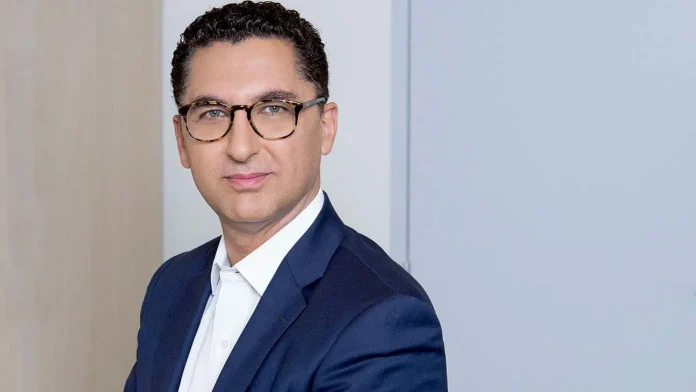
Maxime Saada, CEO, CANAL+ [Credit: hollywoodrepoter.com]


Fresh insights have emerged about what motivated CANAL+ to acquire MultiChoice, operator of Showmax and DSTV. An insider who was privy to the acquisition alleged recently that one of the factors that led CANAL+ to acquire MultiChoice was the opportunity to ride on the perceived monopoly enjoyed by MultiChoice.

‘’The company is coming to Nigeria because of the monopoly MultiChoice has enjoyed over many years. You know, MultiChoice has no discernible, direct competitor. That, and other factors, worked in favour of CANAL+”, the person who was close to the acquisition told Applesauce.ng.

The source added that the language barrier between the Francophone and Anglophone has been a challenge for CANAL+, but ’’the perceived monopoly was part of the attraction’’.

“I am excited about the potential this transaction unlocks for stakeholders… the combined group will benefit from enhanced scale, greater exposure to high-growth markets and the ability to deliver meaningful synergies,” Maxime Saada, CEO of CANAL+, said during the acquisition process.

Canal+ operates in 25 African countries through 16 subsidiaries and has eight million subscribers, according to the French group. MultiChoice is in 50 countries across sub-Saharan Africa and has 14.5 million subscribers. It includes Africa’s premier sports broadcaster, SuperSport, and the DStv satellite television service.

Since 1993, MultiChoice has been a dominant player and has grown to become a household name and a lifestyle choice in the country. It brings entertainment and information to millions of homes, cutting across all ages and cultures, and making huge contributions to the country’s economy via huge investments.

One South African bank equals Nigeria’s entire banking sector

0
Photo credit: Jeffrey Blum


By BLAISE UDUNZE


Nigeria has always prided itself as Africa’s largest economy and most populous nation. Currently, its banking sector is confronting a decisive moment that should send shockwaves. Today, a single South African bank, Standard Bank Group, commands a market value at roughly $21-22 billion that rivals and, in some comparisons, exceeds the entire Nigerian banking industry. Though it may seem to be unbelievable, it is real.

Market valuations

This striking imbalance is not merely about market valuations for individuals who are perturbed by this alarming revelation. Hence, it must be known that this reflects deeper structural challenges in Nigeria’s financial system and underscores why the Central Bank of Nigeria’s recapitalisation drive has become essential for restoring competitiveness, resilience, and global relevance.

Without any iota of doubt, for a nation of over 200 million people and Africa’s largest economy by several metrics, this reality is more than an uncomfortable statistic. This is truly a reflection of deeper structural weaknesses within the financial system. It highlights the urgent need for reform and explains why the ongoing recapitalisation drive by the Central Bank of Nigeria has become one of the most consequential policy interventions in the country’s banking industry in two decades.

Recapitalisation is not merely a regulatory exercise. If, genuinely, the key stakeholders consider this exercise as an attempt to reposition Nigerian banks to compete with global peers, strengthen financial stability, restore investor confidence, and enable the banking sector to support economic transformation, they must not handle this report with bias.

Disparity between Nigerian and South African banks

The disparity between Nigerian and South African banks illustrates the scale of the challenge. While Standard Bank Group, the largest by assets, has a market capitalisation of roughly R372 billion ($21-22 billion = N32.66 trillion). Similar whooping amounts valued in the multi-billion-dollar range as of 2025 apply to several other South African banks, including FirstRand, Absa Group, and Nedbank. For apt juxtaposition from what is obtainable with the South African bank, the combined market capitalisation of 13 Nigerian banks listed on the Nigerian Exchange (NGX) stood at about N16.14 trillion ($10.87 billion) as of 2025-2026.

However, the earlier benchmarks show that around May 2025, it was about N11.07 trillion. The current valuation of N16.14 trillion is a result of the funds tapped by some banks from the capital market through rights issues and public offerings.

Nigeria’s largest banks tell a different story. Guaranty Trust Holding Company, widely regarded as one of Nigeria’s most efficient banks, is valued at less than $2 billion (N3.3 trillion). Access Holdings, despite managing assets exceeding $70 billion, carries a market capitalisation of under $1 billion.

To further buttress Africa’s largest financial institution’s position, as of June 30, 2025, Standard Bank Group of South Africa reported total assets of R3.4 trillion. This amount is equivalent to $191.8 billion, and it points to the fact that it is at the top in Africa’s financial space. The equivalent in naira at Nigeria’s exchange rate of N1,484.50 to $1. Hence, $191.8 billion translates to approximately N284,983 trillion, or roughly N285 trillion. This means a single South African bank now outvalues the entire Nigerian banking industry, when compared to the 10 largest lenders collectively holding N218.99 trillion in assets. Though Nigerian banking industry assets were projected to reach N242.3 trillion ($151.4 billion) by 2025-2026.

An alarming disconnect between asset size and market value signals a deeper.

The obvious and alarming disconnect between asset size and market value signals a deeper crisis of confidence as enumerated thus far. One underlying mistake is to understand that investors are not merely assessing balance sheets; they are evaluating governance standards, currency stability, regulatory predictability, and long-term growth prospects, as these remain their focal interests. The market’s verdict is clear: Nigerian banks remain undervalued because investors perceive higher systemic risks.

Recalled that Nigeria has travelled this road before, in 2004-2006, which did not end as planned. The then-governor of the Central Bank, Charles Soludo, launched a bold consolidation reform that reshaped the banking industry. In addition, Nigeria, in numbers, had 89 banks, which were more than what is in operation today, and many of them were small, fragile, and undercapitalised.

Similar steps are being witnessed today, as Soludo then raised the minimum capital base from N2 billion to N25 billion, triggering a wave of mergers and acquisitions that reduced the number of banks to 25. The industry witnessed the emergence of champions as the reform produced stronger institutions, such as Zenith Bank, United Bank for Africa, Guaranty Trust Bank, and Access Bank.

Nigerian banks are formidable competitors on the continent.

For a period, the experience was that Nigerian banks expanded aggressively across Africa and emerged as formidable competitors on the continent, but unfortunately, the momentum gradually faded because of certain missing pieces, and this must be addressed if the industry is ready for economic relevance. The global financial crisis of 2008 exposed weaknesses in risk management and regulatory oversight. With the industry reacting, several banks were exposed to the stock market and the oil sector. This led to another wave of reforms under former CBN governor Sanusi Lamido Sanusi in 2009.

Although one would say that those interventions stabilised the system. However, more harm than good, they also ushered in a more conservative banking culture, as witnessed in the system, where many institutions prioritised survival over innovation. Two decades after the Soludo reforms, Nigeria’s financial landscape has changed dramatically.

The size of the economy has expanded, inflation has eroded the real value of bank capital, and global regulatory standards have become more demanding. Banks that once appeared adequately capitalised now find themselves operating with limited buffers against economic shocks.

Recognising these vulnerabilities, the CBN introduced a new recapitalisation framework requiring banks to raise their capital bases to the following thresholds: N500 billion for international banks, N200 billion for national banks, and N50 billion for regional banks. As has always been the case, these requirements are designed to ensure that Nigerian banks possess the financial strength required to compete with institutions in advanced economies.

Nigerian banking to take a new leaf as the recapitalisation exercise ends

The Nigerian banking sector should take a new leaf as the recapitalisation exercise ends, with the understanding that capital adequacy is not merely a regulatory metric; it determines how much risk banks can absorb, how much they can lend, and how resilient they remain during economic crises, which must be accompanied by innovation.

In developed financial systems, banks operate with deep capital buffers, which are common with South African banks, that allow them to finance infrastructure, industrial projects, and large corporate investments. Without similar capital strength, Nigerian banks cannot effectively support large-scale economic development.

One of the most persistent obstacles facing Nigeria’s banking sector is currency volatility. The Nigerian naira has experienced repeated devaluations in recent years, eroding investor returns and weakening confidence in local financial assets. When the currency depreciates sharply, equity valuations expressed in dollars decline even if banks report strong profits in local currency. This dynamic partly explains why Nigerian banks appear profitable domestically yet remain undervalued in international markets.

South Africa’s financial system benefits from a more stable currency environment and deeper capital markets; Nigeria’s financial markets remain comparatively shallow.

In contrast, South Africa’s financial system benefits from a more stable currency environment and deeper capital markets. The strength of the Johannesburg Stock Exchange allows South African banks to attract large pools of institutional capital from pension funds, asset managers, and international investors. Nigeria’s financial markets, though improving, remain comparatively shallow.

Another irony in Nigeria’s banking sector is the difference between reported profits and genuine productivity within the economy, and the contradiction is glaring. Though it is known that many Nigerian banks recorded extraordinary profit growth in recent years, partly driven by foreign-exchange revaluation gains following the depreciation of the naira, the contradiction is that such gains do not necessarily reflect improvements in efficiency, innovation, or lending performance.

One measure the apex bank adopted was recognising the risks and restricting banks from paying dividends derived from these gains, insisting they be retained as capital buffers. This intervention revealed how much of the apparent profitability was linked to currency fluctuations rather than sustainable business growth.

Banking strength lies not in accounting windfalls.

True banking strength lies not in accounting windfalls, but in the ability to finance real economic activity, and this should be one of the ongoing recapitalisation targets. The core function of banks in any economy is to channel savings into productive investment. Yet Nigerian banks have increasingly shifted toward safer and more profitable activities, such as investing in government securities, which has continued to weigh negatively on the growth of the real economy.

Other mitigating headwinds, such as high interest rates, regulatory uncertainty, and credit risks, discourage lending to manufacturing firms and small businesses. The result is a financial system that often prioritises short-term returns over long-term economic development. By contrast, South African banks play a more significant role in financing infrastructure projects, corporate expansion, and consumer credit.

Recapitalisation aims to address the imbalance by strengthening banks’ capacity.

Recapitalisation aims to address this imbalance by strengthening banks’ capacity to support the real economy. The fact is that stronger balance sheets will allow Nigerian banks to finance large projects in sectors such as energy, transportation, agriculture, and manufacturing; alas, the narrative is very different, going by what is obtainable in the Nigerian finance sector when compared to others.

Investor perception is shaped not only by financial performance but also by governance standards. International investors place significant emphasis on transparency, regulatory stability, and corporate accountability. While Nigerian banks have made relative progress in improving governance frameworks, there are concerns about insider lending, regulatory inconsistencies and complex ownership structures. These issues have continued to weigh on the industry, while some of these obvious factors may have contributed to the challenges observed in the operations of institutions such as First Bank Plc, and another example is the liquidation of Heritage Bank.

First Bank and another example is the liquidation of Heritage Bank
Recapitalisation provides an opportunity to strengthen governance by attracting new institutional investors and enforcing stricter disclosure requirements, and not mainly dwelling on the pursuit of bigger capital because capital alone does not guarantee resilience, as it would be recalled that Nigeria has travelled this road before.

Larger, better-capitalised banks tend to operate with more robust governance systems because they face greater scrutiny from regulators and shareholders. The global banking industry has become increasingly competitive, which should be a wake-up call for the Nigerian banking industry.

Technological innovation, cross-border expansion, and regulatory harmonisation have transformed how financial institutions operate, and this means that African banks, especially in Nigeria, known as the economic giant of Africa, must therefore compete not only with regional peers but also with global players.

Recapitalisation is essential if Nigerian banks are to participate meaningfully in this evolving landscape. On this aspect, it must be emphasised that stronger capital bases will enable banks to invest in digital infrastructure, expand internationally, and develop sophisticated financial products.

Nigerian banks are to participate in large syndicated loans and international trade financing.

Besides, they will also enhance the ability of Nigerian banks to participate in large syndicated loans and international trade financing. Without adequate capital strength, Nigerian banks risk being marginalised in the global financial system, and for this reason, the CBN must ensure that every dime injected or raised for recapitalisation is genuinely devoid of any form of irregularities.

At the same time, traditional banks face increasing competition from financial technology companies. Nigeria has emerged as one of Africa’s leading fintech hubs, attracting billions of dollars in venture capital investment. These companies are reshaping payments, lending, and digital banking services.

Fintech innovation presents opportunities for collaboration.

While fintech innovation presents opportunities for collaboration, it also poses a competitive threat to traditional banks. To remain relevant, banks must invest heavily in technology and digital transformation. The CBN must ensure that the ongoing recapitalisation provides the financial capacity needed to support such investments, just like its counterpart in South Africa’s banking sector, which operates with a large pool of capital.

The success of Nigeria’s recapitalisation programme will depend on more than regulatory mandates, which is a fact that must be taken into cognisance. Since banks must demonstrate a genuine commitment to transparency, innovation, and long-term economic development.

Policymakers must address the broader macroeconomic environment.

Policymakers must also address the broader macroeconomic environment. Of a truth, the moment Nigeria maintains a stable exchange rate, lower inflation, and predictable regulatory policies, it will be essential to restoring investor confidence, and if aptly implemented effectively, recapitalisation could usher in a new era for Nigeria’s banking sector. The country does not necessarily need dozens of weak banks competing for limited opportunities. What Nigeria truly needs are just fewer, stronger institutions capable of financing industrialisation, supporting entrepreneurs, and competing globally.

Size alone does not determine financial strength.

Nigeria often describes itself as the giant of Africa. But size alone does not determine financial strength. The comparison with South Africa’s banking sector serves as a sobering reminder that institutional quality matters far more than population size. The ongoing recapitalisation exercise, which is due March 31, 2026, represents an opportunity to rebuild Nigeria’s financial architecture and position its banks for global competitiveness.

If the reforms succeed, Nigerian banks could once again emerge as powerful players on the African stage. If they fail, the uncomfortable reality will persist, one South African bank standing taller than an entire Nigerian banking industry.

————–
Blaise, a journalist and PR professional, writes from Lagos and you can reach him – blaise.udunze@gmail.com
 

My doctor-friend loves Arteta, Arsenal FC manager, and has mastered the use of dark arts – he no longer sleeps at home

0

Everton football club manager, David Moyes, had described Mikel Arteta’s Arsenal football club as a trailblazer in the use of dark arts. This was after Arsenal had scored many goals from corners, throw-ins, and free kicks. He spoke about how Arsenal players have mastered the art of holding, blocking and grappling opponents before scoring those goals. I do not know if my doctor-friend was hobnobbing with the Arsenal manager, since he has been acting up lately, never mind that Arsenal lost the Carabao Cup final at the weekend.

I agreed to move over to his estate when I could not cope with the incessant power outages and high cost of fuel. My days are better, and I sleep better without pills. We have also had argy-bargy about little matters, and that is because he has stopped coming home. He told me about one of his patients, and how he had to look after him and got him to a specialist and some bullshit. Then I discovered the patient was a male. A rich male. In addition, they are sleeping together. Oh my God.

This thing is killing me softly, and it is taking me out of the dating game. My mother does not understand it. My father does not understand it. If my doctor-friend were sleeping with another woman, I would not have minded one bit. However, he deserted me for a man? What am I missing, and how could I correct this? I did not cry, as this would not solve the problem. I did not make a fuss out of this, as this would complicate the problem. I did not tell a soul, as this is an admission of a loss.  What I have done is to give him…

Values of electronic payment transactions experienced a decline in February – Report

0

The value of transactions through the Electronic Payment (e-payment) channels in the country experienced a decline, dropping by N4.04 trillion to N113.27 trillion in February 2026, according to a report released by Financial Derivatives Company Limited (FDC).

Citing e-payment transactions data obtained from the Nigeria Interbank Settlement System (NIBSS), the company said: “The decline signals post-holiday normalisation, as seen in the previous Februarys.” It, however, said that the value of transactions “is projected to increase in March, driven by the Eid al-Fitr festive demand.”

#2 – Interswitch, Flutterwave, Opay, and other fintech firms have a combined valuation of $10.6 billion.

Some of Nigeria’s leading fintech companies, including Interswitch, Flutterwave, Opay, Moniepoint and Interswitch, have a combined valuation of about $10.6 billion as of January 2026. This underscores the country’s growing influence in Africa’s digital finance ecosystem and renewed investor confidence in technology-driven financial services.

Report by the Tribune, based on data from Securities and Exchange Commission (SEC) filings, Bloomberg and other publicly available sources, Flutterwave remains Nigeria’s most valuable fintech company with an estimated valuation of $3 billion. OPay is next at $2.75 billion. Moniepoint and Interswitch are valued at about $1 billion each, reinforcing their positions as critical pillars of Nigeria’s digital payments architecture.

#3 – CBN sets new policies to promote safer instant payments, giving users more control

The Central Bank of Nigeria (CBN) has set new rules to promote safer mobile money transfers and online banking and give users more control. This aims to curb fraudulent activities in the growing digital money world.

A statement released on March 12, signed by Musa Jimoh, says the rules start on July 1 for all banks and payment apps in Nigeria. With the rules, mobile money users have the liberty to choose whether to opt into instant payments or turn them off on their accounts—anytime they like.

#4 – Fintech firms to implement fraud detection solution to strengthen anti-money laundering

Following the directive of the Central Bank of Nigeria (CBN), fintech firms in the country will implement automated systems to detect suspicious transactions to strengthen anti-money laundering (AML) and financial crime controls in the sector.

In a circular released on March 10, the apex bank established baseline requirements for AML, fighting terrorist financing, and countering proliferation financing.

#5 – Apex bank issues guidelines on stricter bank verification number enrolment to promote a stable financial system

The Central Bank of Nigeria (CBN) has introduced stricter Bank Verification Number (BVN) enrolment and data access rules to prevent suspected fraudulent transactions. This will become effective on May 1, 2026.

In a statement titled “Addendum to the Revised Regulatory Framework for Bank Verification Number (BVN) Operations and Watchlist for the Nigerian Banking Industry 2021, signed by Musa Jimoh, Director of the Payment System Policy Department, the apex bank said it introduced the policy ‘’to promote a stable financial system’’.

Showmax’s subscribers have over a one-month binge-watch before it ceases operation on April 30

0
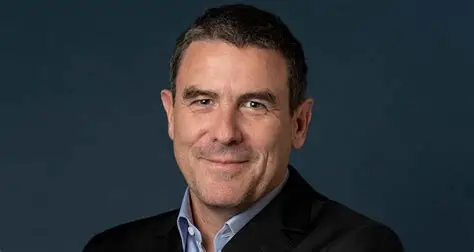
MultiChoice Group CEO, David Mignot [credit: Techfocus24.com]

Showmax’s subscribers will have just over a month to binge-watch content on the streaming service before the platform officially ceases operations on April 30. This development emerges after the acquisition and the latest restructuring by CANAL+. Thereafter, the content will be temporarily moved to DStv Stream and later to Canal+’s app.

According to a report, Showmax, which launched in 2015, has suffered substantial losses over the years.

Showmax was not a commercial success – CANAL+ CEO

In a statement issued last month, MultiChoice confirmed its decision to discontinue Showmax, an African streaming site. This followed a “comprehensive overview” by the entertainment company, the parent body of pay-per-view satellite TV company DStv.

It said: “This decision reflects our focus on strengthening our overall digital offering and ensuring long-term sustainability in an increasingly competitive streaming environment.”

According to thesouthafrican.com, Canal+ CEO Maxime Saada stated that Showmax was not a commercial success, saying it had “underperformed” in the streaming industry.

A month later, MultiChoice Group CEO David Mignot stated that the business could not continue in its current form as it had not met its growth targets.

While Showmax will operate under a new business model after April, South Africans will be spoilt for choice with other video streaming platforms. International platforms include the likes of Netflix, YouTube, Disney+, Amazon Prime Video, BritBox, Zeus Network, and Apple TV+.

DStv stream, which operates via an internet connection rather than a satellite and decoder, is also available to stream local and international content and sports.


Canal+, MultiChoie parent company, injects $115 million in capital, lays off workers to boost cost cutting and efficiency

0
Maxime Saada, CEO, CANAL+ [Credit: hollywoodrepoter.com]

CANAL+, the new owner of MultiChoice, will inject $115 million in capital into the business as part of a sweeping restructuring plan aimed at stabilising the African pay-TV operator, following years of operational and financial pressure.

Tuko.co.ke reported that CANAL+’s restructuring will also involve staff reductions in other areas. The company will also launch a restructuring programme at IRDETO, MultiChoice’s technology and cybersecurity firm and a voluntary severance for support employees.

In its report, the company did not specify the number of roles to be reduced, but the restructuring signals that cost discipline and operational consolidation are immediate priorities for the French group, as the restructuring signals a shift toward leaner operations, with a focus on eliminating redundancies and optimising its cost base.

The planned layoffs are expected to form a core element of a broader cost cutting and efficiency drive, as Canal+ seeks to streamline MultiChoice’s operations and improve profitability.

MultiChoice has struggled in recent years with declining subscriber numbers across key African markets, weighed down by macroeconomic pressures, currency volatility, and changing consumer behaviour.

The rise of global streaming platforms has intensified competition, chipping away at the company’s traditional pay-TV dominance. Canal+’s intervention marks a pivotal moment for MultiChoice, reflecting a more aggressive approach to repositioning the business.

By combining fresh capital with structural reforms, the new owners are aiming to both stabilise short-term performance and lay the groundwork for longer-term growth.

Beyond cost, the electricity outage​ kills me; I hope not to die before exhaust fumes finish me. Should I pour salt into the generators in my compound?

0

All the voices in my head are urging me to pour a handful of salt into the fuel tanks of the generators in my compound because I could not sleep. My ‘maga’ doctor-friend gave me sleeping pills with the hope I would not end up like Michael Jackson, who slept forever. Worried, I sought the calm reassurance of a therapist, and we had a long session, as she was trying to get to the roots of my sleeplessness, or is it insomnia? ​

Then her hands brushed against my breasts, or was it a mistake? Oh, come on. It was a mistake. The voices drowned my thoughts. The voices then reminded me ‘I have promised’’ to pour salt into the electricity-generating machines in my compound. Come on! There were competing voices in my head. Why can’t I think properly?

There is no hope for my sleeplessness and for the electricity outages because the Gencos [or is it the Discos?] are not providing me with any hope. To rub salt upon my injury, the fuel cost lives in the sky. My options have not changed. I can increase my petrol spending; I can relocate to a brothel or a hotel, which will depend on the cost, or I can move in with my ‘maga’ doctor-friend, who lives in a mansion and calls it an estate, before I lose my sanity or run out of cash.

The problem I have is that I am not the only one on this sinking ship; many Nigerians are suffering from this energy crisis. My housemates behave as if they live in neighbouring Ghana with steady electricity because they run generators nonstop, 25/8! Aha, this is killing me! My two-battery inverter and a solar panel are not enough to keep the lights on.

Nigeria’s energy problems are not new, I know, and the national grid has collapsed many times. This has made generators, the available backup power source, even more expensive to run. The unstable electricity means I have missed many deadlines because I could not sleep. My unlimited internet service has limited me because my streaming buffers and my video calls drop incessantly.

Some of the companies I serve are raising eyebrows because I have delayed two presentations. Maybe I need to pour some salt into the generators in my compound before the exhaust fumes and the endless noise kill me. I am struggling for power, fuel, and sleep. I do not want to die now!