Friday, November 20, 2026
Home Blog Page 5

When fuel moves, everything moves

0

Jaouad Rahou, CFO, HEC Paris

What happened to Nigeria’s economy in March?

Every month, I track these numbers. March was one of the most consequential months in recent memory. From my study, March did not collapse. It was a contradiction. Oil revenue went up. Purchasing power was down. Profits recovering. Household budgets are shrinking.

But Nigeria is building. The refinery is running. The ports are getting funds. The digital economy is scaling. The ratings are climbing. Therefore, let us look at 16 key indicators that happened in March, which you should pay attention to.

Seq Key movers in March
1. Brent crude swung between $64 and $120 per barrel in 30 days. Nigeria was on the right side of that trade.
2. PMS rose 49.8% to ₦1,257/litre. Diesel jumped 82.5% to ₦1,807. Transportation was up by 35%. When fuel moves, everything moves.
3. Dangote Refinery hit full capacity at 650,000 bpd and started exporting to five African countries. Nigeria went from importing all its fuel to exporting it.
4. IMF and World Bank revised Nigeria’s 2026 growth upward to 4.4%. Nigeria will overtake Algeria as Africa’s third-largest economy. GDP is hitting $334 billion.
5. Inflation at 15.8% in March. In mid-2024, it was 34%. The direction matters more than the number.
6. CBN held MPR at 26.5%, unchanged since the February cut from 27%. After peaking at 27.5%, the easing cycle has begun. Borrowing costs are coming down.
7. The stock market delivered 28% returns in Q1 alone. 90% over 12 months. 410% over five years.
8. The corporate earnings season showed good performance. FX stability is showing up in balance sheets.
9. Foreign direct investments jumped to $720m in Q3 2025, from $90m the quarter before.
10. Capital importation reached $6.44bn in Q4 2025, up 26.61% year-on-year. Money flowing in, not just out.
11. $1 billion UK deal to rebuild Apapa and Tin Can Island ports.
12. MSC signed a 45-year concession with Nigerdock for a new terminal at Snake Island Port.
13. The digital economy contributes nearly 20% of GDP. Project BRIDGE is deploying 90,000km of fibre optic cable nationwide.
14. Moniepoint handles 80% of in-person payments—OPay processes 100 million transactions daily. Mobile money surged 1,500% in four years. Flutterwave got a full banking licence from the CBN. The line between fintech and banking is disappearing.
15. The Naira held at ₦1,450-₦1,475 in parallel. Reserves now $49 billion. The gap is narrowing. This is not 2023.
16. FAAC climbing. The question is what states do with the windfall. Infrastructure or recurrent spending.


My friend, what did March feel like from where you are seated?

How could I collect the unclaimed dividends my father left behind when he died?

0


My father died suddenly intestate, leaving no will, no property, except grudges. This has thrown the family into turmoil, and the extended family members have almost torn my grieving mother apart. They did not believe my mother.

The family members thought my mother was hiding some ‘property.’ The issue gained another level when my mother received a writ of summons. I laughed. Did this fool know that my father had no property? He did not have a naira to his name. He spent his time educating his five daughters, and none of them depended on him.

You know, whatever happens in a nuclear family stays in the nuclear family, and members of the extended family have no inkling of what goes on. They thought my father had some funds stashed somewhere, unknowingly to them, as he got his pension, he spent it on his daughters and my mother. He did not build a house.

He built his daughters. He did not buy a car. He drove his daughters. He did not have a vineyard. His daughters were his farmland. All of us were educated, and we do not depend on him for undies.

A few weeks later, the court dismissed the case for lack of evidence, and the dust settled. Then I received an email from an anonymous person, which contained a link to my father’s unclaimed dividends. Confused, I responded to the email and met the anonymous person, who claimed she was my father’s lawyer.

With my doctor-friend in tow, we had a buffet lunch at a Chinese restaurant, and I popped the question, ‘’how could I collect my father’s unclaimed dividends?’’

_______________________________________________________________________

Sarah’s Demons is written by an advertising executive who works and lives in Maitama, Abuja. Responses to her diary should go to contentchef@applesauce.ng

When President Trump hosts our delegation, what goes down at the airport before the World Cup

0


Our plane overshot the runway and missed a stationary fire-fighter vehicle by the whiskers. Somehow, the plane took off for another hour or more. I could not comprehend what was going on. Flashes of death danced in my mind. And, oh, finally, the plane landed safely, and we disembarked. However, we were held up for over four hours because our diplomatic passports had expired!

‘’Is this a ploy by Trump’s ICE to deny us from entering America? If President Trump were God, the world would be his PlayStation, and he would play from his white beanbag, but he would not name any country called Nigeria. He would have many shitholes!

‘’All this hold up, is it because of the forthcoming FIFA World Cup that America has beefed up security? My sister, is Trump trying to cut every nation to size?’’ I told a companion in a hushed tone at the Washington Dulles International Airport.

‘’They are following standard security protocol’’, our Nigerian-American security attaché replied in a whisper. I was shocked. How did she hear me?

She explained succinctly. ‘’This is not the first time Nigerians have breached the security protocol at this airport, and the ground security is being careful. All of you are Nigerians, and some of you are visiting for the first time’’.

After the four-hour delay had subdued and dampened our spirits, including the head of the delegation and my doctor-friend, the officious American airport security officers apologised. They returned our passports and gave us diplomatic access. Then we were chauffeur-driven to the White House to meet the Almighty Trump.

As we were being ushered into another bus, a shrill noise cut through my dreams. My phone rang, and it was my nephew. Ah, time for an update about Meta, job loss and her start-up to rival Facebook.

_______________________________________________________________________

‘Sarah’s Demons – Diary of a babe fighting a thousand demons’ is written by an advertising executive who works and lives in Maitama, Abuja. Responses to her diary should go to contentchef@applesauce.ng


Airtel is world’s second largest telco as global customer base surpasses 650 million

0
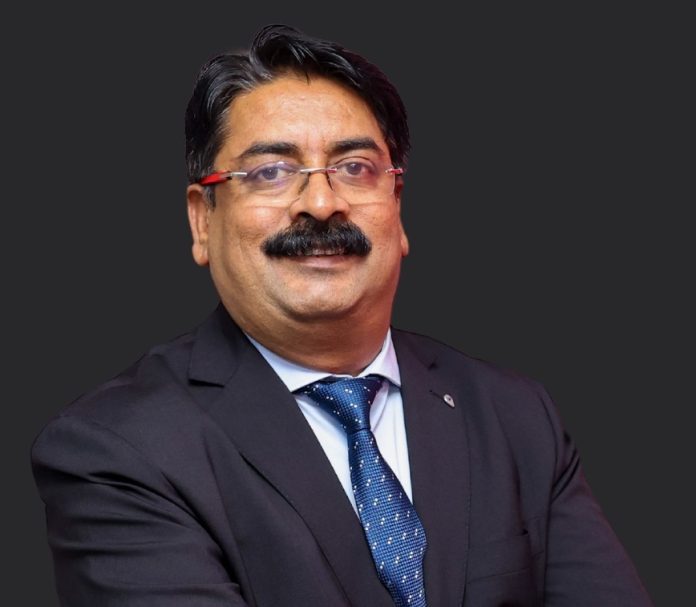
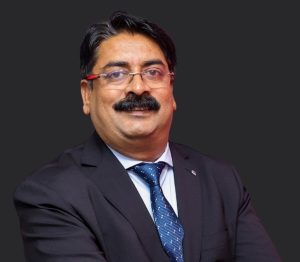
Dinesh Balsingh, Airtel-Nigeria CEO


After crossing 650 million mobile subscribers worldwide, Bharti Airtel has announced a major milestone in its global operations. This scale now positions Airtel as the second-largest telecommunications operator on the planet by customer base.

Crossing this threshold reflects a network of immense scale, the capacity to reach customers across diverse markets with consistent quality, and the ability to deliver experiences shaped by sustained innovation.

In a statement signed by Femi Adeniran, Director, Corporate Communications & CSR, Airtel has continued to scale infrastructure at a pace unmatched in its recent history. Over the past three years, the company has increased its national site count from just above 13,000 to nearly 17,200 sites, including more than 1,560 added in the last twelve months.

This expansion deepens capacity in high-demand corridors and extends high-speed coverage to previously underserved regions. The latest industry data from the Nigerian Communications Commission (NCC) underscores the significance of this growth.

As of December 2025, Nigeria recorded 145,141 base stations across 2G, 3G, 4G and 5G layers. Of this national infrastructure, Airtel accounts for 46,918 base-station layers, reflecting its substantial contribution to the country’s radio access network and its push to absorb rising data consumption.

Nearly 99 per cent of Airtel Nigeria’s sites are now 4G-enabled, positioning the operator as one of the few with a near-ubiquitous high-speed broadband footprint. Thousands of sites have been upgraded for capacity in the past year alone, enabling improved speeds and more stable performance during peak usage.

The company’s expansion underpins Nigeria’s rising internet adoption, with Airtel recording among the largest monthly increases in new internet subscribers, driven by network upgrades across states and rural corridors.

Besides, the company also has a strategic connectivity and redundancy edge, as it is tackling a critical infrastructure challenge for the Nigerian digital economy: reliance on a single international internet gateway. The company is advancing plans for its second submarine cable internet breakout point at Kwa Ibo in Akwa Ibom State, early in the 2Africa cable system rollout, to provide faster and more resilient national connectivity across regions. This significant investment aligns with global best practices in network diversity and redundancy, ensuring a more stable digital experience for consumers and enterprises alike.

in addition to its growth, Airtel’s digital finance arm, SmartCash, has gained traction in Nigeria’s competitive mobile money ecosystem, now serving over 3 million active users. The platform is supported by an expansive agent network and digital services that lower barriers for everyday financial transactions and savings.

Across Nigeria, Airtel’s retail distribution network stands as one of the sector’s most extensive, with approximately 4,000 exclusive outlets bringing services, support, and products closer to customers in small towns, communities, and high-traffic urban hubs. That footprint drives both access and engagement in a market where localised presence remains a competitive differentiator.

Dinesh Balsingh, CEO, Airtel Nigeria, said: “Reaching 650 million customers globally reflects the trust people place in Airtel’s networks and services. Here in Nigeria, we are building infrastructure that not only keeps pace with rising demand but anticipates it. Expanding our network, strengthening redundancy with the second international gateway at Akwa Ibom, and scaling digital services like SmartCash are strategic investments in Nigeria’s digital ecosystem. Our goal remains clear: reliable connectivity, equitable access, and seamless digital experiences across the board.”

As Nigeria’s digital economy continues to evolve, Airtel is committed to sustained innovation — from expanded fibre backbones and advanced mobile broadband to future-ready services, including satellite-enabled solutions and enterprise-grade digital platforms. These efforts help ensure that connectivity, commerce, and creativity thrive across Nigeria and beyond.


‘’You cannot outpace algorithm with hesitation’’ – Yomi Badejo-Okusanya, Lead Partner, CMC Connect LLP

0
Yomi Badejo-Okusanya, Lead Partner, CMC Connect LLP


The Lead Partner at CMC Connect LLP, Yomi Badejo-Okusanya, said managing a crisis in the age of artificial intelligence requires preparedness and speed, saying ‘’You cannot outpace an algorithm with hesitation. We must respond in minutes, not in hours. We must use AI not powerfully but responsibly. In the age of AI, a stitch in time does not save nine. It saves reputation, leadership and the trust that defines both.’’

‘’Crisis is a faster fact. It is louder than the truth. A deep fake can dictate reality. Over six organisations have faced an AI crisis, but 70 per cent of leaders are not prepared. It is not the tech. It is the gap. It is how slowly we are responding. We are reactive. We are hesitant. We cannot outpace an algorithm with hesitation’’, he said.

Badejo-Okusanya, who spoke at the Crisis Management Advocacy Month Flagship Conference 2026 in Lagos, highlighted the need for artificial intelligence-driven strategies and coordinated systems to address today’s rapidly evolving crisis landscape.

He urged the stakeholders to reposition crisis management within organisational leadership because ‘’preparedness is power’’. He noted that crisis management must move from the background to the centre of leadership, stressing the importance of anticipation, preparation, and decisive leadership in navigating crises. He described the conference as part of a broader movement aimed at redefining preparedness in an increasingly volatile environment.

Held at the Metropolitan Club, Lagos, the conference attracted key stakeholders from government, law, and the communications ecosystem under the theme, “Crisis Management in the AI Milieu: fresh threats, smarter responses.” Discussions throughout the event reinforced the need to shift from reactive crisis management to a more proactive, intelligence-led approach to preparedness.

While launching the Crisis-X Intelligence Engine, an AI-powered platform designed to enhance how organisations detect, analyse, and respond to crises, Badejo-Okusanya described the platform as “built for speed, intelligence, and the demands of the current moment.”

He said the platform ‘’integrates real-time monitoring, sentiment analysis, strategic response planning, and recovery mechanisms’’. In addition, the platform also incorporates emotional intelligence capabilities to help organisations better interpret and respond to public sentiment during critical situations.

In his keynote, Dr Bosun Tijani, Honourable Minister of Communications, Innovation and Digital Economy, highlighted the growing importance of data, technology, and coordinated systems in managing modern crises.

The minister emphasised the need for a forward-looking approach, stating that while crises are inevitable, responses can be shaped through preparedness. “With the right data and systems, organisations can move from reacting to crises to anticipating risks and managing them in real time,” he said.

Olalekan Fadolapo, Director General and CEO of the Advertising Regulatory Council of Nigeria, who represented the Honourable Minister of Information and National Orientation, Mohammed Idris Malagi, in his goodwill message, commended the organiser of the event  ‘’for its forward-thinking approach to crisis management’’.

Dignitaries at the event include Femi Olubanwo, past President of Igbobi College Old Boys Association and Partner at Banwo & Ighodalo; Kunle Elebute, past Chairman of KPMG Africa and Chairman of CMC Connect LLP; and Bolajoko Bayo-Ajayi, the first female President and Chairman of Council of the Nigerian Institute of Marketing.


Meta sacks my UX nephew and she is hell bent on getting back at Zuckerberg by creating a Facebook rival platform  

0


In a massive layoff, Meta has sacked one of my nephews who japa’d three years ago, and she is hell-bent on getting back at Mark Zuckerberg, the founder of Meta and Facebook. She alleged mistreatment and unfair disengagement by Meta. She ranted and nearly deafened me with a catalogue of what she called ‘demeaning behaviours.’ ‘’Big sis, could you imagine that Facebook wants to replace me with AI?’’

She asked amidst sobs and sniffing. As a UX specialist, she swore on her mother’s grave that she would use the same AI to create a rival platform to compete with Facebook, and, maybe, eventually, ‘’Zuckerberg would acquire my start-up, and I could work with Facebook again’’.

Dear Diary, you know, I am not a techie, and I do not pretend to be one, but the picture my nephew painted of a rivalry with Facebook seemed logical. However, to compete with Facebook? I am not sure. For Meta to acquire her would-be AI-created startup is a possibility. To work as a Facebook employee again? I am not sure.

However, I was still struggling with how I could get my doctor-friend back [he had joined politics against my ‘womanly’ advice, but he lured me to some of his nocturnal meetings. Why politicians meet at such ungodly hours beats me. Anyway, when he returned to our hotel suite, either I was sleeping or binge-watching horror movies. Diary, you can say my cup is half-full; if you add my nephew’s job loss, it’s empty!


ipNX celebrates the next generation of female innovators, equips secondary school

0
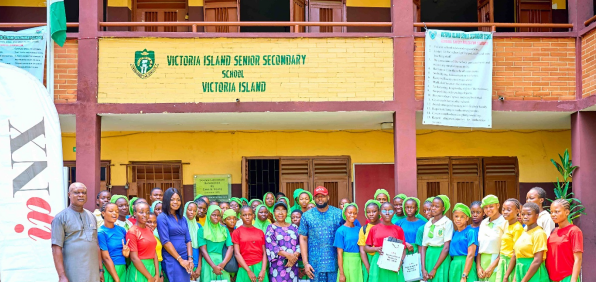
Some of the girls in Science, Technology, Engineering and Mathematics (STEM) and teaching staff with ipNX executives


In commemoration of International Women’s Day (IWD) 2026, themed Give to Gain, ipNX, a leading information and communication technology firm, has demonstrated its commitment to empowering women and promoting diversity with a series of impactful initiatives to inspire, educate and support the next generation of female innovators in the technology ecosystem.

As part of its community outreach, ipNX visited Victoria Island Senior Secondary School, Lagos, and hosted an engaging session to encourage young girls to explore opportunities in Science, Technology, Engineering and Mathematics [STEM].

The session afforded the students an opportunity to learn valuable insights into career pathways in technology, practical guidance, and real-life inspiration to pursue their ambitions in an increasingly digital world.

Courtesy of ipNX, the school received a free broadband internet connection as part of ipNX’s corporate social responsibility (CSR) initiatives to improve access to technology.

Mary Falade, Account Manager, ipNX Business, emphasised the importance of early exposure, mentorship, and access in bridging the gender gap in technology. She noted that the initiative by the company reflects its belief that empowering young girls today is critical to building a more inclusive and innovative digital future.

“When you give yourself to learning, discipline, and growth, you gain opportunities, confidence, and a future without limits. Anything is possible if you believe in yourself,” she added.

To reinforce its thought leadership and advocacy for women in technology, ipNX hosted a virtual webinar that featured Dr Nadu Denloye, one of Nigeria’s foremost technology leaders and former Group Managing Director of Telnet Nigeria Limited, as the keynote speaker.

Dr Denloye shared her professional journey, offering practical insights and inspiration to participants. While speaking on the theme “Beyond Inclusion: Women Building Influence, Driving Impact and Accelerating Growth, she explored the evolving role of women in shaping Africa’s digital economy, highlighting the importance of resilience and leadership, as well as actionable strategies for empowering women within the tech ecosystem.

In her remarks, Group Executive Director, Corporate Services, ipNX, Folashade Efiong-Bassey, said the company is committed to ”inspiring the next generation and creating pathways for women and young girls to thrive in STEM”.

She added that ipNX’s efforts are focused on providing access, opportunities, and the right support systems to help the women build meaningful careers in the digital economy. ”By continuing to champion equal opportunities and amplifying the achievements of women in technology, we are contributing to a future where more women can participate, lead, and succeed.”

These programmes are part of ipNX’s broader vision of being a people-driven and innovative organisation, committed to creating possibilities, enabling access, and driving sustainable impact across society.

Through strategic engagements, mentorship, and advocacy, the company said it would continue to play a pivotal role in advancing digital inclusion and fostering a more diverse technology ecosystem in Nigeria and across Africa.

​Is fintech the future of finance, or is it hyped?

0


Fintech is the future of finance. It is disruptive. Inclusive. Digitally transformative. That is what you have been led to believe. From mobile payments and neobanks to robo-advisors and peer-to-peer lending platforms, the industry has seen exponential growth in both funding and user adoption. However, beneath the flashy valuations and innovation headlines, a more sobering narrative is beginning to take shape.

On the one hand

The team of fintech experts at DigitalDefynd examined a series of structural and strategic weaknesses—including unsustainable business models, customer churn, regulatory hurdles, and overreliance on investor capital.

On the other hand

According to the guru, many fintechs, despite their digital prowess, are yet to solve the core financial challenges they aimed to disrupt. Instead, they often mirror the traditional systems they once ​analysed. It is now slicker, you know, with better branding.

In the long term

DigitalDefynd cut through the noise and explained that most fintech may be more hype than substance. Some may not be as revolutionary as it is portrayed. Many fintech start-ups have been valued at billions despite never turning a profit. This creates an illusion of success fuelled more by hype than financial performance. In the race to become the next big thing, DigitalDefynd explained, fintech start-ups have often attracted sky-high valuations based on future potential rather than current profitability.

My thought: One of the fintech companies that acquired a near-comatose payment firm in the UK has not made a profit. The investors have been pouring funds into the business. While innovation in the space is undeniable, it is also true that many of these companies operate at a loss. Investors, lured by disruptive promises and rapid user growth, have poured capital into start-ups that have not yet proven their monetisation models.

DigitalDefynd said that the mantra of growth at all costs dominates the fintech landscape. Whether it is digital wallets, neo-banks, or lending platforms, many firms prioritise acquiring users and expanding their market share, even if it means incurring losses through incentives. Zero-fee structures. Or subsidised services. This creates an artificial sense of scale. It hides the reality that profit margins are razor-thin. Or non-existent.

My thought: Does this explain a recent event at Kuda that downsized 20 ​p​er cent of its workforce? I do not have a clearer picture. But one of my friends said time would paint a better picture.


DigitalDefynd said fintech valuations often reflect speculative bets on market disruption rather than financial fundamentals. Valuation multiples have been disproportionately high, especially when compared to traditional financial institutions with robust balance sheets and regulatory stability. This has led to disconnects between private and public market expectations, with several ​​high-profile IPOs [Initial public offers] underperforming dramatically after listing.

My thought: One of the fintech firms in Nigeria has promised an IPO. It did not happen. Is this due to the fear of underperforming after listing?

In the short term

Valuation without profitability is akin to building the Banana Island on paper. It may look impressive. However, it is not the future.


Nigeria’s data appetite surges, whoever stays ahead, wins

0


A telco is ahead of surging data demand in a rapidly digitising economy.

Double your capital expenditure. The Nigerian Communications Commission [NCC] asked the telcos in 2025. The telcos have responded, with the Executive Vice Chairman of NCC, Dr Aminu Maida, saying that the commission has secured commitments from the operators to exceed their 2025 investment levels. One of the operators, Airtel Nigeria, has shown its intent to lead the next phase of telecoms growth through advancements in quality of service (QoS).

On the one hand

Already, Airtel Nigeria has updated its range of network, infrastructure, and technology advancements, which placed it in the forefront of QoS leadership in the sector. These updates reflect sustained investments made over the past 24 months. This signals an accelerated push to stay ahead of surging data demand in a rapidly digitising economy.

On the other hand

CEO Dinesh Balsingh said Airtel Nigeria’s strategy is on deliberate scale, depth, and resilience. He said over the last two years, the company has invested with discipline and clarity to strengthen its coverage nationwide. These investments are now translating into measurable improvements in performance, customer experience, and reach, even in underserved and hard-to-reach-communities.

Dinesh Balsingh, Airtel-Nigeria CEO

In the long term

In 2026, Airtel accelerated its upgrades because Nigeria’s data appetite is growing. Data shows that at the core of Airtel Nigeria’s QoS drive is the rapid expansion of its network footprint. Since December 2023, it has increased the number of network sites by 15.5%. It added 2,242 new sites. Its total sites nearly 16,711 nationwide. Soon, additional deployments will come to strengthen coverage. Capacity. Resilience across urban and rural locations.

Besides, the company is also fast-tracking its 5G rollout. Over the last three months, it has doubled its number of active 5G sites. This will connect the top 20 Nigerian cities to high-speed 5G networks. The upgrades are significant, as these cities will become 5G-enabled in the coming year.

Why these matter

Its network capacity upgrades have reached a significant scale. In 2025, it completed capacity enhancements on 30% of its sites. This covers over 5,032 sites nationwide. Today, 99% of Airtel Nigeria’s sites deliver high-speed 4G mobile broadband. It establishes the operator as a full nationwide 4G network. This is noteworthy because Nigeria’s appetite for data is surging. Whoever stays ahead of the pack through investment wins. That is why Airtel Nigeria’s capacity upgrades have extended to more sites to sustain performance as data usage continues to rise.

“We have increased our 4G spectrum by 10MHz. We are optimising our holdings. These actions allow us to support higher data throughput, better speeds and more consistent service, especially in high-traffic areas,” CTO, Harmanpreet Singh Dhillon, said. The company has built an extensive fibre footprint across almost all states. It is expanding its fibre network by 25%. Its intensive rollout activity is ongoing across cities and states. It has confirmed plans to extend its fibre footprint even further.

In the short term

It is a call-and-response world. Airtel Nigeria has responded to a call by investing in fibre, cloud, and satellite-enabled connectivity to lead the next phase of telecoms growth.

We have demonstrated that Made-in-Nigeria is not merely a label but a benchmark of excellence – CardForté’s co-founder

0
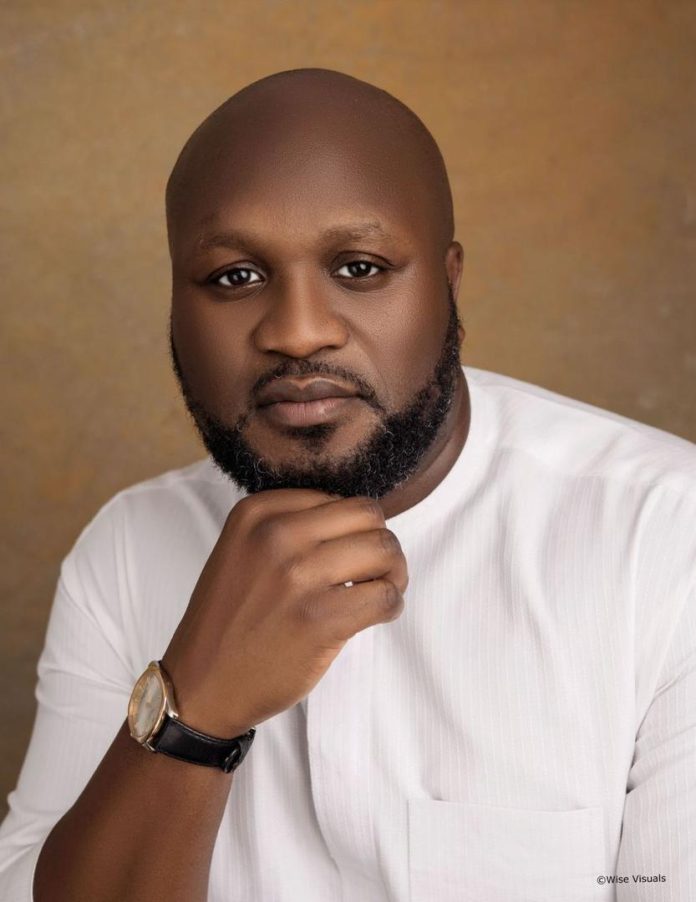
Tunde Aka Bashorun, Co-Founder, CardForte


‘’Made in Nigeria is not just a label but a standard of excellence,” Seun Lawal, the co-founder of CardForte, the all-in-one smart card solutions plug, said in a statement to mark its fifth anniversary.

He explained that when young professionals master the art of smart card production or building secure digital infrastructure on home soil, they do not earn a paycheck; they become beacons. ‘’They teach others, innovate, and demonstrate that Made in Nigeria is not merely a label but a benchmark of excellence.”

Beyond its social impact, CardForte’s approach has substantial economic implications by retaining technical skills and developing local supply chains. It has helped to reduce capital flight and ensure that Nigeria’s digital transformation benefits stay within the country.

‘’This supports local economies, funds education, creates jobs, and empowers start-ups that rely on secure digital infrastructure,’’ he added. As CardForté celebrates its fifth anniversary, its impact is measured not just by technological deployments but by the ‘’lives it has transformed and the expertise it has cultivated within Nigeria.’’

He stated that instead of pursuing quick visibility through consumer-facing applications, the company focuses on the less visible but vital layer of development and infrastructure. ‘’Our legacy is reflected in a growing workforce of confident Nigerian professionals who now see themselves as architects of the nation’s digital future.’’

The story of CardForte, co-founded by Seun Lawal and Tunde Aka-Bashorun, originated with young engineers in Ikeja who gained hands-on experience in building secure digital systems, evolving into local professionals who mastered smart card production technologies once dominated by foreign firms. ‘’CardForte is a deliberate investment in people and infrastructure,’’ he explained.

For decades, Nigeria’s digital backbone—from secure identification systems to biometric verification platforms—was largely reliant on imported technology and foreign expertise. ‘’When the systems faltered, foreign intervention was required, and this created delays, costs, and dependency.’’

Recognising this gap, Seun said the company was built on a vision that goes beyond profit. ‘’CardForte is a testament to what is possible when innovation is rooted in local talent and human capacity is central to national development.’’

He said CardForte is into the design, manufacturing, and printing of card products for the financial, healthcare, hospitality, transportation, and education sectors of the Nigerian economy.

Aka-Bashorun emphasised that the company’s work ultimately revolves around people and trust. “Trust is the currency of the digital age. When a grandmother in a rural community can verify her identity at a clinic in seconds, or a student receives a secure ID that opens doors to their future, that is not just technology, it is inclusion in its most practical form.’’

By localising production and expertise, CardForté has enhanced responsiveness and reliability in service delivery. Issues that once required international support can now be resolved swiftly within Nigeria, bolstering confidence in digital systems and fostering what the company describes as a “social contract” between developers and users.

As Nigeria accelerates its transition into a digitally driven economy, CardForté’s story highlights a vital truth: technology can be imported, but sustainable expertise must be developed locally.