Friday, November 20, 2026
Home Blog Page 4

If it takes more than milliseconds, it is not a fund transfer

0


The new currency of funds transfer is speed.

Speed matters for car race drivers, for sprinters, for aeroplane pilots and for millions of people at the bottom of the pyramid. The artisans, hawkers, market men, and women – speed is the new currency. These people are at home with the cashless economy. The speed of funds transfer has aided this transition.

Getting the payments for goods and services in their accounts instantly is akin to putting the cash in their hands. They like the feeling. They like the assurance. The assurance was deepened recently with the introduction of the millisecond funds transfer. Have you experienced it yet?

On the one hand. The other fintech firms, Opay, Palmpay, and Moniepoint, have raised the stakes in the industry by making instant funds transfer possible in seconds. Unless there is a network glitch or a delay from the processing bank, the platforms deliver funds transfer at the speed of thought. This experience excited the market. It has shored up the volume and value of transactions.

On the other hand. We thought we had seen it all. When bank transfers failed back then and the fintech trio delivered instant funds transfer, we were like Alice in Wonderland. We were excited. What the banks could not make possible, the fintech trio made the impossible possible. The market responded in a positive way. Many bank customers moved to the fintech platforms. The experience led to the proliferation of PoS devices across the country.

In the long term. We thought we had seen the best. Then on June 17, 2025, the Nigeria Inter Bank Settlement System [NIBSS] introduced into the market the national payment stack. A next-generation payment infrastructure. The platform aims to transform our instant payment ecosystem. Redefine the future of digital transactions. Enhance value. Offer a superior customer experience. On November 7, NIBSS initiated a transaction between Palmpay and Wema Bank. The transaction happened in milliseconds with instant settlement.

This milestone demonstrated the scalability and transformative power of a national infrastructure from a government-owned establishment. NIBSS said in a statement that the next-generation payment infrastructure represents its commitment to speed. Innovation. Interoperability. Security. These ingredients would boost the market confidence and increase the volume and value of transactions on the electronic payment machines.

For instance, in 2024, the value was N1 quadrillion. In the first quarter it was of 2025, it was N284 trillion. With the new Ferrari gateway, we should expect N1 quintillion in transaction value.

The landmark aligned with the directive of the Central Bank of Nigeria [CBN] for the ISO 20022 adoption of all electronic financial transactions. What does this mean? This breakthrough has laid the foundation for the development of Nigeria’s digital public infrastructure. Now that speed is the new currency, banks, fintech firms, and payment service providers have their job descriptions written on the wall.

In the short term. Now, the colour of funds transfer is speed. If your funds transfer takes more than a millisecond, it is archaic.

This article was first published in November 2025

All auto mechanics are liars, and I do not owe anyone an apology

0


I felt a rush of blood to my head, and my heart beat violently. It was not for a good reason, and I was actually afraid. The unexpected guest in my life was my auto mechanic, who was determined to fleece me and tear me. If your auto mechanic told you your vehicle was faulty, and you had a hint of a doubt, get a second and third opinion. Otherwise, you might end up paying $500 for a part of $5.

In addition, all auto mechanics are liars. I do not mean any auto mechanics. Well, some auto mechanics, plus the ones in shiny showrooms. I am not throwing a jab at anyone, but the life of my jeep was close to ruin because an auto mechanic threw me under a moving train. Literarily. How could a gasket replacement cost $1,000 because I drive an exotic vehicle?

As I made this entry, my heart was still trying to force itself out of my chest. That is the burden exotic car owners like me have to bear. Those who own Bugatti, AMG or Koenigsegg, and such funny vehicles, must have endured some funny auto mechanics. I am an Igbo woman. I pinched every naira. It does not matter if my doctor-friend pays the bill.

Does it mean I should service the expensive habit of an auto mechanic? No. Therefore, I cross-checked, and the cost of a gasket ranges from $16 to $500. Gasket replacement comes in levels. Public transportation is the cheapest. I am dumb. I cannot lose a bolt with a screwdriver. That does not mean I cannot screw you, especially if my intuition says so.

Your mechanic will screw you and has been screwing you. You may not bother if you are at the level of my doctor-friend’s level. Or Asiwaju’s level. Or Tedollar’s level. At my level, I have to double-check everything. Every naira counts because I need to send some naira to mummy, papa, and some folks in the villa.

______________________________________________________________

Sarah’s Demons is written by an advertising executive who works and lives in Maitama, Abuja. Responses to her diary should go to contentchef@applesauce.ng

CardForté marks half a decade of resilient years of strengthening Nigeria’s digital infrastructure, produces 27 million cards

0


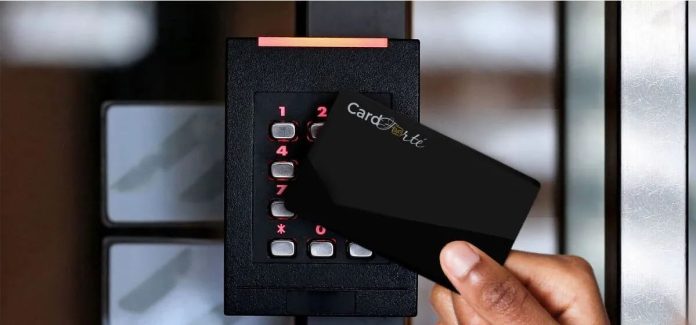
CardForté is marking half a decade of resilient years of strengthening growth within Nigeria’s volatile business landscape. Since its founding in 2021, the company has emerged as a critical behind-the-scenes player in the digital economy, specialising in the production of payment cards and identity solutions.

The company has produced over 27 million cards for more than 150 clients, including numerous fintechs and first-time issuers and has facilitated financial access for over 20 million Nigerians, particularly in underserved communities.

The co-founder and Director, Tunde Aka-Bashorun, said that the journey has required extreme discipline. “In Nigeria, you have to quickly learn that having a good idea is not enough. You need resilience, patience, and the ability to keep moving forward.”

Beyond finance, he said, CardForte provides solutions for healthcare (such as QR-enabled medical cards), retail, and hospitality.

Driven by a “build local” philosophy, CardForté operates with an entirely Nigerian workforce. Its dedicated Graduate Trainee Programme has successfully transitioned entry-level talent into key leadership roles, keeping technical expertise within the country.

Despite successes, the company faces industry-wide hurdles, including high operating costs, foreign exchange fluctuations, and infrastructure gaps. Aka-Bashorun called for increased policy stability and better access to affordable financing to help Nigeria become a true manufacturing hub.

Aka-Bashorun said the company look forward to the future and is set to complete a new production facility in Lagos to scale capacity, expand into research and development, eco-friendly cards and advanced security technologies. We will maintain a focus on building what people actually need.

As it enters its next phase, the co-founder said CardForté ‘’stands as a testament to the possibility of building sustainable, impactful indigenous businesses in the face of macro-economic challenges’’.

Airtel Nigeria suspends airtime and data credit services; prepaid customers cannot borrow airtime, data on next recharge  

0
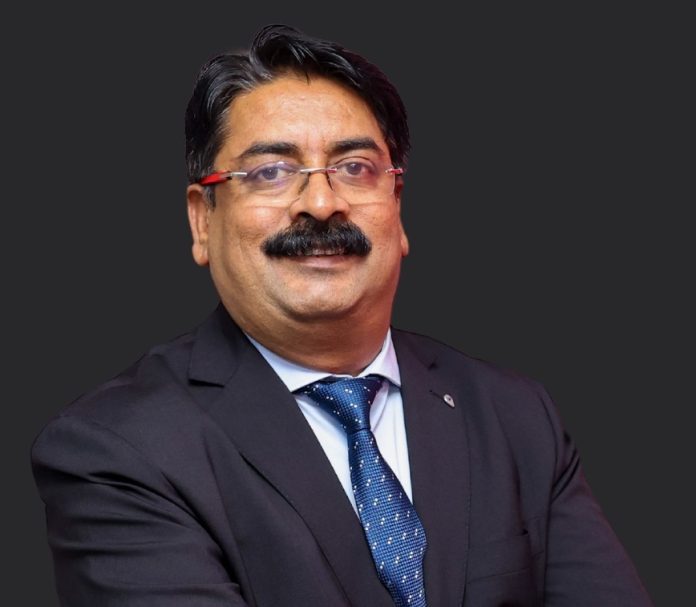
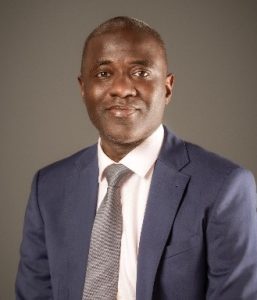
Dinesh Balsingh, Airtel-Nigeria CEO


Airtel Nigeria has announced the temporary suspension of its airtime and data credit services. The affected services allowed eligible prepaid customers to borrow airtime or data and repay on their next recharge.

The company, however, assured its customers that they would continue to enjoy uninterrupted access to airtime and data purchases through its existing channels.

According to Femi Adeniran, Director, Corporate Communications and CSR, the temporary suspension would not materially affect its service standards across the country.

Director of Marketing Ismail Adeshina added that this is a necessary and responsible step as ‘’we align our operations with evolving requirements. Airtel Nigeria remains committed to the highest standards of compliance, transparency, and consumer protection, while continuing to innovate responsibly within Nigeria’s digital ecosystem.”

The company advised its subscribers to expect updates on the status of the service in due course.

How debt and global forces drive Nigeria’s energy crisis – Blaise Udunze

0


 If Nigeria has the oil, why is it importing crude?

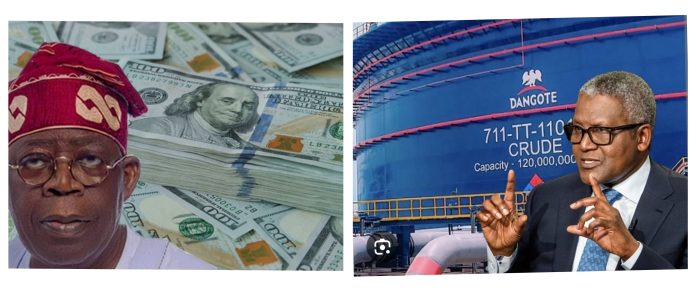
For months, Nigerians have argued in circles. Aliko Dangote has been blamed by default. They have accused his refinery of monopoly power, of greed, of manipulation. They have pointed out the rising price of petrol and demanded a villain.

When examined closely, the truth is uncomfortable, layered, and deeply geopolitical because the real story is not at the fuel pump, and this is what Nigerians have been missing unknowingly. The truth is that the real story is happening behind closed doors, across continents, within financial systems most citizens never see, and the actors will prefer that people be kept in the dark. And once you see it, the outrage shifts. The questions deepen. The implications expand far beyond Nigeria.

In October 2024, it was obvious that the world would have noticed that Nigeria made a move that should have dominated global headlines, but didn’t. Clearly, this was when the government of President Bola Tinubu introduced a quiet but radical policy: Naira-for-Crude.

The idea was simple and revolutionary. Nigeria, Africa’s largest oil producer, would allow domestic refineries to purchase crude oil in naira instead of U.S. dollars. On the surface, it looked like economic reform. In reality, it was something far more consequential. It was a challenge to the global financial order.

For decades, oil has been traded almost exclusively in dollars, reinforcing the dominance of the United States in global finance. By attempting to refine its own oil using its own currency, Nigeria was not just making a policy adjustment. It was testing the boundaries of economic sovereignty. And in today’s world, sovereignty, especially when it touches money, debt, and energy, comes with consequences.

What followed was not loud. There were no emergency broadcasts or dramatic policy reversals. Instead, the response was quiet, bureaucratic, and devastatingly effective just to undermine the processes. Nigeria produces over 1.5 million barrels of crude oil per day. Although it is pushing for 3 million by 20230. Yet when the Dangote Refinery requested 15 cargoes of crude for September 2024, what it received was only six from the Nigerian National Petroleum Company Ltd (NNPC).

This means its yield for a refinery with such capacity will be low if nothing is done. Think about it. From January to August 2025, Nigerian refineries collectively requested 123 million barrels of domestic crude but received just 67 million, which, by all indications, showed a huge gap. It is a contradiction and at the same time, laughable that an oil-producing nation could not supply its own refinery with its own oil.

So where was the crude going? The answer exposes a deeper, more uncomfortable truth about Nigeria’s economic reality. The crude was sold on the international market for dollars. Those dollars were then used, almost immediately, to service Nigeria’s growing mountain of external debt.


Loans owed to the same institutions, like the International Monetary Fund (IMF) and the World Bank, had to be paid, which are the same institutions applauding this government. Nigeria was not prioritising domestic industrialisation. It prioritised debt repayment.

And the scale of that debt is no longer abstract. Nigeria’s total debt stock is projected to rise from N155.1 trillion to N200 trillion. This follows an additional $6 billion loan request by President Tinubu, hurriedly approved by the Senate. At an exchange rate of N1,400 to the dollar, that single loan adds N8.4 trillion to a debt stock that already stood at N146.69 trillion at the end of 2025. This is not just a fiscal statistic. It is the central pressure shaping every major economic decision in the country.

On paper, the government can point to rising revenue, improving foreign exchange inflows, and stronger fiscal discipline as witnessed when the governor of the Central Bank of Nigeria, Olayemi Cardoso, always touted the foreign reserves growth. However, a closer review of those numbers reveals a harsher reality.

Nigeria is exporting its most valuable resource, converting it into dollars, and sending those dollars straight back out to creditors. The crude leaves. The dollars come in. The dollars leave again. And the cycle repeats.
This is not growth. This is a treadmill powered by debt. Let us not forget that in the middle of that treadmill sits a $20 billion refinery, built to solve Nigeria’s energy dependence, now trapped within the very system it was meant to escape.

By 2025, the contradiction had become impossible to ignore, which is a fact. This is because how can this be explained that the Dangote Refinery, designed to reduce reliance on imports, was increasingly dependent on them. The narrative is that in 2024, Nigeria imported 15 million barrels of crude from America, which is disheartening to mention the least.

More troubling is that by 2025, that number surged to 41 million barrels, a 161 per cent increase. By mid-2025, approximately 60 per cent of the refinery’s feedstock was coming from American crude. As of early 2026, Nigerian crude accounted for only about 30 to 35 per cent, which was actually confirmed by Aliko Dangote.

The visible contradiction in this situation is that the refinery built to free Nigeria from dollar dependence was running largely on dollar-denominated imports. Not because the oil did not exist locally, but because the system, shaped by debt obligations and global financial structures, made it more practical to export crude for dollars than to refine it domestically, which leads us to several other covert concerns.

Faced with this troubling reality, there is one major issue that still needs to be answered. This is why Dangote pushed back by filing a N100 billion lawsuit against the NNPC and major oil marketers. He further accused the parties involved of failing to prioritise domestic refining. For a brief moment, one will think that the confrontation, as it appeared, was underway is one that could redefine the balance between state control and private industrial ambition, but these expectations never saw the light of day.
Yes, it never saw the light of day because on July 28, 2025, the lawsuit was quietly withdrawn. No press conferences. No public explanation. No confirmed settlement. Just silence. There are only a few plausible or credible explanations. As a practice and well-known in the country, institutional pressure may have made continued confrontation untenable.

A strategic compromise may have been reached behind closed doors. Or the realities of the system itself may have made victory impossible, regardless of the merits of the case. None of these scenarios suggests a system operating with full autonomy or aligned national interest. All of them point to constraints, political, economic, or structural, that extend far beyond a single company.

Then came the shock that changed everything. On February 28, 2026, Iran closed the Strait of Hormuz, disrupting a channel through which roughly 20 per cent of the world’s oil supply flows. Prices surged past $100 per barrel. Global markets entered crisis mode. Supply chains are fractured. Countries dependent on Middle Eastern fuel suddenly had nowhere to turn.

And they turned to Nigeria. Nations like South Africa, Ghana, and Kenya began seeking fuel supplies from the Dangote Refinery. The same refinery that had been starved of crude, forced into dollar-denominated imports, and entangled in domestic disputes suddenly became the most strategically important energy asset on the African continent.

Nigeria did not plan for this. It did not negotiate for this. With this development, the world had no choice but to simply run out of options, and Lagos became the fallback. And then, almost immediately, attention shifted. This swiftly prompted, in early 2026, a United States congressional report to recommend applying pressure on Nigeria’s trade relationships within Africa.

Shortly after, on March 16, 2026, the United States launched a Section 301 trade investigation into multiple economies, including Nigeria. This is not a sanction, but it is the legal foundation for one. At the same time, the African Growth and Opportunity Act, which had provided duty-free access to U.S. markets for decades, was allowed to expire in 2025 without renewal.

The sequence is difficult to ignore. As Nigeria’s strategic importance rose, so did external scrutiny. As its potential for regional energy leadership increased, so did the instruments of economic pressure. To understand why, you must look at the system itself. The global economy runs on the U.S. dollar, which the Iranian government tried to scuttle by implementing a policy that requires oil cargo tankers being transported via the Strait of Hormuz to be paid in Yuan.

Most countries need dollars to trade, to import essential goods, and to access global markets. The infrastructure that enforces this is the SWIFT financial network, which connects banks across the world. Control over this system confers enormous power. Countries that step too far outside it risk exclusion, and exclusion, in modern terms, means economic paralysis.

Nigeria’s attempt to trade crude in naira was not just a policy experiment. It was a subtle deviation from a system that rewards compliance and punishes independence. The response was not military. It did not need to be. It was structural. Limit domestic supply. Reinforce dollar dependence. Ensure that even attempts at independence remain tethered to the existing order.

Meanwhile, the debt clock continues to tick. N155.1 trillion. That number is not just a fiscal burden. It is leverage. It shapes policy. It influences decisions, and it determines priorities, which tells you that when a nation is deeply indebted, its room to manoeuvre shrinks. In all of this, one thing that must be understood is that choices that might favour long-term sovereignty are often sacrificed for short-term stability. Debt does not just demand repayment. It demands alignment.

Nigerians remain focused on the most visible symptom, which is fuel prices. Unbeknownst to most Nigerians, they argue, protest, and assign blame while the forces shaping those prices include global currency systems, sovereign debt obligations, trade pressures, and geopolitical realignments. The price at the pump is not the cause. It is the consequence.

Nigeria now stands at an intersection defined not by scarcity, but by contradiction. What is more alarming is that it produces vast amounts of crude oil, yet struggles to supply its own refinery. It earns more in dollar terms, yet its citizens feel poorer. It builds infrastructure meant to ensure independence, yet operates within constraints that reinforce dependence. This is not a failure of resources, and this is because there is a conflict or tension between what Nigeria wants, which reflects its ambition and structure, and between sovereignty and obligation.

If Nigeria has the oil, why is it importing crude? Why is the refinery paying in dollars if Naira-for-crude exists? One will also be forced to ask if the lawsuit had merit, why it was withdrawn without explanation. If revenues are rising, why is hardship deepening? And if Nigeria is merely a developing economy with limited influence, why is it attracting this level of global attention?

These are not abstract questions. They are the pressure points of a system that extends far beyond Nigeria’s borders. Because this story is no longer just about one country. The reality is that, perhaps unbeknownst to many, it is about the future of African economic independence. It is about the structure of global energy markets, the dominance of the dollar and the role of debt in shaping national destiny.

The question is that if Nigeria, with all its resources and scale, cannot fully align its production with its domestic needs, what does that imply for the rest of the continent? The next time the conversation turns to petrol prices, something must shift. Because the number on the pump is not where this battle is being fought. It is being fought in allocation decisions, in debt negotiations, in regulatory frameworks, in international financial systems, and in quiet policy moves that rarely make headlines.

The Dangote Refinery is not just an industrial project. It is a test case. A test of whether a nation can truly control its own resources in a world where power is rarely exercised loudly, but always effectively. And right now, that test is still unfolding.


Blaise, a journalist and PR professional, writes from Lagos. blaise.udunze@gmail.com  
How fintech can untie the puzzle at the bottom of the pile   

0


We need an overarching purpose of inclusive growth and shared prosperity.

My grandma did not trust the bank. She trusted the Isusu daily collector. That was Mama Udoh. She used to own the corner shop. Sold biscuits, sweets, and ugwu leaves. My grandma was with Mama Udoh daily. She trusted this woman and other market women with her money. Explicitly. Do you know why? Grandma was part of a special group of people at the bottom of the economic pile. These people represent billions of others around the world. They are a significant market opportunity for companies to develop and sell affordable products and services. This demographic represents value. Real value.

On the one hand. My grandma and others like me live at the bottom of the pyramid. That is why global economies have brought them into the formal economy. That is why the Central Bank of Nigeria [CBN], banks, and fintech firms are driving financial inclusion for the underbanked and unbanked. They are bringing them into the formal financial system. Where can you find them? In the hinterland. On the outskirts of cities. In the southwest. In the north. Abuja. Kano. Port Harcourt. Delta area. These people are not poor. They are not rich. They embody a massive untapped consumer market with purchasing power. Real power.

Dr Yemi Cardoso, CBN Governor

On the other hand. Here is an idea. If your company develops a product around these people, your company can touch their lives. Transform dreams. Alleviate poverty. Improve their living standards. Can you do that for my grandma’s group and other people at the bottom of the pyramid?

In the long term. The CBN, banks, and fintech firms understand that financial inclusion is critical to the development of our economy. But the real puzzle resides at the bottom of the economic pile, where my grandma’s group reside. They lack access to formal basic financial tools. In its 2023 survey, EFInA reported 64% financial inclusion growth. This is driven by marginal growth in the banked population and major gains in non-bank formal adoption.

An economist, Dr Abiodun Adedipe, chief consultant/CEO, B. Adedipe and Associates, explained in his keynote at the second edition of Business Journal Fintech & Financial Inclusion Roundtable 2025 that fintech and financial inclusion are not only contemporary in our financial ecosystem. They hold exciting promises in the transition of our economy from ‘’jobless growth to inclusive and sustainable growth’’.

But challenges abound. Adedipe said these challenges are the ability of the CBN to promote and regulate fintech and financial inclusion effectively. Besides market, structural, cybersecurity, cultural and gender risks, credit assessment and KYC risks exist. He added that ’’If Nigeria will benefit from financial inclusion and the deep role fintech plays, there must be a balance of interests. That balance will be effective only if all stakeholders collaborate and no one seeks to take advantage of the other, and focus on the overarching purpose of inclusive growth and shared prosperity.’’

Why do these matter? The renowned economist said that for Nigeria to have an inclusive financial system, policies, products, regulations and technology must be inclusive by design. He did not expatiate on how these elements would find a common platform. Anyway, that is the puzzle fintech needs to untie. Until this puzzle is untied, my grandma and her group would be on the financial exclusion list. Forever.

In the short term. Does your grandma trust the bank, and is she on the financial inclusion ecosystem?

This article was first published in September 2025

Fintech, fraud, and Yahooze, who wins?

0


Internet fraudsters fleece Nigerians of millions of naira every day. The dead resurrected and spoke in Kenya’s financial sector theatre. When Alfred Basweti’s signature appeared on Kenya Union of Savings & Credit Co-operatives (KUSCCO)’s 2022 financial statements, it was not merely an administrative oversight. It was the perfect metaphor for a financial system haunted by phantom profits and ghostly accountability. There was one problem, though: Basweti died before the document went public.

A November 2024 PwC forensic audit exposed how the executives inflated assets by Sh14 billion: They paid fictitious dividends from member savings. They funnelled Sh1.6 billion in untraceable commission. This macabre detail emerges from the heart of Kenya’s most devastating financial scandal. It threatens the stability of a financial subsector that forms the backbone of middle-class aspirations in Kenya.

On the other hand. Nigerian banking fraud has tripled. A report released by Nigeria Inter-Bank Settlement System (NIBSS) revealed that funds lost to fraud in Nigeria’s banking system have nearly tripled over the past five years. Analysis by the NIBSS estimated that 52.3 billion naira ($34.8 million) was lost to fraud in 2024.

On the one hand. In 2020, 11.6 billion naira went missing. This happened in Nigeria with a thriving technology and finance sector, the finance sector that is confronting a rival industry: Yahooze. That is another name for the industry populated by the internet-savvy Yahoo boys. Do you remember Yahooze? It was a successful song released by Afrobeats star Olu Maintain in 2007. The songs celebrated the internet fraudsters.

Internet fraud is now an industry. It is thriving. It is jostling for attention with the finance sector. The fraudulent acts listed above came via the internet. Many Nigerians have lost billions of naira to these rats. What have we done to arrest the situation? We turned the act into a song and a dance. Yahooze.

Olu Maintain performing in London in 2008

In the long term. According to the report, fraudsters attempted to steal 86.4 billion naira in 2024. The numbers came after the latest GDP figures showed fourth-quarter growth of 3.8 per cent. This increase got a boost through the services sector: Finance and insurance. “The amount lost to fraud has increased over the past five years along with the growth of financial transactions in the digital payments sector,” the report stated.

Nigeria’s digital payment system is one of the most robust in Africa. We have a thriving technology startup ecosystem that raised an estimated 400 million dollars in 2024. According to media reports, such services are important as a cash shortage and currency reforms pushed users away from physical banknotes.

Because of the learned e-payment habit by Nigerians, fraudsters are using various methods to defraud unsuspecting Nigerians. Gift cards. Accounts opening. They are using stolen identities of senior citizens, minors, and foreigners to perpetrate the act. Due to this, an estimated 400 million naira was received in accounts opened with the stolen identities. Aside from this, many Nigerians were complicit in the act. Some were ‘’employed’ to find victims online through phishing. They targeted mostly Americans. Canadians. Mexicans. Etc.

Why these matter? The law recovered the stolen funds and arrested some bank employees. However, the international fraud monitors have categorised Nigeria under the “grey list.’’ Do you know the co-travellers? South Sudan. Bulgaria. Monaco. Croatia. These countries were deficient in preventing money laundering and terrorism financing. Meanwhile, the Economic and Financial Crimes Commission had arrested several foreigners in connection with the internet fraud.

In the short term. While we danced to Yahooze, the fraudsters are fleecing Nigerians of millions of naira. Every day.

Why it is uneconomical to serve the people using the ATMs

0


The company died. I have no hand in its demise. In my earlier life, I consulted for a company called Automated Teller Machine Consortium [ATMC]. The company could not have survived. It shared the same women with its founders. ATMC was a special-purpose vehicle established by the banks to deploy off-site ATMs.

The shareholders were: Diamond Bank. Fidelity Bank. First Bank. Afribank. UBA. Union Bank. Wema Bank. Zenith Bank. Accenture. Before its death, ATMC was the largest independent ATM deployer [IAD] in Nigeria.

The company aimed to deploy 2,000 shared ATMs in Nigeria. The machines carried the insignia Quickcash. Anywhere you found the Quickcash logo, you would get cash. Quickcash was located in places without bank presence. Eateries. Fuel stations. Shopping malls. Restaurants etc. The initial rollout was smooth. Then the Quickcash brand died quickly. Why?

On the one hand. Could you hand over your off-site ATMs to ATMC? The CBN ordered. The first CEO of ATMC, Olumide Bajomo, and his team were happy. It appeared to Bajomo that the CBN’s order would quicken the rollout of more Quickcash machines. He was disappointed. The banks refused to hand over their machines. Bajomo exited. Why?

On the other hand. Noble Ekajeh, Bajomo’s successor, inherited the legacy system. Our discussions were on the same issue. It was obvious that the ATM consortium was not working. To confirm it, the CBN reversed its policy. Banks could deploy cash machines anywhere. Then the bank consolidation exercise sealed ATMC’s fate. The banks that were uncooperative earlier now had official backing. Adieu ATMC.

In the long term. Why did the banks refuse to hand over their machines? Does a bank profit from deploying an ATM? No. How do I know? A reason that led to ATMC’s demise was the high maintenance cost. To maintain a cash machine, you need a cash machine. You need cash. You need a machine to count the cash. You need a sorter to find ATM-fit banknotes. You must do this every day. Seven days a week. Four weeks a month. 365 days a year.

You need a cash-in-transit vehicle to ferry the cash to the designated machine. You need security personnel. You need electricity and a diesel power generator. You need a steady internet connection. You must pay rent. Add these hurdles to the uncooperative stance of the banks. ATMC enjoyed the ride. ATMC could not survive.

ATM sales and management guru, Tope Dare, the man who sold most of the ATMs in Nigeria, told me recently that a bank does not profit from deploying an ATM. Dare listed the following reasons: High cost of capital expenditure [CAPEX] on ATMs, and high cost of maintenance. High cost of power infrastructure maintenance. Cash management.

One of the leading bank CEOs said on one of the platforms I belong to: ‘’Banks do not make money from ATMs. I know this is hard to understand, but it is true. It is not possible to make money from ATMs. It is uneconomical to serve the people using the ATMs”.

In the short term. The banks earn revenue by charging non-customers fees for using their ATMs. In the ATM race, ATMC could not have survived.


You will get compensation directly from the telecom operator if you experience poor service

0


1# You will get compensation directly from the telecom operator if you experience poor service. The compensation of subscribers for poor service quality, which can be through persistent network outages or failed calls, is now automatic. The Nigerian Communications Commission (NCC) has said the initiative would ensure fairness by mandating that operators provide automatic compensation, such as airtime credits, for failing to meet regulatory Quality of Service Key Performance Indicators (KPIs). Under this order, telecom operators are required and mandated to identify affected subscribers and provide compensation directly.

Dr Aminu Maida, NCC, Executive Vice Chairman

2# Airtel is the world’s second-largest telco as its global customer base surpasses 650 million. After crossing 650 million mobile subscribers worldwide, Bharti Airtel has announced a major milestone in its global operations. This scale now positions Airtel as the second-largest telecommunications operator on the planet by customer base. Crossing this threshold reflects a network of immense scale, the capacity to reach customers across diverse markets with consistent quality, and the ability to deliver experiences shaped by sustained innovation.

3# MTN Nigeria’s ultra-high-speed 5G connectivity gives subscribers the power to download video in seconds. MTN Nigeria has become the first in Sub-Saharan Africa to test a commercial 25 Gbps full-duplex microwave link on the E-band spectrum in conjunction with Huawei to unlock ultra-high-speed 5G connectivity, and empower subscribers to download video in seconds. Conducted using 1000MHz in the 80GHz E-band, the breakthrough quadruples spectral efficiency over traditional systems, enabling simultaneous two-way data transmission that supports video streaming, AR, and low-latency apps. Chief Technical Officer Yahaya Ibrahim hailed it as a “game-changer,” affirming MTN’s lead in evolving network capabilities for Nigeria’s digital surge.

Paystack, Juicyway, others join CBN initiative targeting anti-money laundering compliance

0


#1    Paystack, other companies now CBN’s Virtual Asset Providers – The Central Bank of Nigeria (CBN) has selected Flutterwave, Paystack, and Juicyway for a new pilot programme aimed at strengthening compliance in Nigeria’s evolving virtual asset ecosystem. Other participants include KuCoin, KoinKoin, and cNGN. The apex bank said the pilot is “designed to develop a structured understanding of AML/CFT/CPF risks, business models, and operational practices across participating entities.”

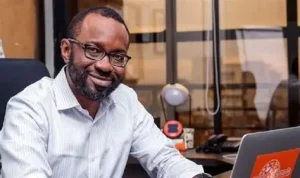
Tayo Oviosu, Paga, founder

#2  – Tayo Oviosu steps down as Paga CEO, Oyinloye to lead Nigeria operations. Tayo Oviosu has stepped down as Paga’s CEO for the first time in 17 years. Oviosu, who founded the company in 2009 and has led it since, is stepping back from day-to-day operations to become Group CEO, while Opeyemi Oyinloye has been named acting CEO of Paga Nigeria, pending approval from the Central Bank of Nigeria. This is part of a wider restructuring aimed at positioning Paga for its next phase of growth.

#3  – Flutterwave secures microfinance bank licence, can operate as a regulated financial institution.  Flutterwave has secured a microfinance bank license from the Central Bank of Nigeria (CBN). This marked a significant step in its evolution within the country’s financial ecosystem. With the new license, Flutterwave can operate as a regulated financial institution, enabling it to provide services such as accepting deposits, facilitating transfers, and offering credit to customers.

#4  – MTN Uganda secures shareholder approval to separate from fintech arm.  MTN Uganda has secured shareholder approval to separate its financial technology operations into a new company, MTN Mobile Money Uganda Limited. This is a key step in its revenue diversification strategy. In recent years, MTN has executed similar spin-offs in Nigeria and Ghana, positioning its fintech arms as independent entities for better operational and financial clarity.

#5 – Ghana’s payment card works in 200 countries. Ghana has turned its national identity card into a bigger platform, as the Ghana Card can now be used to make payments online, in stores, at ATMs, and even across over 200 countries, marking a major shift in how financial services could work in Ghana.